
John Major and Brexit, ten years on: are there any winners?
By Davide De Leo (Linguist, PhD)
Ten years on from the referendum in the summer of 2016 that decided the UK’s exit from the European Union, former Prime Minister John Major gave an interview to the Editor of The Independent. Major expressed a highly critical view of the effects of Brexit, not only from an economic perspective. In this issue, we have summarised the points raised by the influential British Conservative politician and asked Luca Cinciripini, a researcher at the Institute of International Affairs, to analyse them. Enjoy the read!

John Major on Brexit
Brexit has undoubtedly harmed the UK, and not just from an economic perspective.
Weakness and isolation: previously, the UK was the US’s main ally and a leader within the EU, which had a population of 500 million. With a population of 70 million in a world of 9.5 billion, the UK has far less clout and far fewer friends in a world that has become very difficult.
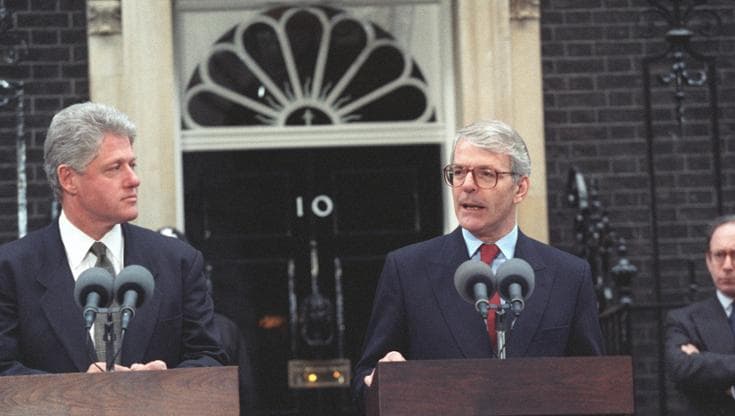
‘Let’s take back control’: an empty slogan meaning ‘We don’t like foreigners. Let’s do everything ourselves’. But only one country in the world is completely sovereign: North Korea, and it is certainly not a model of society to aspire to. The UK depends on alliances: it is part of the ‘Five Eyes’, the United Nations and NATO. In all these cases, it shares sovereignty with others. Why, then, should it not share sovereignty with its nearest neighbours in the case of the EU? It makes no sense. Michael Gove (one of the ‘Brexiteers’, those who wanted Brexit) had said before the vote: ‘Once we leave the EU, we’ll hold all the cards’. The only cards it finds itself holding are the many P45s (the forms issued to those who lose their jobs). Margaret Thatcher had taken the UK into the single market; some of those who call themselves Thatcherites have pushed it out, despite having said the opposite.
Economic and financial impact: over the past ten years, a wide range of institutions has estimated a decline in UK GDP of between 4 per cent and 6 per cent. According to a recent survey, this figure is likely to be an underestimate and could range from 6 per cent to 8 per cent. Even taking a cautious approach and using the lower figure, the UK economy has lost around £100 billion in business activity each year, with £40 billion in tax revenue evaporating annually. Without this loss of tax revenue, many of the unpopular fiscal measures introduced in recent years would not have been necessary.
On the subject of the Brexiteers: leaving, they argued, would have increased the UK’s freedom to pass its own laws, to escape the financial chaos caused by EU budgets, and would also have made it possible to control national borders. Why, then, is there a queue to join the EU? One of the arguments put forward by those who wanted Brexit was that once the UK had left, the entire European project would collapse and everyone would want to leave. The opposite is happening. So what do the Brexiteers see that no one else can see? Who are the winners? No one knows. It is, however, easy to identify the losers: every household budget and every national budget. Now the Brexiteers say: let’s discuss how to make Brexit a success. Thinking about how to make it a success implies admitting that it has failed so far. And, according to Major, it will continue to fail.
The vote: we mustaccept the result; the British people aremasters of their own destiny. They listened to the debate that took place and then made their choice, so we must accept the result. But Major said he was angered by the fact that the vote was distorted by false promises: the UK was supposed to become a land of ‘milk and honey’, stronger and more sovereign. None of this has come to pass. The costs of the vote, of the exit procedures, of the creation of laughable Brexit ministries. These costs would have been acceptable had they produced measurable benefits for the lives of the British people. But that has not happened.
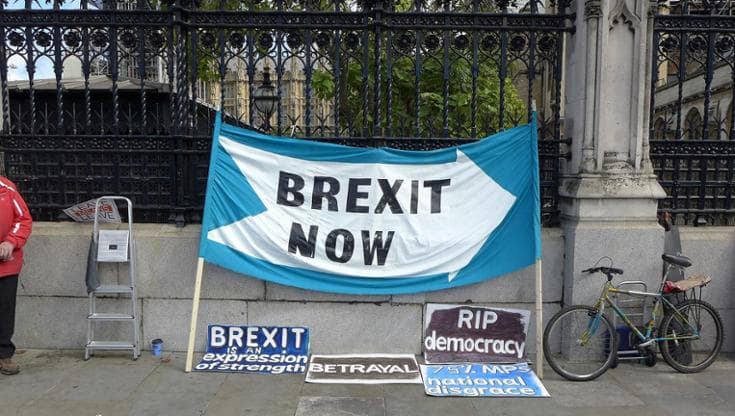
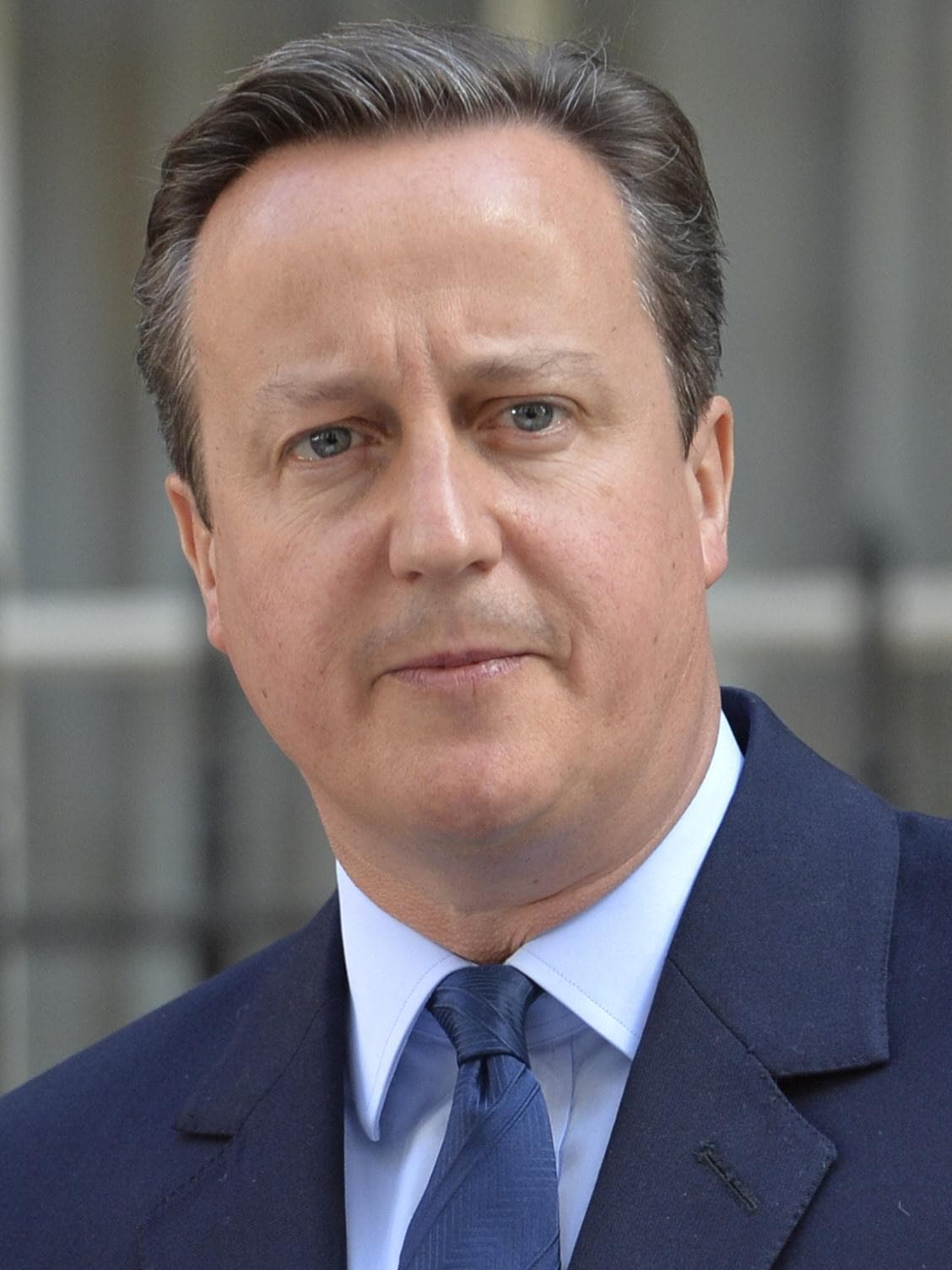
On David Cameron’s decision to call the referendum and the role of the Conservatives: it was a complex decision. Cameron called it because he saw growing demand from Eurosceptics and because he thought he could win it. He certainly did not call it to lose it, but as we know, it went disastrously wrong. The fact that many of the Brexiteers were Conservatives still has a negative effect on the party.
Political instability: Brexit has contributed to political instability. There have been seven prime ministers since the referendum. The country is changing them as frequently as football teams change their managers.
Contributing factors to the crisis: there have been major events such as the war in Ukraine and the conflicts in the Middle East, none of which were due to decisions by the British government; however, Brexit and its effects have been by far the main reason for the slowdown in the British economy. Only a small proportion of businesses that previously traded with Europe continue to do so. A huge number of medium-sized enterprises have ceased all trade. Businesses now have to deal with 27 different procedures, each with its own rules, forms and red tape. It has become impossible for small businesses to trade with Europe given all these obstacles. Boris Johnson said that barriers (excluding tariffs) with Europe would not increase, but the opposite is true: the increase has been enormous. The result is a significant decline in trade with the EU.
Possibility of rejoining: this is not currently an option. There are short-term and long-term objectives. In the short term, relations of trust with Europe must be re-established. The current government has taken the first steps, but too timidly. The Customs Union would not be of much help to the UK. The aim for the next five years must be to rejoin the Single Market, despite the current difficulties. And here we must be honest with the British people, setting out the benefits they will gain and the costs they will have to bear. As for rejoining the EU, this is unlikely to happen any time soon. There is too much mistrust, too much fear. Parties such as Reform would break any promises they made if they came to power. Europe would be very sceptical, because in the past it has granted the UK various advantages and exemptions, and yet Brexit still won the day. So the hesitations of EU member states would be understandable.
The younger generation: the majority of ‘Leave’ votes came from the older generations. At the moment (the interview is from June 2026, ed.), it seems that 68 per cent believe Brexit was a mistake, whilst 32 per cent do not. I believe Brexit was a nationalist choice and that the younger generation is more ‘internationalist’. Traditionally, nationalist sentiment is alien to the British people and will probably pass. But it is not too early to start discussing it, because the EU issue is very complex; no one can fully grasp all the details, not even former prime ministers like myself. Especially since all the disadvantages have been highlighted, but not enough attention has been paid to the advantages of EU membership.
Analysis by Luca Cinciripini
We asked Luca Cinciripini,a researcher at the Institute of International Affairs, to analyse the points raised by John Major.

Effects: Isolation and weakening of the UK
Ten years on from the referendum of 23 June 2016, one of the most evident effects of Brexit concerns the reduction in the United Kingdom’s political and diplomatic clout within the European context and, more generally, on the international stage. London has not ceased to be a major power; it remains a permanent member of the United Nations Security Council, a nuclear power and one of Nato’s key players. However, the UK’s ability to influence key international dynamics now appears more limited, particularly when viewed in the light of the transformations that have taken place in the global order. The ‘Global Britain’ project, which was intended to be the main strategic response to the UK’s exit from the European Union, has progressively come up against an international context very different from that envisaged by its proponents. The underlying idea was that the UK could compensate for the loss of its membership of the single market and European institutions by strengthening trade and diplomatic relations with non-European partners, accompanied by greater freedom in shaping its own foreign policy. Within this framework, a fundamental role was assigned to the ‘special relationship’ with the United States. In 2016, however, the transatlantic axis appeared to rest on assumptions of stability that subsequent developments have progressively called into question. The rise of Donald Trump and the return to more protectionist trade policies have highlighted just how risky it was to imagine that the privileged relationship with Washington could represent a sufficiently solid alternative to European integration. The relationship between London and Washington naturally remains significant, particularly in the military and intelligence services spheres, but this does not automatically translate into preferential treatment in economic and trade matters. At the same time, the UK’s attempt to build an alternative network of bilateral partnerships has yielded tangible results, though these are insufficient to compensate for the loss of the benefits associated with EU membership. As a member of the Union, the United Kingdom was able to contribute directly to shaping European positions, exerting significant influence through its diplomatic network and alliances with other Member States. Today, however, it must contend with European decisions over which it has far more limited means of influence. This loss takes on even greater significance in an international system characterised by the resurgence of competition between major powers. In a world where economic clout, the size of markets and the ability to mobilise industrial and technological resources are central to international projection, acting alone entails increasing costs. Brexit has therefore deprived London of one of the main multipliers of its international influence, just as global competition was making it increasingly important to be able to act within political and economic groupings larger than those offered by the nation-state model (especially if one does not fall within the great power paradigm). Against this backdrop, it is hardly surprising that a rapprochement with the EU has returned to the forefront of the British foreign policy agenda. The strategic partnership launched in May 2025, particularly in the areas of security and defence, represents a recognition that many of the key challenges facing London cannot be effectively addressed without close cooperation with Brussels. This is perhaps the most significant paradox of the first post-Brexit decade: the United Kingdom continues to need Europe, yet has relinquished a considerable portion of the tools through which it could influence its decisions.
Brexit promises: regaining control
One of the most effective slogans of the 2016 referendum campaign was ‘Take Back Control’. The promise was seemingly simple: to restore to British institutions the full capacity to decide autonomously on legislation, immigration, trade and economic policy, removing these areas from the influence of European institutions. From a strictly formal point of view, it is undeniable that Brexit has enabled the United Kingdom to regain powers previously exercised or shared within the EU. However, if we focus on the extent to which this greater autonomy has translated into an actual ability to achieve better results, the picture looks far bleaker for the United Kingdom. The distinction between formal sovereignty and the substantive capacity to exercise it is probably one of the main contradictions of the British experience. London is now free to adopt regulations that differ from those of the EU, but it continues to depend economically on a market with which it has extremely close trade links. For British businesses wishing to export to the EU, compliance with European standards often remains an essential requirement. Consequently, some of the regulatory freedom gained presents a dilemma: either to diverge from European rules and accept higher commercial costs, or to maintain a high degree of alignment without being able to participate fully in the formulation of those very same rules. It is in this context that the risk arises of the United Kingdom becoming a ‘rule taker’ – that is, a country that ends up adopting, at least in certain sectors, rules drawn up elsewhere. The ongoing pursuit of new agreements with Brussels makes this contradiction particularly apparent. Initiatives aimed at reducing barriers to agri-food trade, strengthening energy cooperation or linking the respective emissions trading schemes necessarily involve forms of coordination and, in some cases, regulatory alignment. A similar argument applies to trade policy. Leaving the EU has enabled London to negotiate new agreements independently, including those with Australia, New Zealand and India, as well as joining the Comprehensive and Progressive Agreement for Trans-Pacific Partnership (CPTPP). However, most of the UK’s trade agreements have replaced arrangements that already existed whilst it was a member of the EU, whilst the expected benefits of the new partnerships remain relatively modest compared with the costs arising from the introduction of new trade barriers with the European market. Immigration control also offers a significant example of the gap between promises and results. The end of free movement has indeed reduced net arrivals of European citizens, which are estimated to have turned negative from 2022 onwards. However, this decrease was more than offset, at least initially, by an increase in immigration from non-European countries. According to data reported by the House of Commons Library, the net migration figure for non-EU+ citizens reached approximately 1.05 million in 2023, before falling in subsequent years. Brexit has therefore profoundly altered the composition of migration flows, without automatically bringing about the overall reduction that many supporters of leaving the EU had expected. The balance sheet of regained sovereignty thus appears mixed. The United Kingdom certainly enjoys greater legal and regulatory autonomy, but it has discovered that its ability to exercise this effectively is constrained by economic and geopolitical interdependencies that are difficult to eliminate.
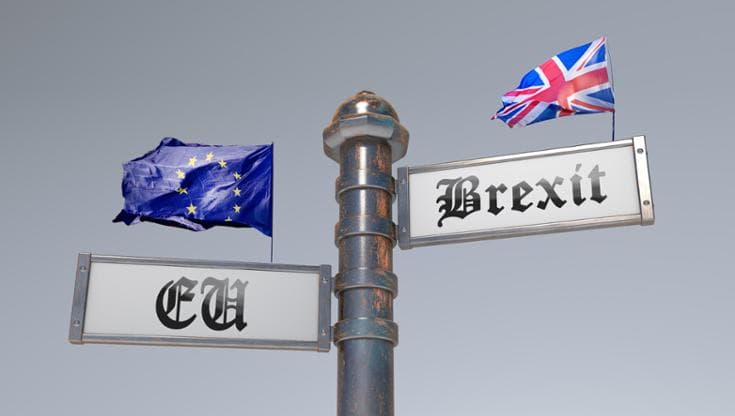
Economic/financial impact. Are there any winners?
If Brexit is viewed primarily through an economic lens, it is difficult to identify any real winners. The EU has certainly suffered commercial and political consequences from the UK’s departure, but has, on the whole, managed to contain the systemic effects. The UK, by contrast, has had to contend with significant structural costs, which have contributed to exacerbating economic weaknesses that were already present before the referendum. In the months following the 2016 vote, one of Europe’s main concerns was the potential domino effect that the UK’s decision might trigger. At a time characterised by the rise of Eurosceptic movements, there was a fear that the departure of one of the continent’s major economies might encourage similar processes in other Member States. This scenario did not materialise. On the contrary, the complexities of the negotiations and the economic difficulties that emerged in the years that followed have helped to make the prospect of leaving the Union less attractive. For London, the cost appears to be considerably higher. The exact quantification of Brexit’s impact remains a matter of debate, not least because it is impossible to know with certainty what the UK’s economic trajectory would have been had the referendum not taken place. However, a large body of economic literature agrees that the UK economy is now significantly smaller than it would have been under that hypothetical scenario. The Office for Budget Responsibility, the independent body responsible for official economic forecasts, continues to estimate that Brexit will result in a reduction of around 4 per cent in productivity and GDP in the long term. Other studies cited by the House of Commons Library indicate negative effects ranging from 2 per cent to 8 per cent, depending on the methodologies and indicators used. Lower growth means, all other things being equal, lower tax revenues, reduced capacity to finance public investment and tighter margins for meeting the government’s spending needs, particularly in an increasingly challenging international context from 2022 onwards. The main factor weighing heavily is the new trade barriers with the EU, which have increased costs for businesses and helped to discourage investment. The OBR also forecasts that, in the long term, both UK exports and imports will be 15 per cent lower than they would have been had the UK remained in the EU. Trade agreements concluded with non-European partners, while important from a diplomatic perspective, do not appear capable of offsetting these losses. These consequences must also be viewed within the context of an already complex economic trajectory. The years of austerity introduced under David Cameron had significantly reduced the capacity for public investment, while the pandemic and the energy shock following Russia's invasion of Ukraine have further exacerbated the situation. Structurally weaker economic growth has made it even more difficult to tackle these problems, particularly in parts of the country characterised by lower levels of productivity and investment. The outcome is therefore profoundly asymmetrical. The EU has lost a leading economic and political partner, but has retained its market size and regulatory capacity. The UK, on the other hand, has foregone some of the benefits of integration without managing to build an alternative economic model capable of compensating for them.

The vote. Was it wise to hold the referendum? Was there Russian interference?
The decision to hold a referendum on the UK’s continued membership of the EU is probably one of the most significant errors of political judgement in recent British history. David Cameron had announced in 2013 his intention to consult the electorate on EU membership, against a backdrop marked by internal divisions within the Conservative Party and growing electoral pressure from Nigel Farage’s UK Independence Party. The referendum was intended to help heal the rifts within the Conservative camp and to neutralise, at least temporarily, the European issue as the main source of internal political conflict. Cameron’s gamble was based on the idea that a victory for the ‘remain’ camp could have brought the debate to a definitive close, thereby strengthening his leadership. Cameron’s main mistake was probably to interpret an issue deeply rooted in the fabric of British society primarily through the prism of domestic political competition. The referendum ended up becoming a vessel for a range of grievances that went far beyond the relationship with Brussels. In many areas marked by deindustrialisation, regional inequalities and the gradual decline in economic opportunities, the vote for Brexit also represented a form of protest against a political system perceived as aloof. Brussels thus became the target of discontent whose origins were at least partly attributable to decisions and changes within the United Kingdom itself. Of course, reducing the ‘Leave’ vote to a mere expression of economic hardship would be equally simplistic. Issues relating to national identity, immigration and the restoration of sovereignty played a significant role, as did growing mistrust of traditional political institutions. Added to this picture is the debate over possible Russian interference in the referendum process. This is not a new issue, but it returned to the forefront in October 2026, when prime minister Andy Burnham said that he had received confirmation of interference by Moscow in the 2016 vote. His remarks represented a politically significant shift, particularly given that previous Conservative governments had maintained that they had no evidence of interference capable of altering the result. At present, Burnham has not provided any public details on the nature of the Russian activities, nor sufficient evidence to assess their impact on the final result. As early as 2020, the Intelligence and Security Committee’s report had raised questions about the insufficient attention paid by the British authorities to the issue, without, however, establishing whether Russian activities had influenced the referendum outcome. The most recent independent review, led by Philip Rycroft, has further highlighted the persistence of British vulnerabilities to foreign interference in political life. The issue remains politically sensitive because, while it is true that any new evidence could fuel the debate on the quality and transparency of the democratic process, it is unlikely to bridge the deep divisions that continue to characterise British society ten years on from the vote.
The future: is re-accession possible? – The role of the new generation
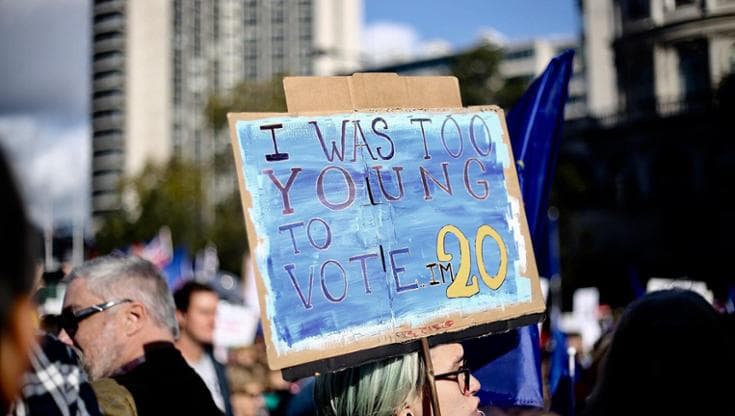
Despite the growing consensus in favour of a rapprochement with Brussels, I consider the possibility of the UK returning to the EU to be a prospect that is unlikely to materialise in the short to medium term. I would not rule out the issue returning in a concrete form to the British political agenda, but I believe that actual accession would require a profound political and cultural shift, likely to unfold over the course of at least a generation. Shifts in public opinion indicate that the relationship with Europe is far from set in stone. According to an Ipsos poll published in June 2026, 52 per cent of Britons said they were in favour of submitting a new application for membership, with this figure rising to 68 per cent among young people aged between 18 and 34. The figures therefore suggest a growing divide between the younger generations – who are generally in favour of closer European integration – and a significant section of the older electorate, who continue to regard Brexit as a choice worth defending. It would, however, be premature to automatically interpret these trends as concrete prospects for re-entry. There is a substantial difference between declaring oneself in favour of re-entry in principle and accepting its political and economic conditions. It must be carefully borne in mind that London’s re-entry into the EU would by no means entail a return to the situation prior to the referendum, and this is precisely one of the main obstacles. For decades, London enjoyed a particularly favourable status within the EU, characterised by derogations and specific conditions that allowed it to participate in the single market whilst retaining a high degree of autonomy in certain sectors. These included retaining the pound sterling, exclusion from the Schengen Area and special treatment regarding contributions to the European budget. A possible return would not automatically entail the restoration of the previous conditions. Re-accession would have to take place through a new procedure under Article 49 of the Treaty on European Union, with conditions to be negotiated and approved unanimously by the Member States. Furthermore, the standard framework applicable to new members requires a commitment to adopt the euro once the relevant criteria have been met, although this does not necessarily impose an immediate deadline. There is therefore no guarantee that London could regain its previous derogations, nor that the other Member States would be willing to grant them. These factors would make the path towards renewed membership particularly complex from a domestic perspective. A British government in favour of rejoining would have to convince the public not only of the economic and political benefits of integration, but also of the need to accept conditions that may be less favourable than those abandoned in 2016. In a country where the European question continues to be a source of intense political polarisation, this would be a considerable challenge. For this reason, I believe it is more likely that the future of relations between the United Kingdom and the European Union will involve a process of gradual, sector-by-sector rapprochement. The strategic partnership agreed in May 2025 and the new summit scheduled for November 2026 represent important steps along this path. Security, defence, energy, trade and youth mobility are areas in which there are converging interests and concrete scope for rebuilding forms of cooperation. Looking ahead, these initiatives could help to gradually bridge the gap between London and Brussels, rebuilding a relationship of trust after years of confrontation. But a functional rapprochement does not necessarily equate to future membership. The real question concerns British society’s ability to develop a new vision of its role in Europe, moving beyond the dichotomy between national sovereignty and integration that has dominated the debate over the last decade.
REPORTS
Video
Interview with former Prime Minister John Major, The Independent, available on YouTube, 2026.
Books
Brexit: Between Law and Politics,by Federico Fabbrini, 2021, Il Mulino.
The media and politicians have often portrayed it as a binary choice, but the United Kingdom’s exit from the European Union neither began nor ended with the referendum of 23 June 2016. To understand ‘Brexit’, it must be viewed as a legal and political process: a complex journey never before attempted by a Member State, which has required – and continues to require – enormous negotiating efforts on a multi-level playing field, caught between aspirations for sovereignty and legal constraints. Drawing on a solid body of documentation and first-hand knowledge of the key players, the author, in his capacity as director of the Brexit Institute in Dublin, faithfully reconstructs the story, situating the facts – causes and consequences, costs and benefits, choices and compromises – within the framework of European law and the difficult relations that the United Kingdom has always maintained with the EU institutions. On closer inspection, however, the most serious crisis the Union has ever faced appears, in fact, to have the potential to revitalise the project.
*The Brexit Effect, 2016–2026*, edited by Anthony Seldon, 2026, Cambridge University Press.
To mark the tenth anniversary of the Brexit referendum, Anthony Seldon brings together leading experts and political figures from across the spectrum to analyse its causes, the implementation process and its consequences for British society. The book *The Brexit Effect* examines the impact of leaving the European Union on politics, the economy and everyday life, offering different perspectives and reflections on future opportunities, to better understand the past, present and future of the United Kingdom.
Articles
The Rycroft Review: Report of the independent review into countering foreign financial influence and interference in UK politics. Department for Housing, Communities and Local Government, 25 March 2026.
‘Debate on the impact of the 2016 EU membership referendum on the UK’, by Stefano Fella, Daniel Harari, Esme Kirk-Wade and Dominic Webb, 17 August 2026.
The UK’s trade agreements, UK Department for Business and Trade and UK Department for International Trade, 2 March 2026
‘Ten Years after the Brexit Referendum, Britain Remains an Isle Full of Noises: Prospects for an EU-UK Reset’, by Luca Cinciripini, 1 July 2026.
Brexit analysis, Office for Budget Responsibility. Series of studies, last updated 20/07/2026.