
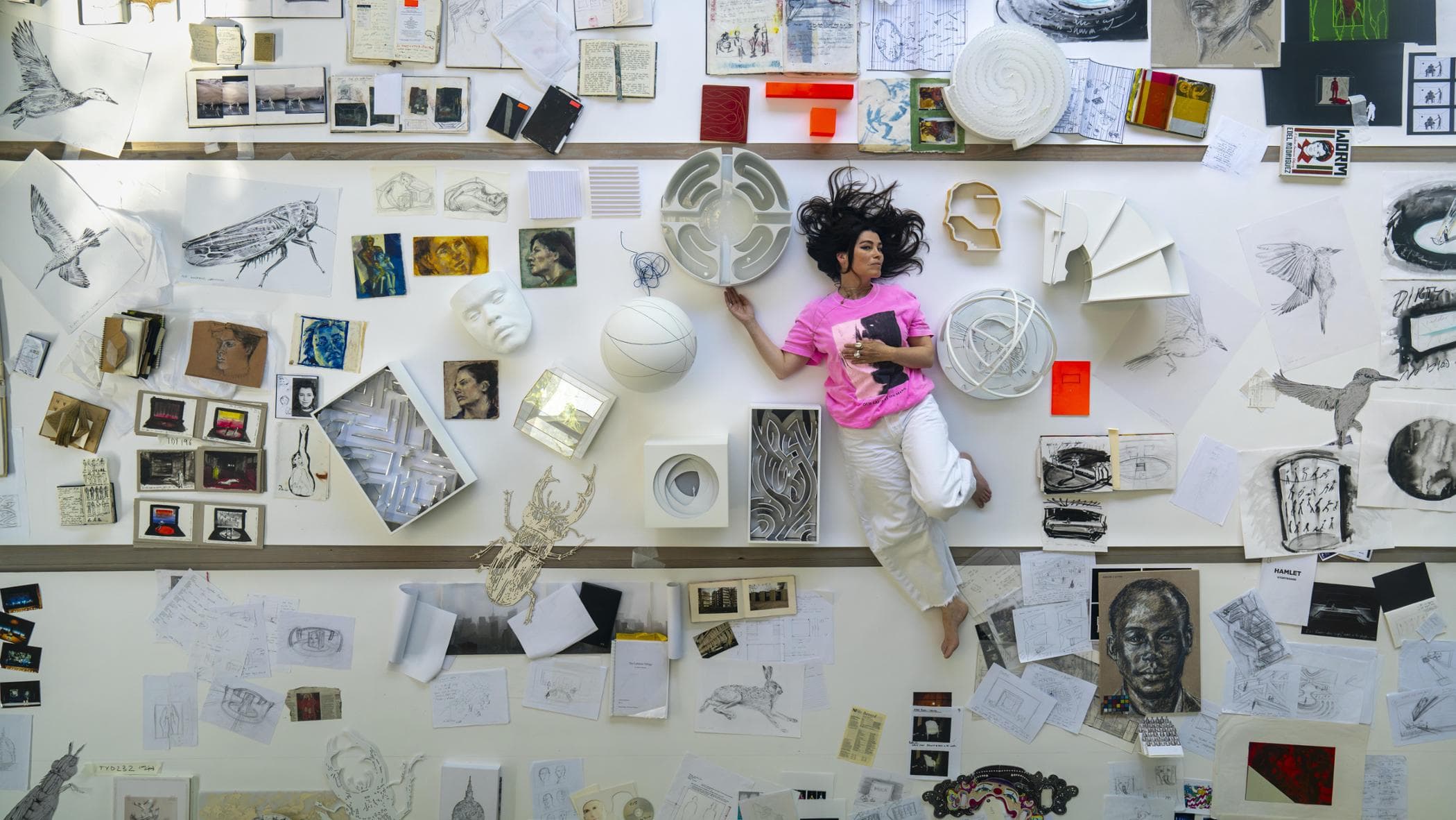
Eyes elongated by kajal, a fluorescent yellow T-shirt. “Es Devlin leaves a lasting impression, just like her monumental set designs,” observes Danielle Thom, who, alongside Johanna Agerman Ross and Margherita Dosi Delfini, is curating *Es Devlin: other worlds*, on display until 4 April at the Design Museum in London. It is the first major retrospective dedicated to the thirty-year career of the British stage designer, born in 1971 in Kingston upon Thames, a suburb to the south-west of the capital. “The title was suggested by Es herself,” Thom continued. “It encapsulates the power of her installations and their ability to transport us elsewhere, engaging the senses and the imagination.”
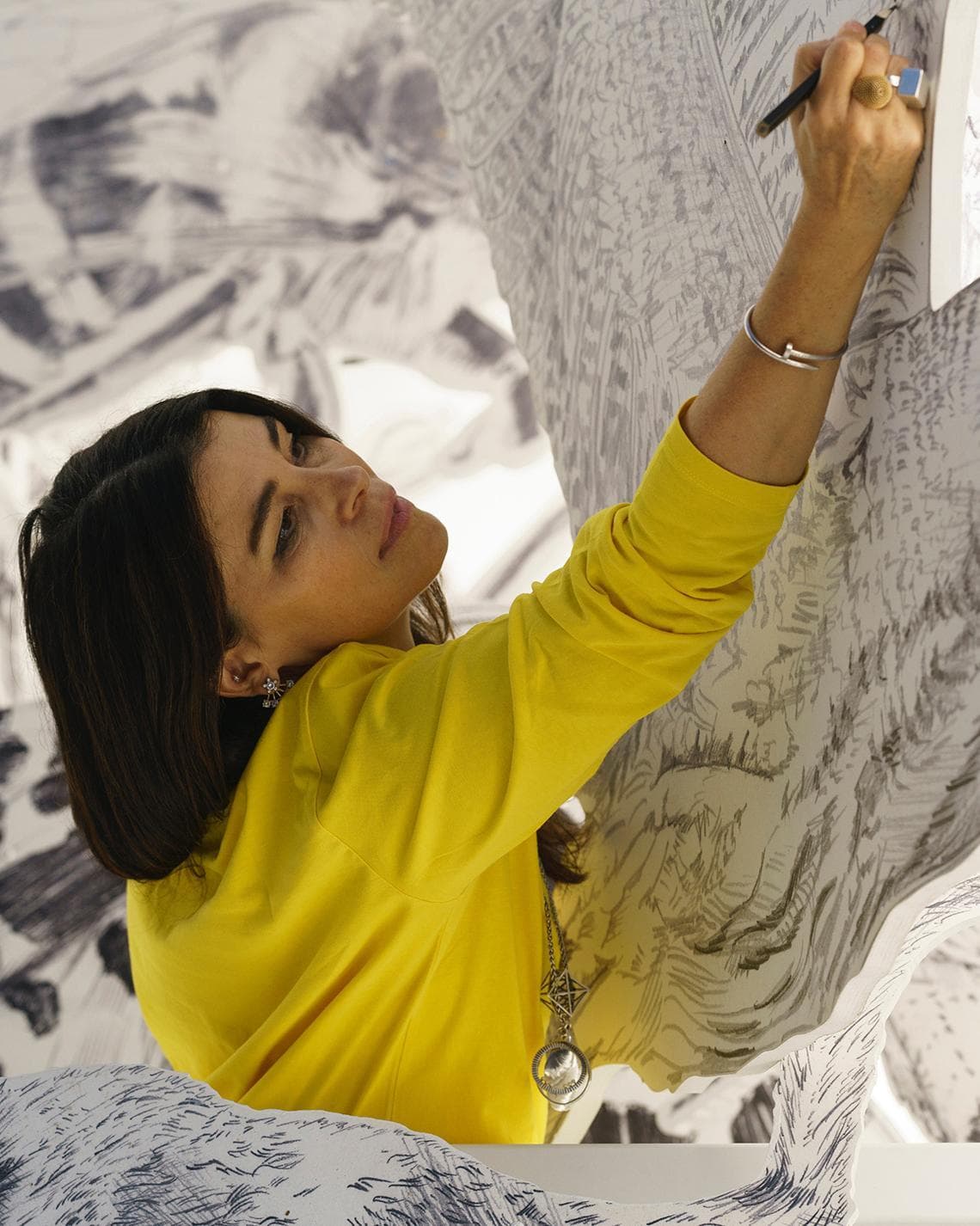
Devlin al lavoro su Come home again, scultura sulla biodiversità (foto Daniel Devlin - Susakpress)
An artist, set designer, musician and activist, Devlin has designed stages for the most famous pop stars, from Beyoncé to Lady Gaga, as well as scenic sculptures for the theatre, Louis Vuitton fashion shows, the Olympics and the Super Bowl, transforming set design into a language capable of transcending genres and disciplines. Today she is also the artistic director of Homo Faber, the exhibition of fine craftsmanship that ran until 30 September in Venice.
‘She embodies a multitude of identities and skills,’ the curator added. On display are over two hundred items: sketchbooks, collages, photographs and models, ranging from early cardboard prototypes to the most elaborate scale models. ‘If we include the sketches, there are many more. Some are presented in motion because a large part of her projects is based on cubes and rotating structures.’ Produced in close collaboration with the artist, the retrospective reflects her concept of participation: ‘For her, the public is not merely an audience, but a temporary community. Every visitor shares a collective experience: even those who come alone discover that their perception is shaped by the presence of others.’ The exhibition opens with a reconstruction of her studio, not merely a creative workshop but, as Thom emphasises, ‘an intimate space. ‘It was important to recreate it because this is, first and foremost, a solo exhibition.’ Visitors are greeted by Devlin’s voice-over, which describes a deeply analogue working method: ‘Even when she conceives highly complex immersive environments, she always begins with a drawing on paper, with cut-outs and hand-built models.’
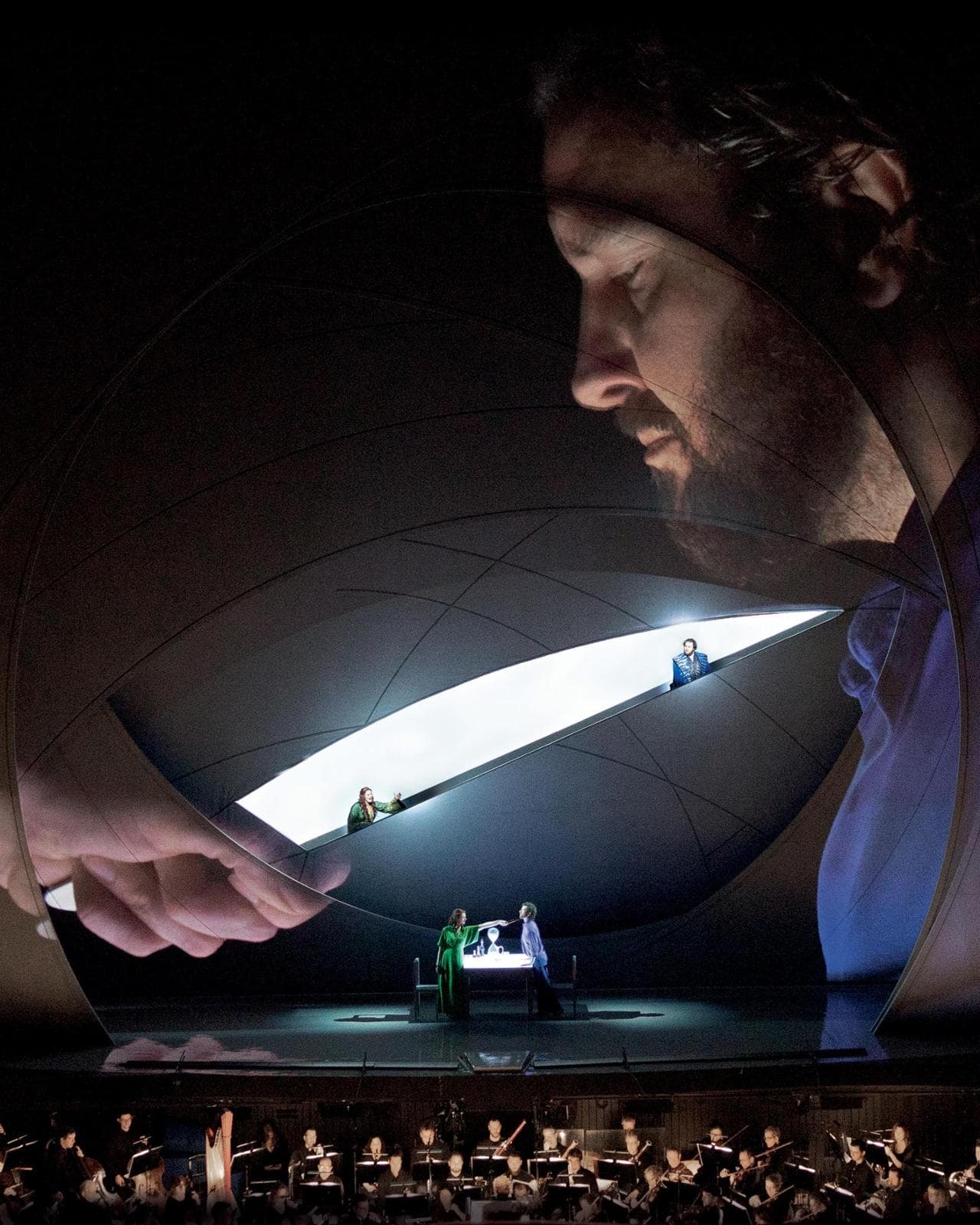
La scenografia per l’opera Tristano e Isotta (foto Es Devlin)
This is followed by *Come home again*, a ‘choral sculpture’, as the artist has described it, which highlights the loss of biodiversity, featuring silhouettes of two hundred animal and plant species in London that are endangered. The exhibition culminates with *Infinite library*: ‘An imposing rotating bookcase that occupies almost half the gallery. Visitors can browse through the books chosen by Devlin – volumes that have influenced his career. The installation builds on the research begun with *Library of Light*, presented in 2025 at the Pinacoteca di Brera, an architecture of knowledge conceived as a space for participation’. Mirrors, labyrinths and kinetic cubes recur in his imagery: ‘He enchants the public by concealing and revealing. Rather than reinventing a visual language each time, he refines, develops and adapts a repertoire of essential forms over time’. It is this continuity that makes his style instantly recognisable: ‘Even when he collaborates with a world-famous star,’ the curator concluded, ‘his presence always comes to the fore. He has made set design a visible discipline, transcending its boundaries. He has redefined the role of the set designer, broadening its possibilities and responsibilities’