
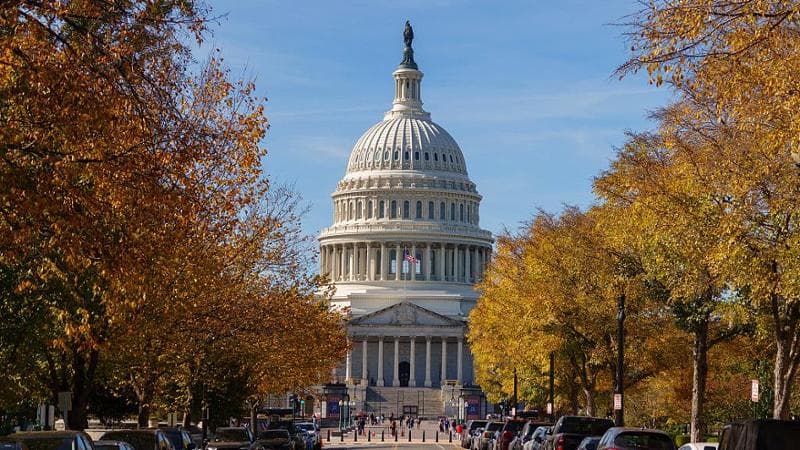
History is repeating itself, but with the roles reversed. In 2024, Kamala Harris and the Democrats lost the White House with inflation and the cost of living at the forefront of voters’ concerns. Two years later, Donald Trump and the Republicans have lost control of Congress for the very same reasons: inflation and the cost of living. Much of the discontent has remained unchanged. The result will force Trump to face the final two years of his term with both Houses – the House of Representatives and the Senate – under Democratic control.
For the equity markets, a presidency that is now politically weakened is not necessarily bad news. Historically, stock markets have performed well under a divided government. Furthermore, the prospect of a bipartisan budget deal could generate positive fiscal momentum, through a compromise involving increased military spending and measures to prevent a drastic cut in social and healthcare benefits – which would risk gradually leaving millions of Americans without health cover. This scenario is similar to that of the Bipartisan Budget Act of 2019.
This is less positive news for the bond market, as political conflict and fiscal discipline rarely go hand in hand, and neither side has any political interest in supporting fiscal austerity measures. On the contrary, both have an interest in pursuing their respective spending priorities. Consequently, high deficits and substantial Treasury issuance continue to pose a significant risk, particularly for longer maturities.
The dollar also appears vulnerable, given the wide fiscal imbalances, the reduced credibility of economic policies and uncertainty over the Fed’s future direction.
As regards sectoral implications, companies most exposed to the domestic market and most sensitive to changes in taxation are those likely to be hardest hit by the new scenario. A Democratic-majority Congress could put a rise in corporate taxes back on the political agenda. Companies that generate the majority of their profits in the domestic market, have limited exposure to foreign revenues and benefit from few structural tax breaks are the most vulnerable. This applies, in particular, to US banks, retailers operating in the US market, companies in the managed healthcare sector and telecoms operators.
For data centres, a scenario characterised by a Democratic-majority Congress and a politically weakened Trump presents implications that are more nuanced than overtly negative. Opposition to the construction of new data centres is now a reality, but both Democrats and Republicans have an interest in preserving the economic growth and tax revenue generated by this sector.
Conversely, infrastructure for electricity grids, electrification and industrial investment in the United States could once again benefit from greater political support. The infrastructure sector is particularly attractive because it represents common ground between the two sides: the Democrats support the energy transition and investment in electricity grids, whilst the Republicans continue to promote domestic manufacturing, energy production and reshoring.
*Member of the Carmignac Investment Committee