
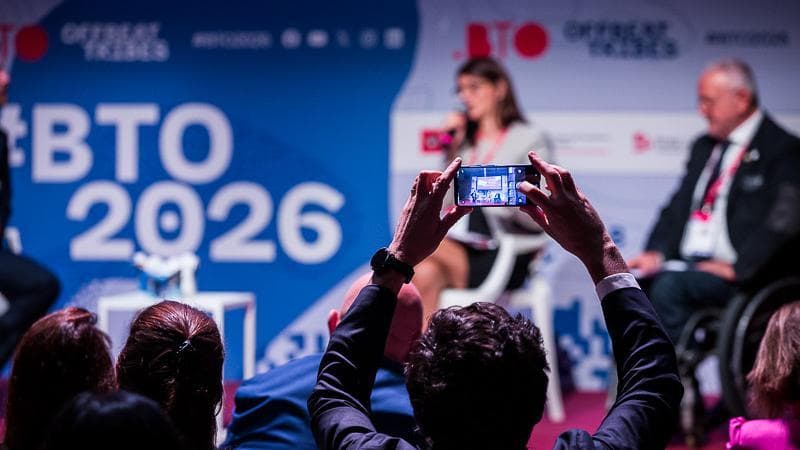
In book launches, conferences and debates, the main focus is increasingly on Artificial Intelligence, which, ironically, is already being referred to in America as “Almost Intelligent”. AI was bound to be the central theme of one of the most forward-looking international tourism events, the BTO (Be Travel Onlife, a brand of the Region of Tuscany and the Florence Chamber of Commerce), which took place at the Stazione Leopolda (Matteo Renzi's annual convention in Florence) on 10 and 11 November.
The two-day event covered topics such as Destinations, Digital Strategy and Innovation, Food and Wine Tourism, and Hospitality, but the watchword of this 18th edition was Offbeat Tribes and the role of AI in research, promotion, sales, and the relationship between guest and host. What are Offbeat Tribes? They are the new ‘Tribes of Travellers’ – tourists who break the mould (offbeat), united by a desire to be unique and, at the same time, to belong to a community.
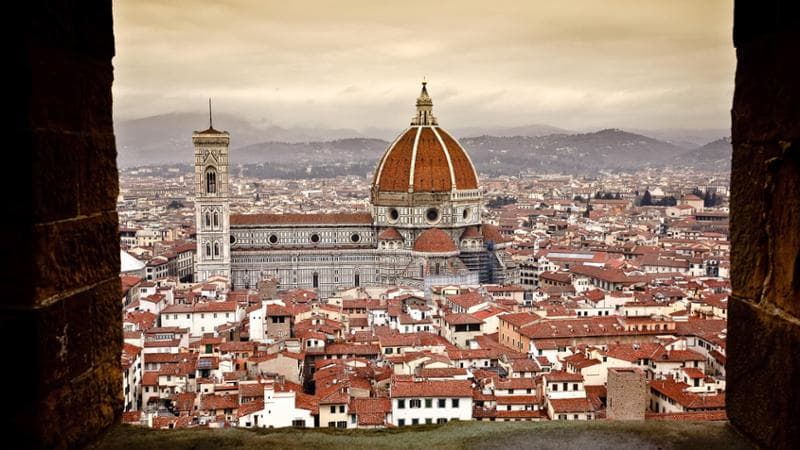
We hope Friedrich Nietzsche will not mind if we borrow his most revolutionary concept, the Übermensch, the ‘Beyond-Man’, which is often – and erroneously – translated as ‘Superman’: BTO 2026 has heralded the birth of the ‘Beyond-Tourist’. And if, as the great German philosopher put it, ‘all the gods are dead’, we are at the end of traditional tourism and on the threshold of an entirely new world where technology is breaking down and rebuilding the concept of travel as we have always known it. And this acceleration in tourism must not be endured, but guided.
Supply and demand are undergoing a profound transformation in the search for itineraries and destinations, bookings and payments, all increasingly carried out in ‘AI Mode’. At this point, the question posed by BTO 2026 was: are travellers’ choices still free? To what extent does AI work in the interests of the tourist, and to what extent in those of the operators?
Artificial Intelligence has made a dramatic impact on hotel operations, reshaping internal workflows, pricing and business models; however, market surveys among hotel staff demonstrate that AI cannot replace human interaction in all areas, revealing that 59 per cent of staff believe that reception and check-in should continue to be handled by people.
A significant portion of BTO 2026 was dedicated to “Women’s Travel”, which has become an increasingly important segment of the tourism sector. Another key theme was the accessibility of accommodation facilities, which should be treated not as a regulatory obligation but as a strategic market lever. This is a market potentially worth €27bn, although operators are, unfortunately, only managing to capture a small portion of it; here, AI could be of great help in providing support platforms for guests with disabilities.
Above, we have highlighted a hotel in Florence (the city that hosted the BTO) which has distinguished itself in recent years for its focus on accessibility and catering for those with food intolerances: this is the Fh55 Grand Hotel Mediterraneo, a 4-star hotel in a very central location on the Lungarno. Many rooms (double rooms start at €110 per night) are equipped for guests with mobility impairments, with tactile aids for the visually impaired. The on-site restaurant is part of the Aic network and serves gluten-free dishes.