
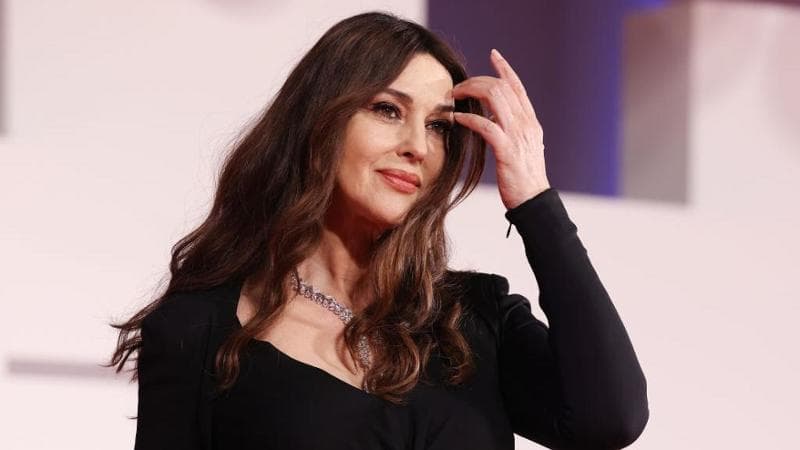
ROME – From winning the Pardo for Best Performance at Locarno to attending an Ariana Grande concert in London, Monica Bellucci can move from one stage to another in the space of just a few days without ever ceasing to think of herself, first and foremost, as a spectator. After almost 40 years spent between Città di Castello, Paris, Rome, Hollywood and film sets around the world, she retains her itinerant spirit and her appetite for the unfamiliar. That is also why she said yes to Giovanni Tortorici’s Ketticè, released by PiperFilm, in which she plays a mother from Palermo’s fading high society, an unhappy woman unable to communicate with her son.
“She will never have the courage to change her life,” Bellucci says. Bellucci herself, by contrast, has changed hers many times.
What does winning the Pardo for Best Performance mean to you?
“I received it with surprise, humility and emotion. It wasn’t a large role, and I was working alongside wonderful young actors. With Diciannove, Tortorici had already shown how good he is at working with young people. And Locarno is a celebration of artistic freedom, a festival for audiences. I was a member of the audience before I ever did this job: as a child, I used to watch three films a day.”
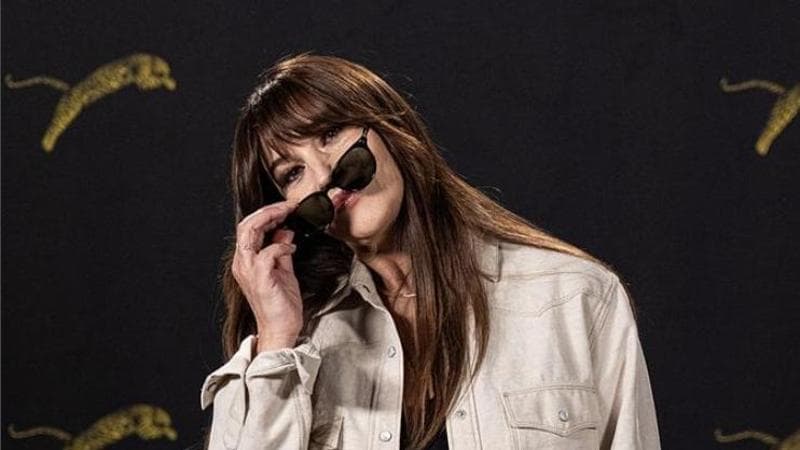
Who is this mother?
“At first, we see her as a high-society woman. Then we begin to sense the unhappiness and frustration behind the veneer of respectability in a family in decline. She is full of bitterness and a kind of rage that has nowhere to go. She appears holding a knife, but she doesn’t frighten anyone because she will never have the courage to change anything. She screams to compensate for that sense of powerlessness.
“She loves her son, but theirs is a relationship built on tension and mutual humiliation, at times almost comical. Giovanni portrays a society in which adults are no longer able to communicate with young people.”
You have moved through very different worlds and social classes. Have you met women like her?
“In my work, people are the most interesting resource of all. This woman is very different from the kind of mother I am, but I can understand someone who becomes trapped in a social role and in a frustration from which she cannot escape.”
You have often chosen very daring roles. Looking back, are there any you would no longer accept today?
“Having children makes you question many things, and it also changes the way you choose your roles. A film like Irréversible would be complicated today — and not just because I’m no longer the right age for that role. When you’re young, you have a different kind of freedom.”
(Released in 2002, Gaspar Noé’s Irréversible contains one of the most extreme and controversial depictions of sexual violence in contemporary cinema, including a harrowing, extended rape scene featuring Bellucci).
“I still make powerful films — Histoires de la nuit, which I made with Léa Mysius and which was presented at Cannes, is a violent, highly charged thriller — but I’m a little more careful now.”
Did you feel protected while filming those harrowing scenes?
“Yes. We rehearsed everything: how I moved, how I turned, what I did. There was no risk of my getting hurt, so I felt safe, despite the adrenaline of filming those scenes.
“I was wearing a very pretty little dress, and we had several of them made because we thought they would be destroyed. In the end I said, ‘Put one aside for me. It’s so beautiful, I’ll wear it afterwards.’ When the film was finished, they gave it to me. I have never been able to wear it. Never.”
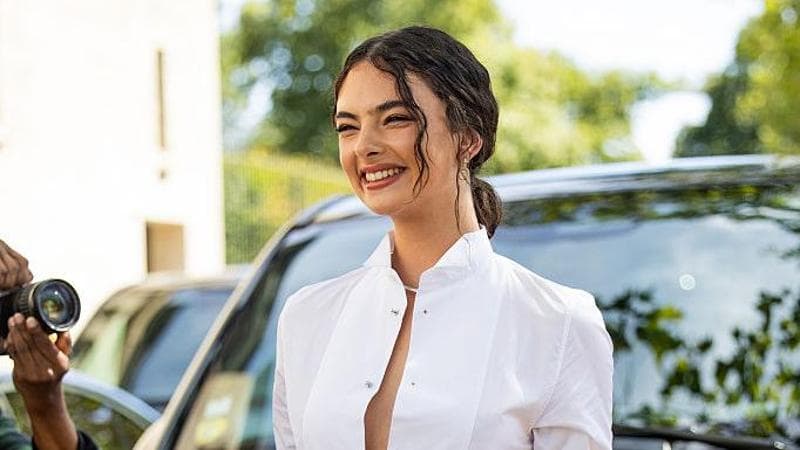
If Deva were offered a role as extreme as yours in Irréversible today, what would you tell her?
“I would let her decide for herself. She is almost 22 and makes her own choices. Of course we talk and have a wonderful exchange, but she has a very definite personality, her own way of expressing herself and making artistic choices. Then she follows her own path. And that is what I like.”
Who were you at 16, the age of the teenagers in Ketticè?
“I was a high-school student who was already working from time to time. At 16, I would disappear for two weeks at a time: Florence, Milan, Paris. Then I would go back to school. My teachers weren’t exactly pleased, but they let me come back.
“I liked that contrast between leaving the provinces to experience something completely different and then returning home. I wasn’t ready to leave for good yet.”
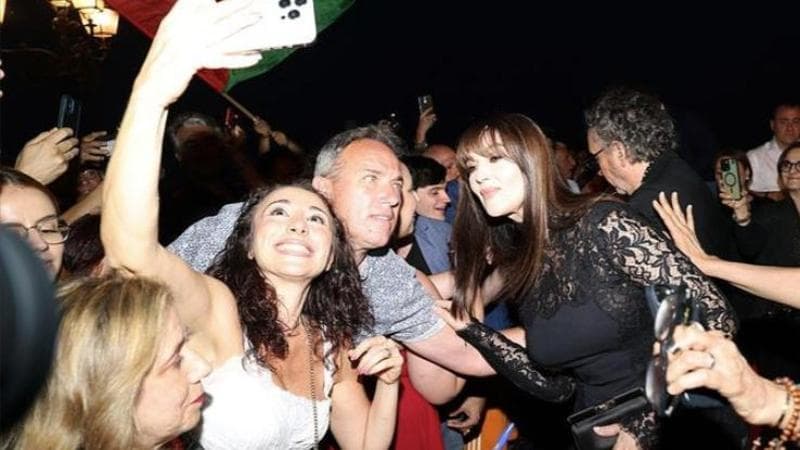
Do you still feel a connection to Città di Castello?
“Very much so. I go back to Umbria from Paris and sometimes run into people I went to school with. I’m also extremely attached to Rome and to my friends there. I have always remained deeply connected to Italy, and so have my daughters.”
The woman in Ketticè cannot find the courage to change her life. You have changed yours repeatedly. Where does that courage come from?
“From curiosity, and from being fortunate enough to have had opportunities, because in order to make choices you need to have the opportunity to choose. I have always wanted to travel, to move to different cities, to work with directors from different cultures, while remaining rooted in Italy. I only have an Italian passport.”
You mentioned opportunities. The Apartment turns 30. Was that the film that changed the course of your life?
“There are films that become turning points. The Apartment set off a chain reaction: it won a British Academy Award, and then came Malèna, Irréversible, The Matrix and The Passion of the Christ. Professionally, one link led to another.
“On a personal level, of course, the most important thing has been my daughters. But that film was a crucial beginning.”
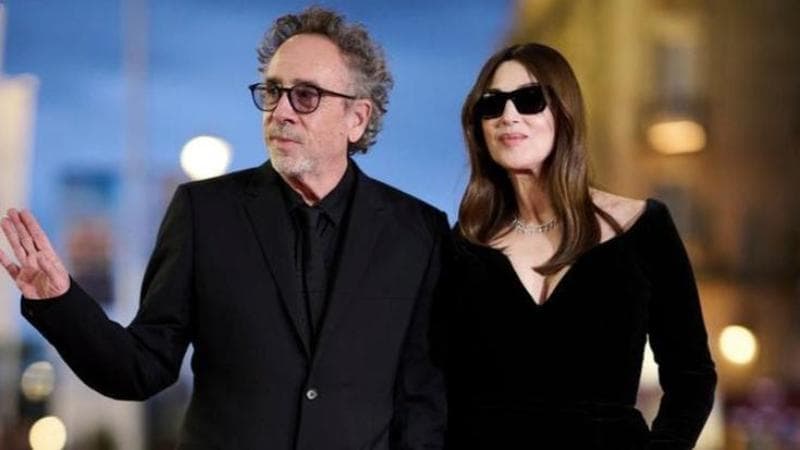
You have had very public relationships. You and Tim Burton even managed to separate without being dragged through the media circus. How did you do it?
“In friendship, as in love, there are paths that meet and remain together for a very long time, perhaps for ever. Others travel together for part of the way and then each person continues along their own path. That’s life.
“What matters is coming away enriched by the time you have spent together, because through relationships we always learn something about ourselves and about other people.”
Compared with when you started out, have women gained greater freedom to speak out and make their own choices?
“Of course. Today we talk about these things, and there is freedom to speak about what happens. Women are gaining important ground, even though true social equality is still a long way off.”
And yet this year there was only one female director in competition at Venice. What do you make of that absence?
“I work with so many women now, wonderful writers and directors. I have just finished Maria Sole Tognazzi’s film, and I have worked with Rebecca Miller. Films have to be seen; we can’t judge them before we have seen them. But of course, a lack of women is saddening.”
Looking back, do you see a common thread running through the women you have played?
“When I look back at Malèna, Irréversible or The Passion of the Christ, I think I have played women whose femininity has been marked by violence. Fortunately, that is something I have never experienced in my own life.”
And yet that violence continues to affect the lives of so many women. When you look at femicide today, what have we still failed to understand?
“Perhaps we need more civic education. Alongside mathematics and history, we should teach empathy, both at home and at school. A world without empathy is a frightening place.
“Technology is advancing at an incredible pace, while in human terms we are still living in the Stone Age. It is that gap, combined with a lack of social education, that allows these things to happen”.
The translation of this article was reviewed by a Language Service Provider