
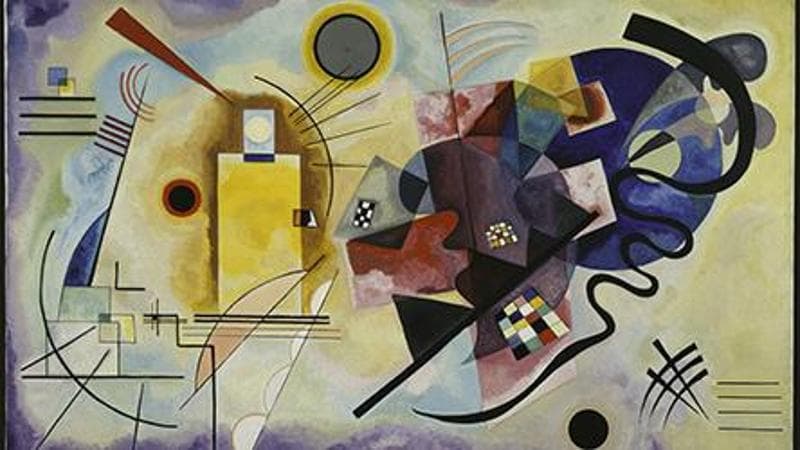
ROME – One of the greatest artists of the 20th century, a father of abstraction and a symbol of a Europe scarred by brutal conflicts, world wars and revolutions, but also alive with endless experimentation and adventures of the spirit. And beside him, another artist, rediscovered only in recent years despite never having disappeared from view, and indeed having continued to work throughout her life, long after their relationship ended.
We think we know a great deal about Wassily Kandinsky, the subject of the retrospective opened at Palazzo Bonaparte in Rome on 15 September (until 14 February 2027). We know almost nothing about the woman who shared both his art and his life for more than a decade during the crucial years of his artistic development: the German painter Gabriele Münter.
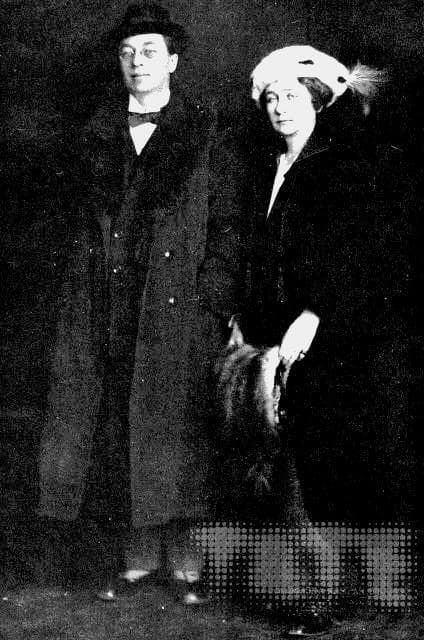
Now the Rome exhibition, produced by Arthemisia in collaboration with the Centre Pompidou in Paris, fills that gap. Through some 70 works, it not only traces the entire career of the genius behind the Blue Rider but also introduces Münter to the Italian public for the first time.
On the first floor of the palazzo, curator Angela Lampe is quick to point out the exceptional nature of the occasion. “This is a unique opportunity to see all the Kandinskys from the Pompidou, which is able to lend its entire collection of his works because it is closed for renovation. As for Gabriele, who was recently celebrated by the Guggenheim in New York, I hope this section devoted to her will be only a first step towards making her better known in Italy”.
It is a very promising first step. The palazzo where Napoleon’s mother once lived — and from whose covered balcony she would peer down at the carriages crossing Piazza Venezia — now also contains the paintings with which Kandinsky began his career.
Born into the Tsarist bourgeoisie, he had studied law. In 1896, at the age of 30, he abandoned everything, including Russia, and moved to Munich. He threw himself into painting and opened a small school, Phalanx. It was there, in 1902, that he met Gabriele, who, as a woman, was barred from the art academies.
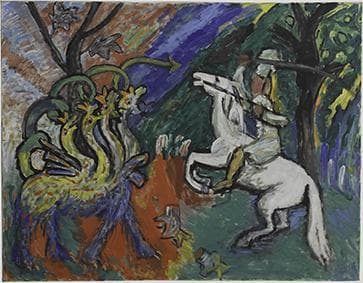
He was already experimenting with colour and composing landscapes, and his pupil was doing the same. Still very young, orphaned and comfortably off, she had already travelled extensively through the United States with her sister. Seen today, both her photographs and her paintings reveal an instinctive talent for composition, one she would refine during her relationship with Kandinsky.
He was still married to his first wife, but the two nevertheless began travelling together across Europe. They went to the Netherlands, Tunisia, Venice and Paris.
“Showing here the still-figurative paintings Kandinsky produced during these journeys allows us to understand how his palette changed”.
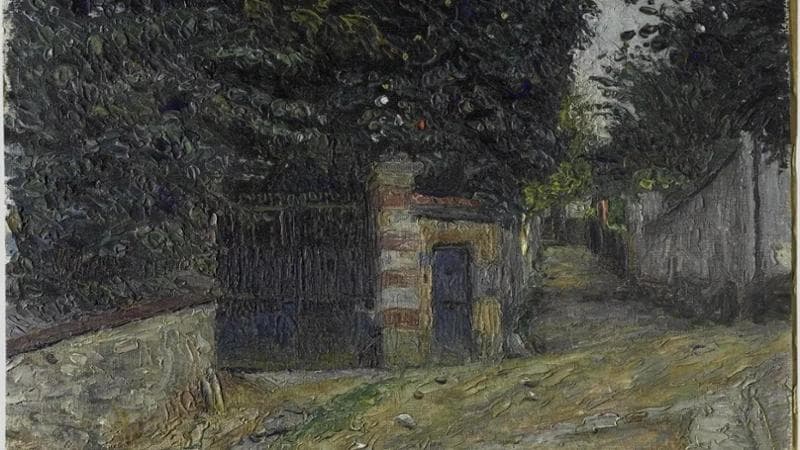
Gabriele and Kandinsky founded Der Blaue Reiter, the celebrated Blue Rider group. She bought a house in Murnau, near Munich, where they spent their summers. And it was in Murnau, Lampe explains, during the summer of 1908, while working alongside Münter, Alexej von Jawlensky and Marianne von Werefkin, that Kandinsky changed course.
“That was the moment when his pictorial language became abstract, when Kandinsky began painting not so much, as is often said, to express “emotions”, but to elicit a particular response from the viewer.
“The very titles of his paintings express that intention. That is why, in the final rooms on the first floor, we wanted to show both the transitional canvases from 1911 to 1913, in which figurative elements can still be recognised, and Gelb-Rot-Blau (Yellow-Red-Blue, 1925), one of the emblematic works of his Bauhaus period”.
When the First World War broke out, Kandinsky returned to Russia, where he remained throughout the years of the Revolution. When he returned to Germany in 1921, he did so with another love: a new Russian wife, Nina, much younger than him, who would remain at his side until his death in 1944 and whose will would eventually leave his artistic legacy to the French state.
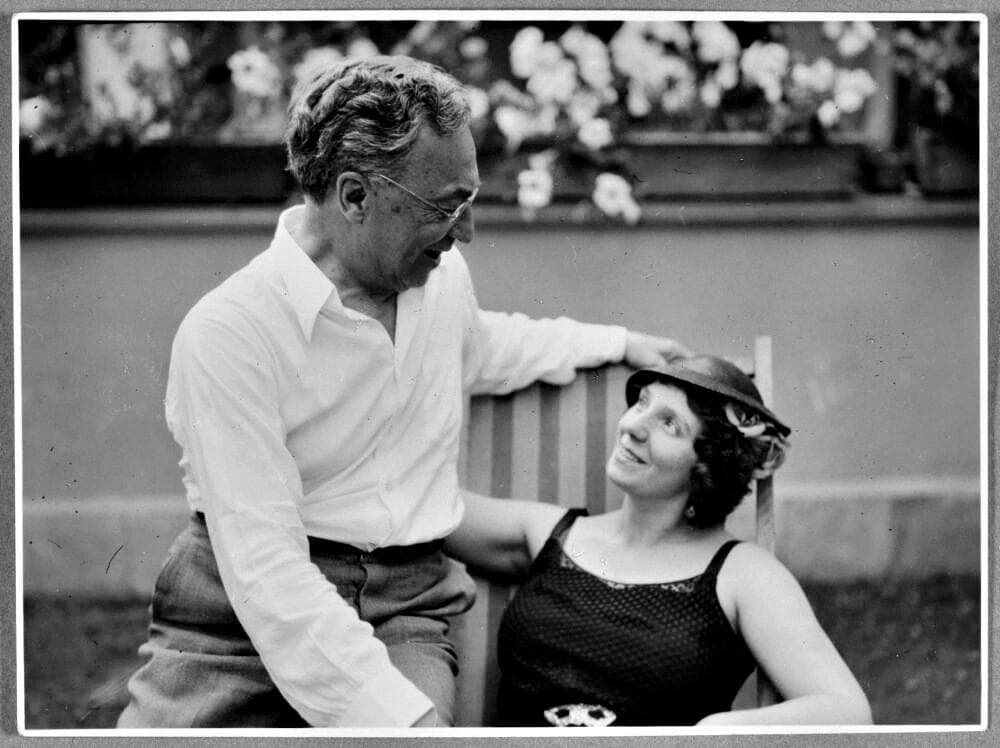
And Gabriele?
She had painted alongside him, searching for — and finding, as the five canvases in the exhibition demonstrate — a style of her own. She never embraced abstraction, continuing instead to paint objects, people and landscapes with complete, uncompromising freedom.
“She waited for him for a long time,” Lampe says, “and she was devastated when she learnt that he had married Nina, his second wife”.
But Münter continued to work and, during the Nazi years, hid everything that remained from her time with the Blue Rider in her house in Murnau.
“She saved letters and documents of incalculable historical value,” Lampe explains.
She later had another relationship, with the art historian Johannes Eichner, who studied both her early work and Kandinsky’s. When she died, she wanted her house and her works to become a heritage for everyone.
Nina’s story ended very differently. In 1980, she was murdered during a robbery at her chalet in Gstaad. Her killer was never found. The murderer wanted her jewellery but left the Kandinskys hanging on the walls.
In the will discovered after her death, she bequeathed all the works by her husband that she owned to the Musée National d’Art Moderne, now the Centre Pompidou.
“A generous gesture,” Lampe says, “and a stroke of good fortune for France”.
The translation of this article was reviewed by a Language Service Provider