
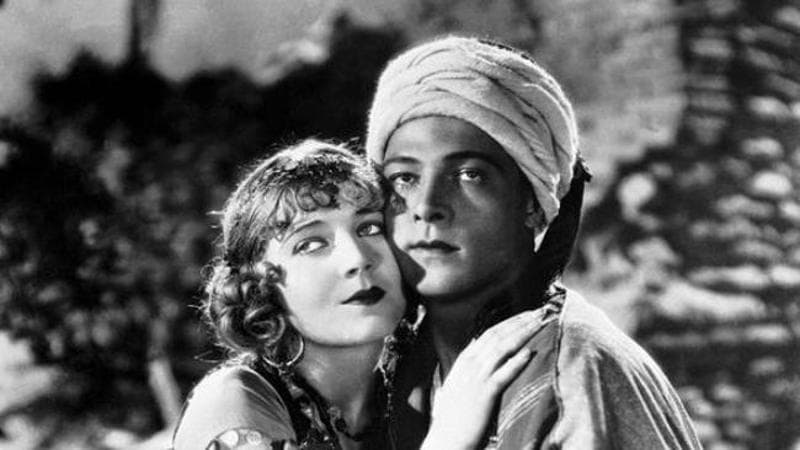
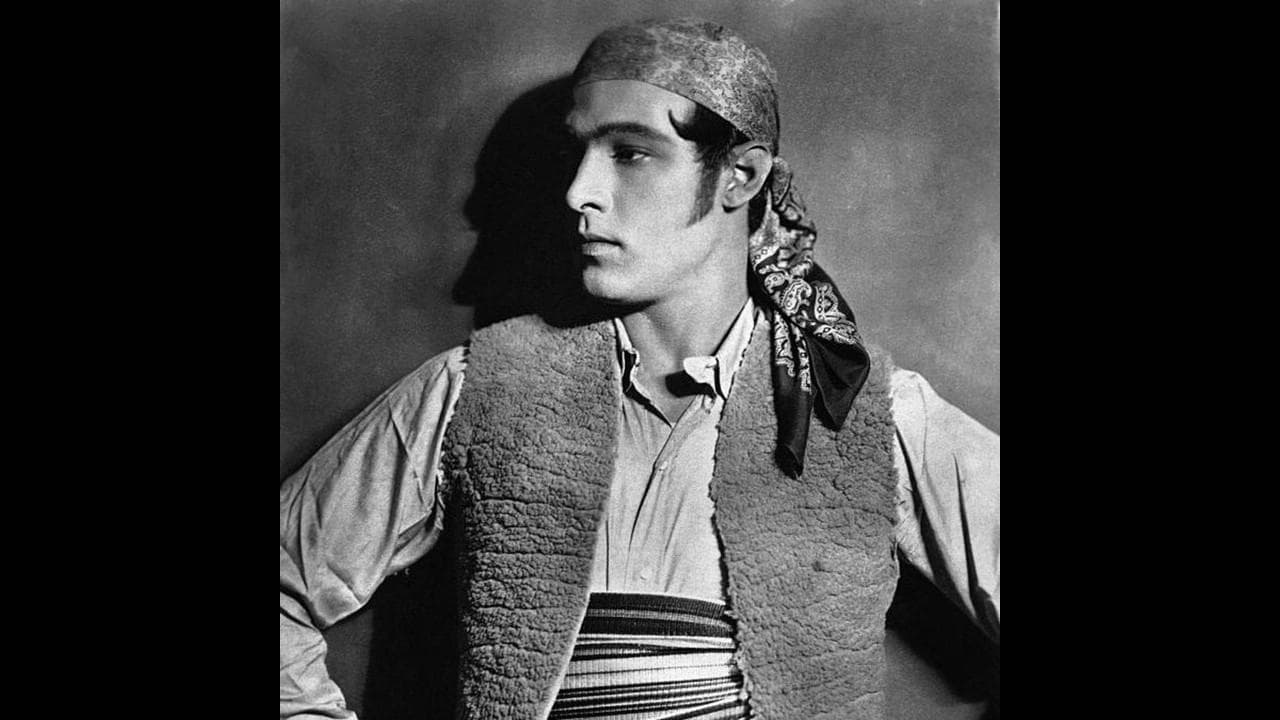
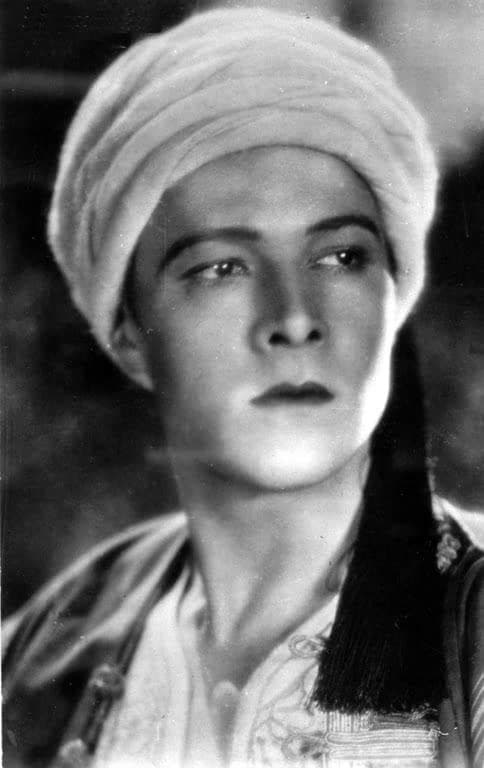
ROME – Perhaps the Latin lover is proof that not all stereotypes are rooted in reality. And perhaps the man who inspired the term, Rodolfo Valentino, who died on August 23 exactly a century ago, is proof of that too.
The Latin lover is supposed to be a passionate man, drenched in cologne, impeccably dressed and unfailingly elegant in his manners. He is romantic, ardent and relentless in his pursuit of the woman he wants to seduce, combining gallantry with a polite but inexorable persistence, all because he is in love.
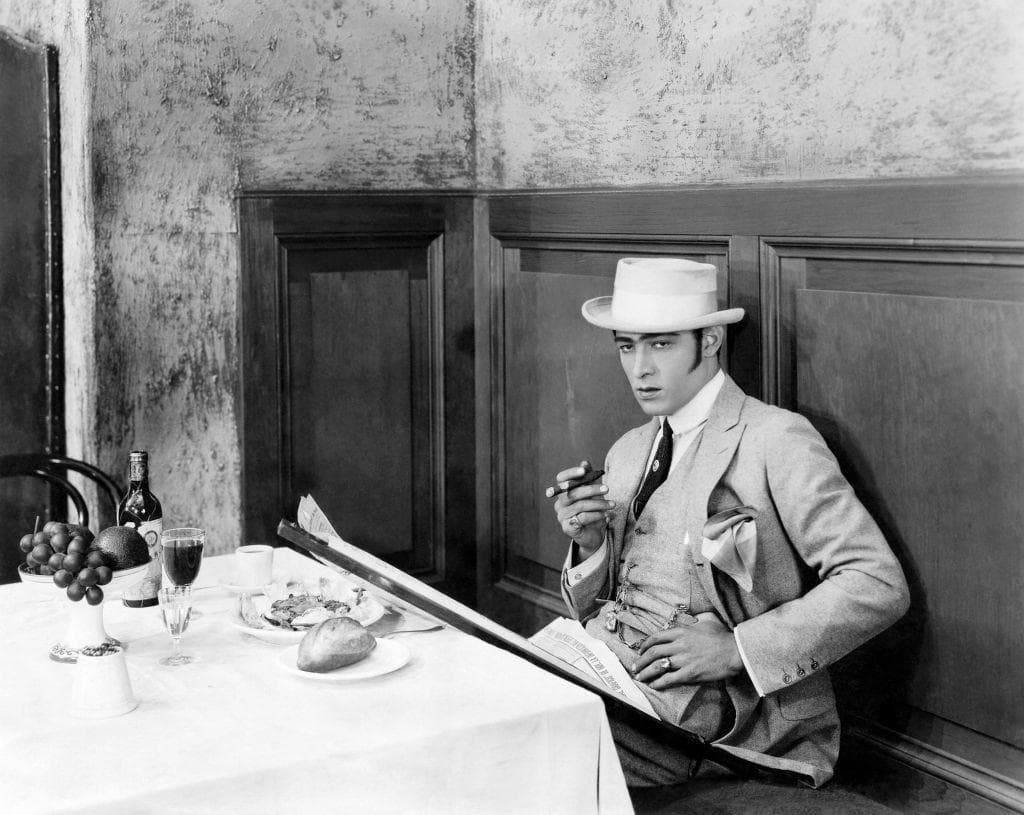
Rodolfo Valentino was the original Latin lover. In his films, in his eyes, in the silent-film scripts written especially for him, he embodied a type of man who may well have existed to some extent, but whom Hollywood's star-making machinery transformed into a myth.
Valentino was Italian, and that alone seemed enough to drive women wild. It would probably have worked just as well had he been Spanish, Greek or from anywhere else around the Mediterranean, that region supposedly populated by men who appeared to devote their entire existence to romantic passion and to keeping count of how often they could make love.
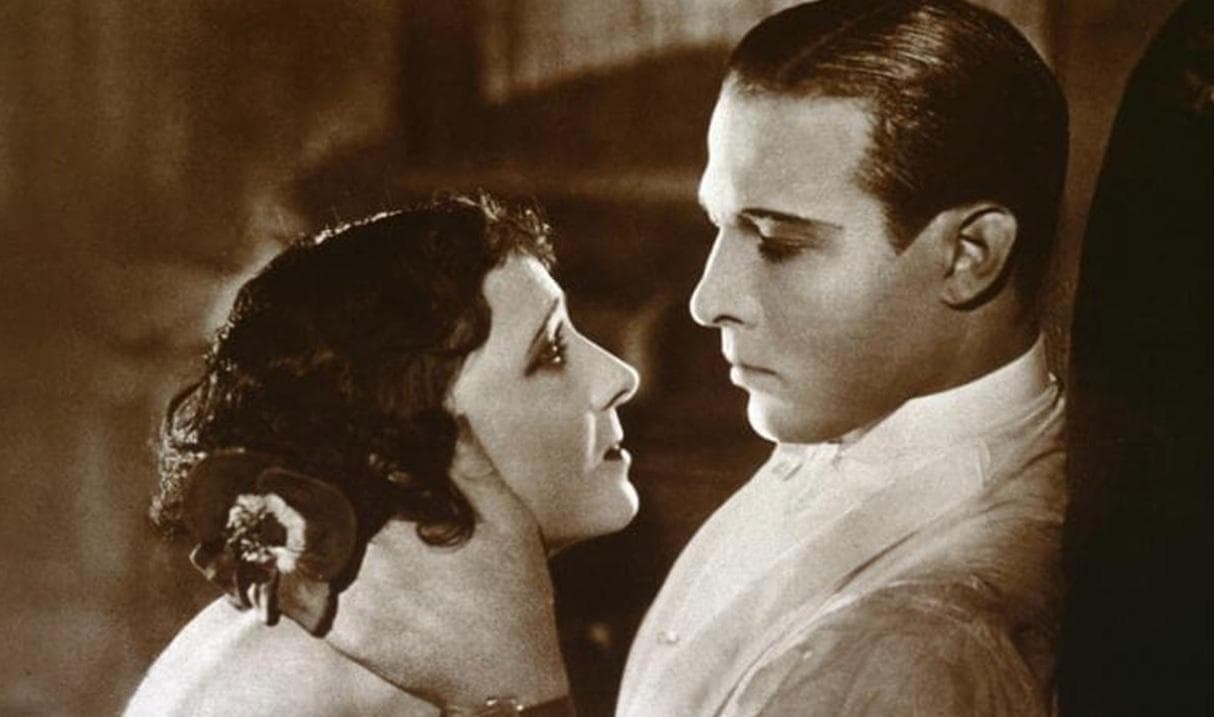
In Valentino's particular case, the Latin lover, a term coined for him, had another defining characteristic, at least as far as Americans were concerned, or rather the American women who flocked to see his films. He was a foreigner, an exotic figure. He was like us, but not quite like us, because he supposedly carried in his very genes the distinctive qualities of his homeland: a capacity for desire that Americans, according to the stereotype, could scarcely dream of possessing.
And indeed, his success came from playing characters of different nationalities, with the kind of broad-brush generalisation that perhaps only Americans could conceive of. His most famous films cast him as a sheikh or a bullfighter. But whoever he played, whether Italian, Spanish or Arab, invariably passionate and irresistible, it was also his manner that became legendary: the hairstyle everyone copied, the smouldering gaze, the aura of myth that followed him like a shadow to every corner of America. He died of peritonitis at the age of 31, but by then his legend had become so universal that nobody seemed willing to accept such an ordinary death. Rumours circulated that he had been poisoned by romantic rivals or by women whose love he had failed, or ceased, to return.

And so female audiences dreamed, swept away by his charm and powers of seduction. This was made all the more difficult by the fact that his films were silent. The Latin lover's signature magic, the irresistible whispered words, the extravagant compliments, was necessarily absent or reduced to written intertitles. Yet the power of the label, of the legendary qualities it suggested, overcame every conceivable obstacle.
The term endured, encompassing generations of Latin men across different continents and finding its way into literature, everyday life, everywhere. Eventually, people came to believe, or encouraged others to believe, or simply assumed, that the stereotype was real. That it had ancient roots, underlying causes, distinctive lifestyles, diets, cultural traditions, even a particular genetic makeup.
An elaborate stereotype built on absolutely nothing. And, in a sense, something of a masterpiece precisely because it was invented, because no such creature actually exists in nature.
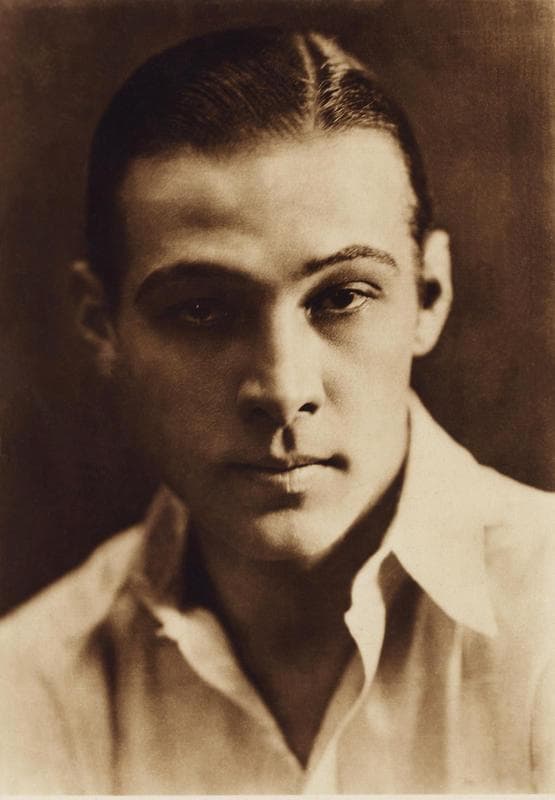
Over the years, other men have been described as Latin lovers. Marcello Mastroianni, for instance, who used to laugh at the label and make fun of those who applied it to him. Or Antonio Banderas.
Cinema has always been complicit in creating these labels, however imprecise they may be. Such labels identified a characteristic that attracted audiences, particularly women, and screenplays were consequently written to turn certain actors into romantic seducers simply because someone had decided that was what they should be.
That, after all, was why Rodolfo Valentino was given the label in the first place. It was one of the ways film producers had devised to make money.
The problem, and this is where the artificial nature of the whole thing becomes apparent, is that it is impossible to establish which came first: the romantic seducer or the roles written for romantic seducers. Did women start fainting first, prompting the industry to exploit the phenomenon by repeatedly casting Valentino in the same kind of role? There were certainly plenty of women fainting at his tomb, overcome by grief at his death. Or had there been some small initial indication of his appeal, which producers and screenwriters then seized upon, nurturing and inflating it until it became a full-blown phenomenon?
In any case, the Latin lover should not be confused with the playboy, another masculine archetype that enjoyed considerable commercial and media success.
The two may overlap, but they are fundamentally different. The playboy's goal was one conquest after another. He was ruthless and made his escape as quickly as possible.
The Latin lover was another creature altogether. He made his passion and desire immediately apparent. His irresistible appeal seemed almost involuntary, the product of the supposed cultural characteristics of his homeland, and of the mythology created, once again and as always, by cinema.

The Italian, the Spaniard, the hot blood, the talent for lovemaking. And then there was the great distinction between the Latin lover and the playboy, whether genuine or entirely fictional: the Latin lover's ability to fall in love almost instantaneously.
His passion was insistent, irresistible and, indeed, suffocating. But because that suffocating intensity was attributed to love, it was excused, even celebrated as a virtue.
The Latin lover did not sneak away the following morning by climbing down from a balcony. Instead, he could keep a woman dreaming for months, caught up in a love affair of extraordinary passion, extraordinary virility and extraordinary exhaustion.
Now, as you can probably imagine, all this has long since moved beyond questions of good and bad. If we were to encounter such a man today, and there is no guarantee that we won't, unexpectedly and against the prevailing tide, we would probably find him ridiculous. But that would be a tremendous mistake.
Because the Latin lover possessed a secret weapon, from Valentino onwards and through every generation that followed: his willingness to defy ridicule.
The Latin lover would not suddenly become ridiculous today. He was ridiculous from the very beginning. He was born ridiculous, with his stealthy movements, whispered endearments, sugary compliments and enveloping, predatory advances. He was capable of reciting a poem by Prévert with tears in his eyes. He could sit talking in a car until dawn, dreaming of escaping together to some unreachable island.
The Latin lover did not want simply to have sex. He wanted to fall in love, instantly, and live out a dream.
All this could seem ridiculous even in the days when such a man was still allowed to exist. And indeed it was ridiculous. The women he seduced laughed at him, mocked him. But he sailed through the ridicule, effortlessly, almost nonchalantly. He gritted his teeth and waited for the laughter to subside.
And eventually he was redeemed in their eyes, perhaps above all because of that very resilience. Because he possessed the shamelessness to say and do ridiculous things, to believe in them, to feel no embarrassment about them and, ultimately, to make them possible.
That was when he began to rise in their estimation. His image was transformed. The women who had laughed at him started having doubts. Gradually, they began asking themselves philosophical questions, making comparisons.
And eventually, well, who had ever recited a poem by Prévert to them with tears glistening in his eyes? Perhaps this ridiculous man deserved to be reassessed after all. And there you have it: the Latin lover's astonishing victory.
So, if there are still a few Latin lovers wandering around, just as a handful of animals belonging to endangered species still survive, which means they may be dying out but are not yet extinct, don't be too quick to dismiss them as ridiculous.
Because Latin lovers thrive on precisely that judgment. They draw nourishment from it, feed on its energy, recover their strength and rediscover a sense of purpose.
And they might just start multiplying again: passionate, romantic men from the countries of the Mediterranean.
We could find ourselves surrounded by them once more. Because ridicule, it turns out, has never been enough to drive the Latin lover to extinction.
The translation of this article was reviewed by a Language Service Provider