
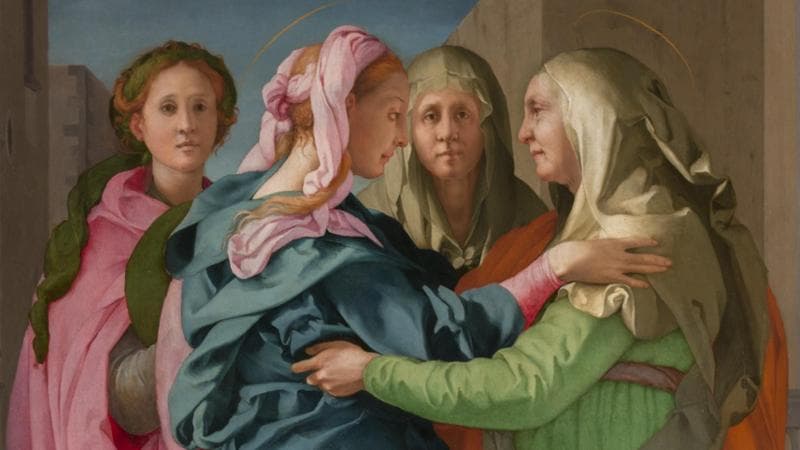
ROME – The best-known image of Pontormo, and the one that perhaps best captures his eccentric personality, is undoubtedly that of his house in Via della Colonna in Florence. Contemporary accounts describe a home on the first floor of a building with no doors and no direct access from the street. Whenever Pontormo had no desire to see anyone, he could simply use a pulley to haul up the ladder that provided the only link between the outside world and his room, cutting himself off completely.
A perfect misanthrope
This image of Pontormo as the perfect misanthrope owes much to Giorgio Vasari, the art historian who, in the second half of the 16th century, published a book that for centuries has remained an essential reference for anyone wanting to understand what Italian artists were like, from Giotto to Michelangelo.
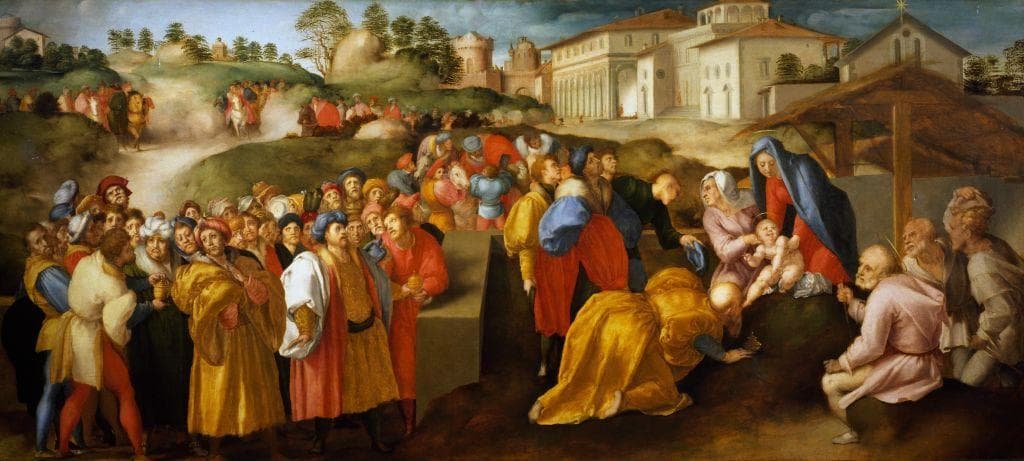
And it is probably with the great Buonarroti that we should begin if we want to understand Pontormo: both the man and painter he really was, and the stories portraying him as whimsical, odd and antisocial.
When the very young orphan Jacopo Carucci da Pontormo arrived in Florence around 1510, it was possible to encounter three of the great geniuses of the age in the city’s streets: Raphael, Leonardo and Michelangelo. These three men were not simply the most dazzling artists of their day. They also embodied the spirit of the Renaissance, the culmination of a long journey that had restored civilisation to the heights reached by the ancients — heights thought to have been lost with the barbarian invasions and the fall of Rome.
In the masters’ style
The idea was therefore beginning to take hold that painting could do little more than imitate these great figures: that artists should paint in the manner of the masters, while never quite equalling them, because surpassing them was simply impossible.
Mannerism was born. Pontormo became one of its leading exponents, alongside Rosso Fiorentino, Parmigianino, Bronzino, Sebastiano del Piombo and many others.
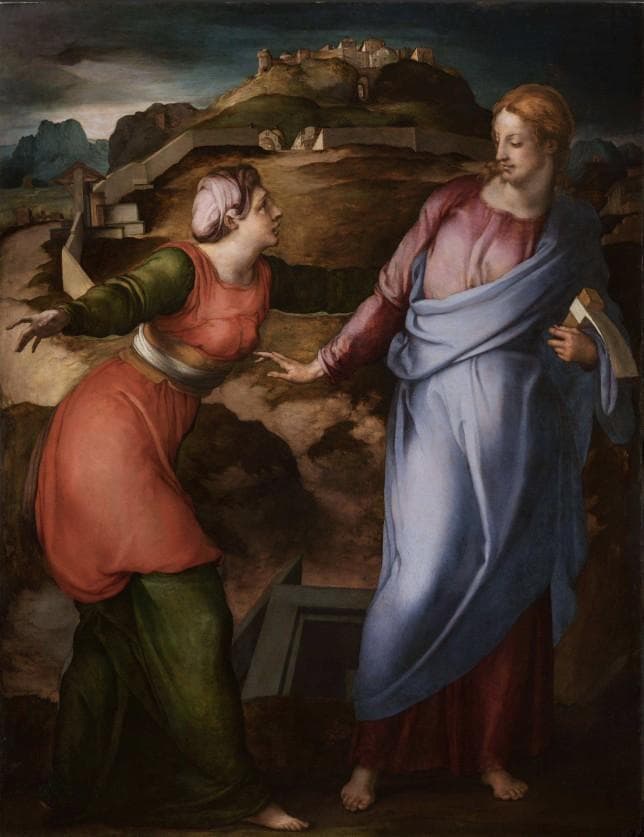
In some respects, even Michelangelo himself can be considered a Mannerist. To his contemporaries, he represented the universal artist, the very ideal of what an artist should be, rather than merely an artist, however magnificent.
In a sense, the first person to imitate Michelangelo was Michelangelo himself. He was also the first to work assiduously at ensuring that the world celebrated his myth, supplying his contemporaries with all manner of biographical material as well as sublime works of art. The artist was known for more than a few eccentricities: his scruffy clothes, less than impeccable personal hygiene, fits of temper and much else besides.
A capricious personality
The idea consequently took hold that a truly distinguished painter ought to display vices and peculiarities along with a capricious personality. Many became convinced that this was the way to be seen as a genius and achieve fame.
That does not mean Pontormo belonged in this category simply because he pulled up his ladder whenever he did not want to be disturbed. Yet he and his circle were also known as the “Florentine eccentrics”, a name that highlighted their distinctive way of breaking with convention.
Another famous testament to Pontormo’s peculiar character is the so-called Libro mio. We could more simply call it a diary: a series of notes entirely devoid of literary ambition, unlike the even more famous autobiography written by Benvenuto Cellini.
Pontormo had no interest in lengthy narratives. He confined himself to what he considered strictly necessary: what he ate, his bowel movements, what he painted and, above all, the state of his health.
The journal — or at least what survives of it — begins with this observation: “I have some ailment, either of the stomach or the head.” It could almost be the opening of Dostoevsky’s Notes from Underground, whose protagonist is keen to introduce himself as a sick man.
Except that Pontormo immediately worries about how to “remedy it by eating little and fasting, because I know that if I do not, I regret it”, revealing that what really concerned him was simply staying healthy in an age when illness and death were part of everyday life.
The manuscript
The manuscript of this diary, covering the final years of Pontormo’s life, is on display in the first major monographic exhibition devoted to him by the Scuderie del Quirinale, in partnership with the Uffizi Galleries, opening October 9.
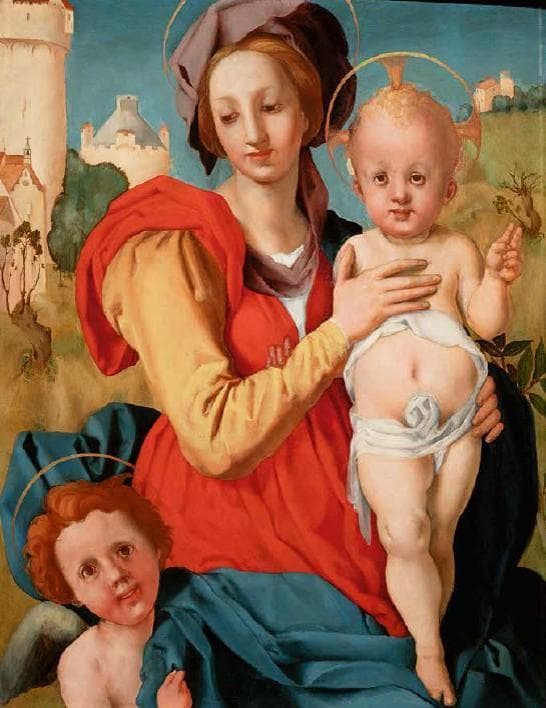
In an inspired decision by curator Cristina Acidini, the Libro mio will be displayed alongside one of the finest versions of the Madonna of the Book — or, more precisely, beneath the painting, which remained in Pontormo’s doorless house until after his death and was seen by numerous copyists.
It is an enchanting work that reveals just how closely Pontormo studied Michelangelo, pushing the twisting of bodies to an extreme and giving his drapery an almost diaphanous purity, as though it were floating over the figures like clouds made entirely of colour.
In this dialogue with Buonarroti from afar, Pontormo seems to anticipate the modernity of a genius who might appear to be his complete opposite, yet was as eccentric and as much talked about as he was: Caravaggio.
It is no coincidence that, like Caravaggio, Pontormo would later be relegated to the ranks of lesser artists, almost forgotten for centuries before being rediscovered in more recent times. His influence has since proved remarkably wide-ranging, stretching from the English Pre-Raphaelites to Bill Viola and including Italy’s own Pier Paolo Pasolini, who recreated Pontormo’s Deposition as a tableau vivant in his film La ricotta — a film that also landed Pasolini in court on charges of insulting religion.
It is an old story: sometimes it takes centuries to become modern.
This article was reviewed by an external translation partner