
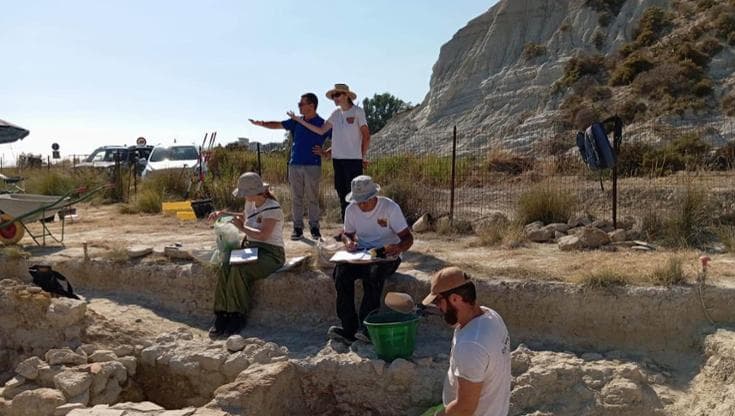
AGRIGENTO — It is no longer simply the “Valley of the Temples”, but a metropolis of men and women whose history spanned more than 16 centuries. Agrigento is rediscovering its Roman and Christian past, revealing its ancient city anew thanks to more than 20 excavation campaigns in a single year — work that has turned Agrigento’s Archaeological Park into a model of archaeological research.
You only have to look at what is happening around the temples right now, where 12 archaeological missions led by Italian and foreign universities are at work.
“From the Scuola Normale Superiore in Pisa and the University of Bologna to universities in Sicily, Lisbon and Bordeaux, our entire park has become one vast open-air archaeological site,” says director Roberto Sciarratta.
And the finds? Spectacular.
Archaeologists compare notes as they move from one dig to another, visitors peer into the excavations and students watch as another Agrigento gradually emerges. Also involved are the park's archaeologists—Maria Concetta Parello, Valentina Cammineci, and Maria Serena Rizzo—who are investigating the neighborhoods and daily life of a previously unknown city that, whose story will be told in a small museum opening soon in collaboration with the University of Palermo.
The “cursed” house
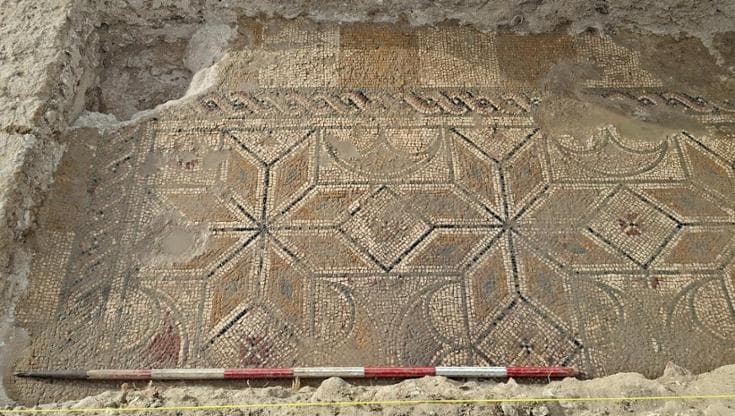
The story begins with a Greek house that became Roman in the first century AD, as shown by a ritual marking its new beginning: animal remains, inscriptions and a nail were concealed inside the walls to ask the Roman gods to protect its new owner.
“But 200 years later,” explains Giuseppe Lepore, a professor at the University of Bologna and director of the archaeological mission, “the same house was demolished in a strange, almost symbolic way.”
Cristina Soraci, professor of Roman History at the University of Catania, discovered that its owner may have been a tax collector who, through what amounted to a private company, collected taxes that were then sent to Rome. Such figures were so deeply hated that in the second century AD the Roman emperor abolished the role and confiscated their property.
The demolition of this wealthy home may therefore have been intended as a symbol for the city: an empty space left between the surrounding houses as a permanent reminder.
“But what was inside survived,” Lepore adds, “including the beautiful paintings and graffiti that Soraci deciphered, finding the name Sulla — indirect evidence that prominent figures who connections to illustrious people frequented this house. It was a private residence where the powerful gathered, rather like Caesar’s home — or, in some respects, Silvio Berlusconi’s.”
From pagan temples to Christian churches
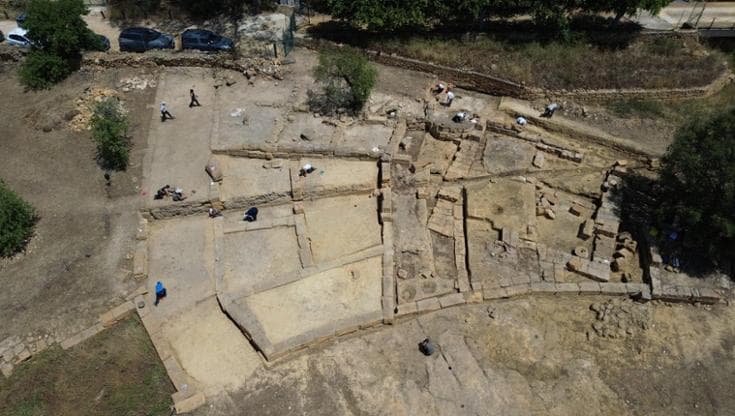
The park’s archaeologists are searching for the remains of the city that developed after the Greek period, explains Maria Concetta Parello, revealing Agrigento’s long history in the shadow of the valley.
“When the pagan era comes to an end,” adds Gianfranco Adornato, a professor at the Scuola Normale Superiore in Pisa, “the seeds of the future Christian city emerge among these ancient remains. The city is no longer organised around the agora, but around its churches.
“We discovered a bath complex bearing the name of the man who donated it to the city: a certain Martinianos, a politician from Asia Minor who was engaging in a form of political patronage. Inside the baths, we also discovered a stone box containing bones that were considered relics. We therefore believe that a sort of martyrion was established within the ancient baths, around which a pagan cult developed.”
In the fourth century, the pagan temples began to be dismantled and Agrigento itself was reorganised. Further evidence comes from a basilica discovered on the upper part of the Hellenistic theatre, where Professor Luigi Caliò is leading an archaeological mission with the park.
The assembly and the right to vote
Agrigento has something unusual in the Mediterranean world: an ekklesiasterion, a bouleuterion and a theatre, all clustered together on the San Nicola hill.
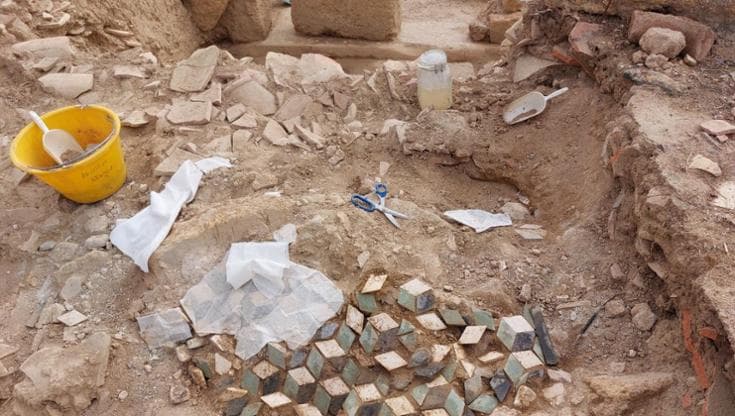
“These were centres of civic assembly,” Adornato says, “where those who had the right to vote would gather. Thanks to government funding, we have resumed the study of the area and of material uncovered during excavations in the 1960s. With the help of the heritage authorities, we recovered De Miro’s excavation journals and digitised them, and we are now carrying out new investigations in the southern part of the site.
“Here we discovered a domus with spectacular first-century AD mosaics, alongside stucco architectural elements and paintings dating from the late Republican and early Imperial periods, similar to those in the Villa of Livia in Rome. They are beautiful paintings that reveal the elegance and taste of a new city.”
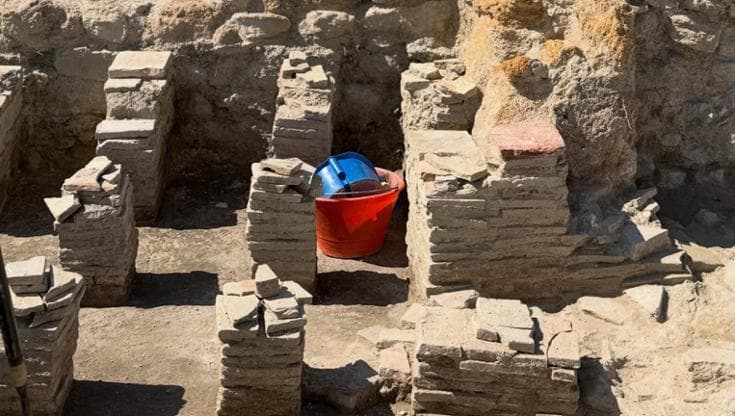
Durrueli and the “open” villa
Students will take centre stage in reconstructing the Roman villa of Durrueli, in Realmonte, where university students from several countries have been working under the supervision of the archaeological park and Daniele Malfitana, professor and director of the University of Catania’s postgraduate School of Archaeology.
The seaside home of a wealthy Roman named Publius will now become the subject of dissertations and multidisciplinary research following an excavation campaign “open” to students.
This article was reviewed by an external translation partner