
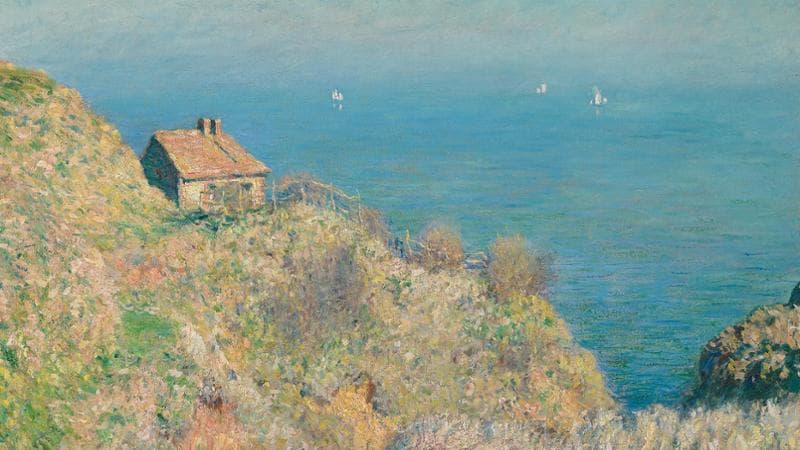
When a museum abroad closes for renovation, Italy seizes the opportunity. It is happening in Rome, where Palazzo Bonaparte has secured masterpieces by Kandinsky from the Pompidou Centre, which will reopen in 2030. And it is happening in Ferrara, where Palazzo dei Diamanti is displaying, until January 10, some of the most fascinating works from Rotterdam’s Museum Boijmans Van Beuningen, currently empty while undergoing renovation.
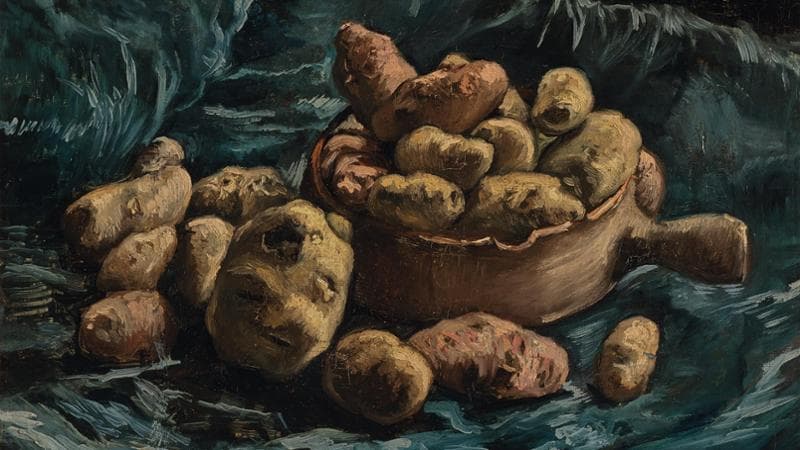
On loan from one of Europe’s leading museums — whose collection ranges from Bosch and Rubens to Rothko and Cattelan — are paintings, prints and drawings by masters who revolutionised painting between the late 19th and early 20th centuries, from Millet and Van Gogh to Toulouse-Lautrec and Picasso.
Sandra Kisters, the Rotterdam museum’s head of collections, has made the works available for the Ferrara exhibition.
The Italian connection
An inspired and highly successful decision was to bring Vasilij Gusella, head of Ferrara’s civic museums, on board alongside the Dutch curator, who has complemented the works from Rotterdam with a selection by Italian artists drawn from outstanding collections.
These include Pescara’s Museo dell’Ottocento, a remarkable showcase for the Barbizon painters and others; the Istituto Matteucci in Viareggio, a leading centre for the Macchiaioli; and the Museo Boldini, one of the jewels of Ferrara’s cultural scene.
The exhibition succeeds in showing that, at the same time as the European art market was discovering the French Impressionists or marvelling at Kandinsky’s spiritual theories, the work of their Italian contemporaries was no less interesting or revolutionary.
Giuseppe Palizzi’s In the Forest of Fontainebleau, painted in 1865 not far from Paris, more than holds its own alongside Claude Monet’s Poppy Field, painted more than a decade later. Boldini’s bridges over the Seine, meanwhile, have nothing to envy in Bonnard’s.
Italians in Paris
The Italian artists who chose to plunge into the vibrant world of fin-de-siècle Paris experienced that exhilarating period not as outsiders but as protagonists. The exhibition in Ferrara provides ample proof.
The journey through Palazzo dei Diamanti makes this web of relationships particularly clear, without reducing the comparison to a story of Italian artists chasing French models.
The Macchiaioli before Impressionism
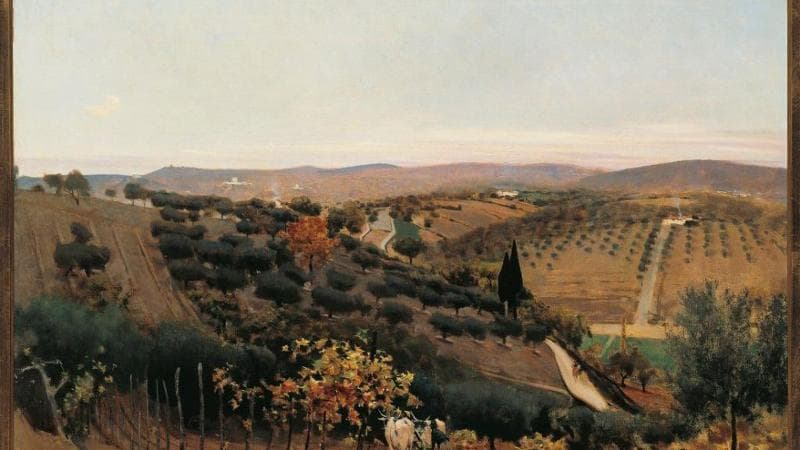
The section devoted to the Macchiaioli shows how an independent artistic language had already developed in Tuscany by the early 1860s, based on the synthesis of light and a direct relationship with reality.
A striking example is Telemaco Signorini’s The Honeymoon, painted between 1862 and 1863 and on loan from the Istituto Matteucci in Viareggio. In its unusually elongated format, two figures immersed in the landscape become an almost suspended episode, constructed through contrasts of light and shade and an atmospheric sensitivity that anticipates concerns destined to become central to European painting in the decades that followed.
It is not simply a sentimental interlude, but evidence of how the Macchiaioli technique could transform the observation of reality into a modern form of storytelling.
From Impressionism to Kandinsky
Divided into nine sections and comprising more than 120 works, the exhibition traces this gradual liberation of painting from naturalistic representation. From the Barbizon school and Impressionism, it moves through Post-Impressionism and Symbolism, the Italian experiments of Divisionism and Futurism, and finally to the dissolution of form in Mondrian and Kandinsky.
A European story of modern art
The exhibition’s greatest achievement, then, is to avoid telling art history through separate national compartments. French, Dutch and Italian artists are presented as protagonists in the same European laboratory, shaped by travel, exchanges, exhibitions and mutual influences.
What emerges is a less predictable account of modernism, one in which Italy, too, regains its place on the international stage. And the works themselves make the case immediately apparent.
This article was reviewed by an external translation partner