
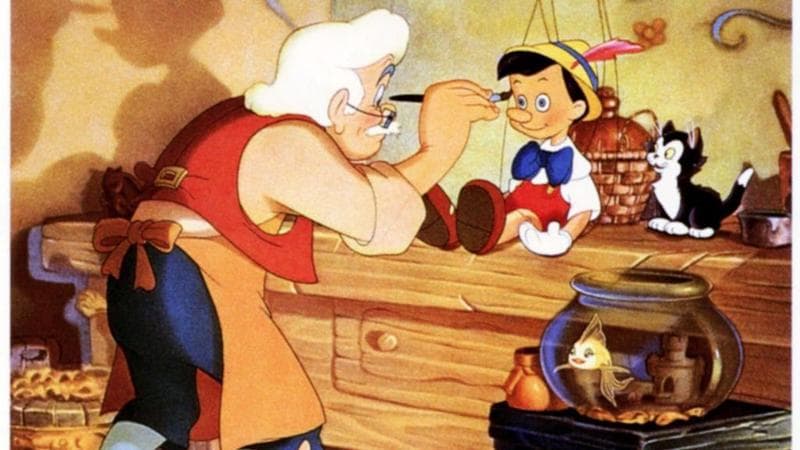
As a child, Pinocchio is “wild”: a megalomaniac enfant terrible, cruel, cheeky, vulgar, unpredictable, quarrelsome and, at times, even touching. He is undoubtedly the forerunner of a whole tribe of unruly children, from those who populate Dickens’s novels and Mark Twain’s stories, such as Huckleberry Finn, to Pippi Longstocking and Holden Caulfield. But there is another Pinocchio, his double, inhabiting that unyielding wooden body and drawing his strength from the chthonic world that lies beneath his feet.
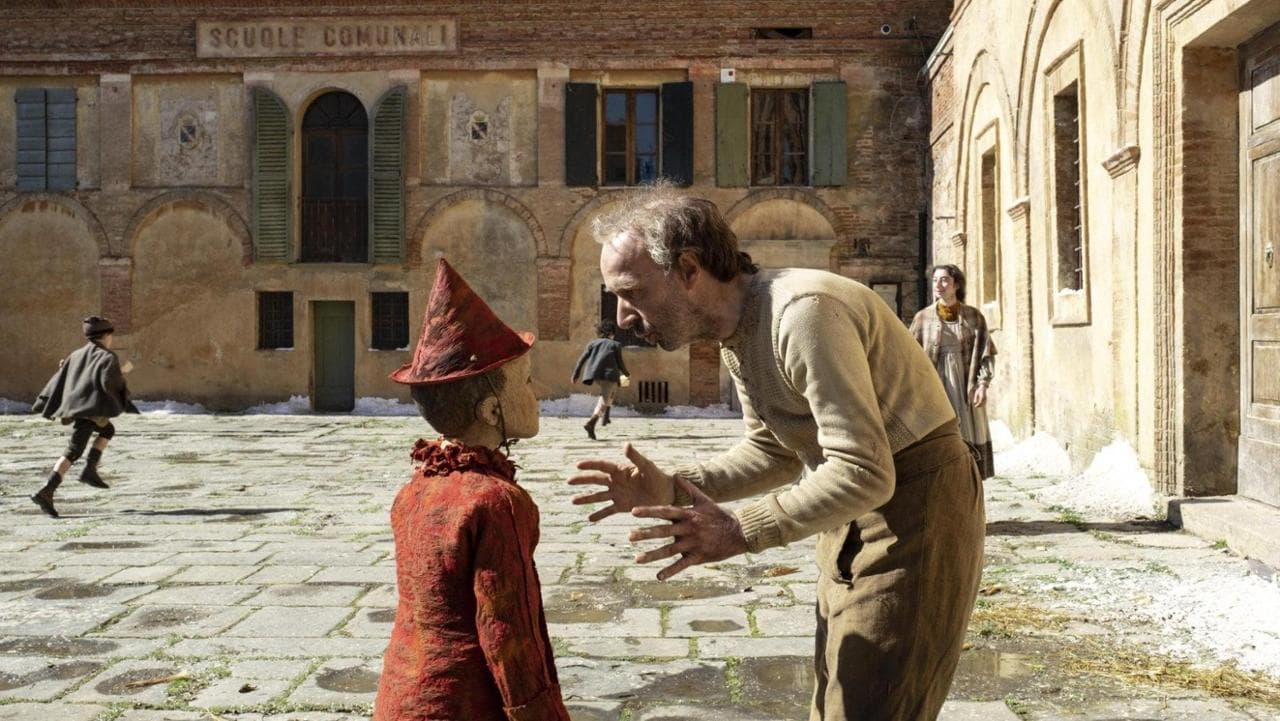
Pinocchio, Collodi’s extraordinary creation, whose first appearance in Giornale per i bambini 145 years ago has just been celebrated (along with the 200th anniversary of his creator’s birth), is therefore a trickster: literally a deceiver, a swindler or, in mythological terms, a “divine rogue”. He belongs to that breed of demigods whose actions create worlds only to destroy them moments later, drawn to the great chaos of existence, in which they feel at home despite everything.
Pinocchio is ignorant, like every trickster in the tales: the puppet knows everything and, at the same time, knows absolutely nothing.
To be a rogue is to be deceitful, but not out of cruelty or malice. Rather, it is because such creatures simply cannot be anything else. Pinocchio is ignorant, like every trickster in the tales collected by ethnographers: the puppet knows everything and, at the same time, knows absolutely nothing.
That is why he is sent to school. Not merely because he is a wild, impetuous, uncontrollable boy who ought to learn some manners, but also to temper his own divine ignorance, a quality that everyone else fears. Indeed, in his adventures he moves freely among monstrous beings such as Mangiafuoco, the fearsome puppet master, and the repulsive Little Man of Butter, as well as talking animals — crickets, snails, dogs, cats, foxes, birds and fish — that inhabit his mysterious kingdom.
Even the Fairy herself, with the extraordinary entourage she brings along whenever the scene changes, is in fact monstrous despite her reassuring appearance, though she never truly abandons him. She is as ambivalent as her protégé — or rather, her godson.
At the Great Puppet Theatre, where Harlequin and Pulcinella, his brothers, perform, they recognise him immediately. They know his name and his exploits before he has even begun to carry them out. When Harlequin sees him enter the theatre, he exclaims: “Heavens above! Am I dreaming or am I awake? Why, that fellow over there is Pinocchio…”
A wooden brother, Harlequin is himself a trickster.
Italo Calvino saw The Story of a Puppet as a “Gothic novel”, the only one in Italian literature. Its world contains coffins, disreputable inns, hangings, the silent cart bound for the Land of Toys, muffled assassins and other sinister episodes, such as the announcement of the House of the Dead.
Elémire Zolla, a distinguished scholar of esotericism, went so far as to identify the “beautiful little girl with turquoise hair” as none other than a reincarnation of Isis, one of the principal Egyptian deities, whose mystery cult had spread throughout the Mediterranean.
Everything is magical in the Tuscan-like landscape through which the puppet travels on foot, including the stormy sea and the terrible Shark, which is none other than the whale that swallowed Jonah.
As Pietro Citati wrote in these very pages, Pinocchio’s transformation into a flesh-and-blood boy at the end of the story conceals “many hidden things”.
Pinocchio’s transformation into a flesh-and-blood boy at the end of the story conceals “many hidden things”.
The puppet had longed to spend his life with both a father and a mother, but that is not what happens. The Fairy with Turquoise Hair never becomes his earthly mother. Instead, she disappears as the fairy tale itself fades away.
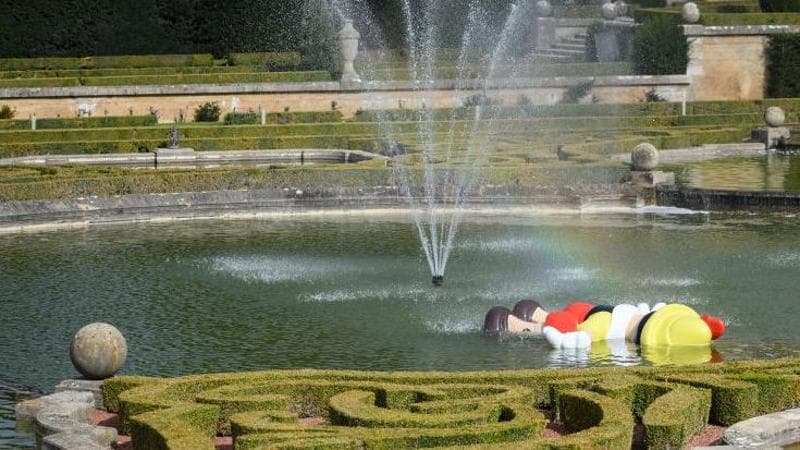
With her departure, the transformations cease, along with the constant changes of shape and identity. Everything around him settles into place. The labyrinth of enchantments has dissolved and no longer hangs over him.
Now that he is a real boy, he can look at his former self, propped against a chair: “His head turned to one side, his arms dangling and his legs crossed and bent in the middle, so that it seemed a miracle he could stand upright.”
He concludes: “How funny I was when I was a puppet! And how happy I am now to have become a good little boy!”
Now comes Reality, Citati writes: “Work, school, money.”
No longer will Pinocchio leap about on those little wooden legs across the boards of the Great Puppet Theatre, acting out his own story. Nor will he race headlong through the world with his enemies in pursuit. The metamorphosis of life is complete.
It is a much-debated ending, but how could it have been otherwise? The beauty of the story lies, of course, not in its conclusion but in everything that precedes it, and in the very way the book tells its tale.
As Calvino wrote, it lies in “the inner necessity of its rhythm, of its syntax of images and metamorphoses, which means that one episode must follow another in a propulsive chain”.
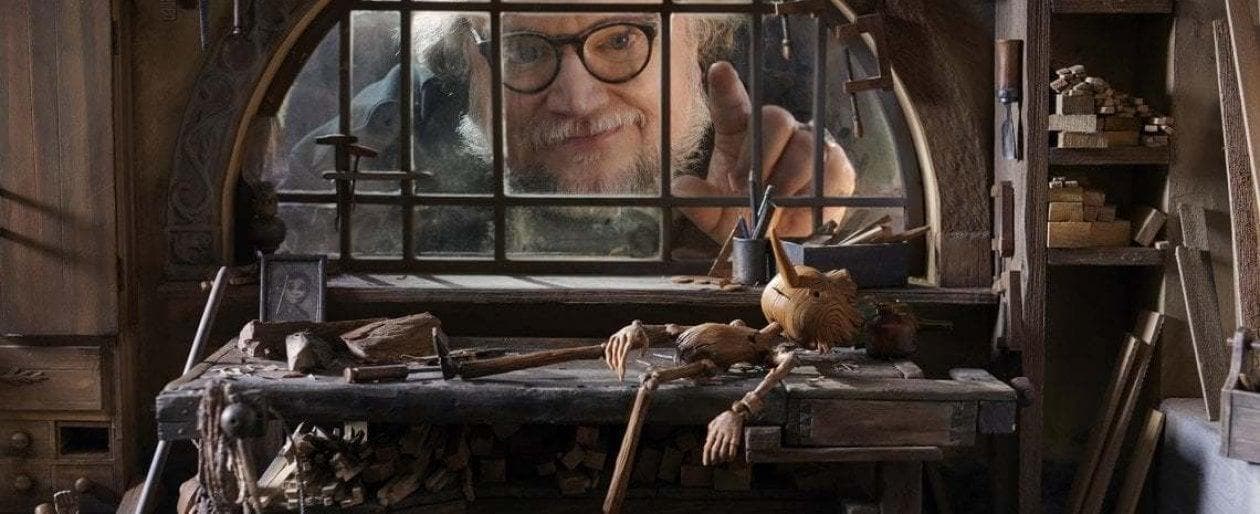
This is the source of Pinocchio’s “generative power”, the quality that makes it a “model of adventure storytelling”, a book that every writer in the Italian language encounters as a first reading experience and in which each recognises something of their own wildness.
Whether told or read aloud by others, or explored directly, it is often encountered even before a child has learned to spell out the letters.
Pinocchio is not merely a story we read, but a story that reads us through its unfathomable adventures, as Giorgio Manganelli, one of its great commentators, might have said.
Could all this have something to do with that famous interruption on 29 October 1881, when Collodi abandoned his creation hanging from the Great Oak, a rope around his neck, while a cruel wind tossed him back and forth without respite?
As we know, Collodi resumed the story on 16 February 1882, prompted by the urgent requests of his young readers and perhaps inspired by a host of new ideas.
And so this book, written at two different speeds, became one of the most widely read in the world, with its extraordinary child who is both one and two.