
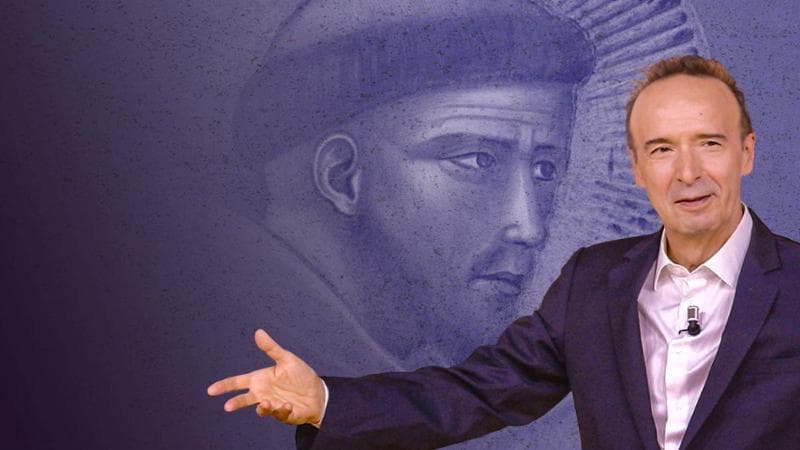
Many people joined St Francis because he had an irresistible charisma — that much we know. But above all because the world in Francis’s time was a world full of violence: against people, animals and nature. A world dominated by greed and the thirst for power.
And Francis showed everyone that another world is possible. Francis proposed a world turned upside down: those who win, lose. A true revolution.
Francis is not the “poor man of Assisi”. Francis looks upon the world with a fiery gaze .
Francis rises above everyone. Francis is afraid of nothing. Or rather, he is. There is one thing he fears, one great fear: becoming inhuman. Becoming devoid of humanity, indifferent to the fate of others, of those at the very bottom. That is why he tells his friars to pour all their love, charity and compassion into every man, every woman, every animal and every blade of grass they encounter along the way.
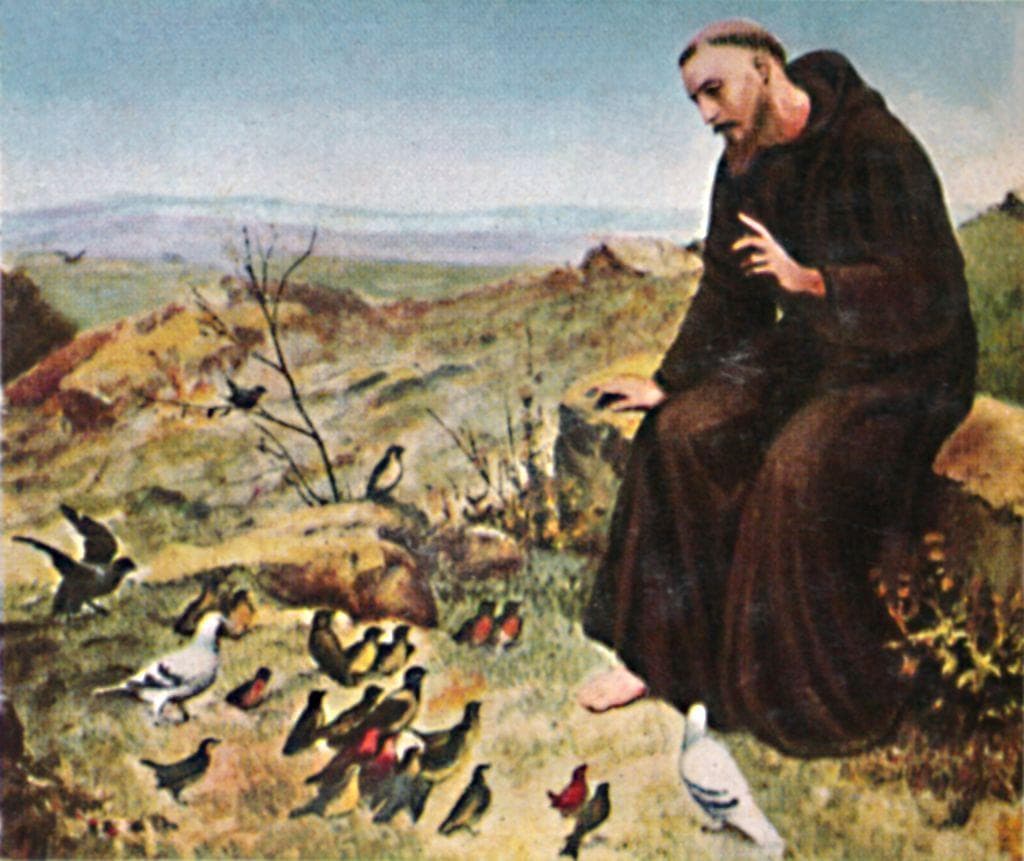
And they all follow him! He spoke to them and they followed him. That is Francis’s greatest miracle: that they followed him! He described himself as “Unus novellus pazzus” — a new kind of madman, a madman!
And who were these people? I have to tell you about some of them, otherwise you might think it was all made up, a story like this… But it is all true. There are documents for every one of them, evidence, records — practically identity cards!
They were all real people who followed Francis. Just listen to who they were. Because you might imagine the Franciscans were all simple folk, peasants, naïve people… but listen: almost all of them came from well-to-do families in the city. Almost all of them were nobles.
Clare — St Clare — was a noblewoman. She was just eighteen when, captivated by Francis’s words, she decided to leave her father’s house in secret. On the night of Palm Sunday, she went to Francis, had her hair cut off and gave up her life of wealth and privilege.
Bernard of Quintavalle was a nobleman and a doctor of law who sold everything he owned and gave the proceeds to the poor so that he could follow Francis. Rufino di Scipione was a nobleman. Masseo was even a knight! And then there were men from wealthy non-noble families, another respected jurist, Sabbatino, Ginepro and many others.

All these people, women and men, decided to change their lives to follow a man who challenged everything: wealth, vanity, prestige, power, success. A man who proclaimed a happiness made up of hunger, cold, insults, rejection and pain!
And they had to call themselves “minors” — the little ones, the lowest of the low. They could not touch money and did not know how they were to support themselves, because they were not allowed to own anything. “And through all these privations,” Francis told them, “You must remain cheerful and serene, never sad or downcast. You must radiate joy. Through you, everything must become a contagion of joy and good cheer: you must be jesters, God’s jesters.”
People would often stare at them in disbelief. What kind of men were these? They asked for nothing, thanked everyone, smiled and sang even when they were met with rejection. No one could tell whether they were madmen or saints, but many stopped to listen to them.
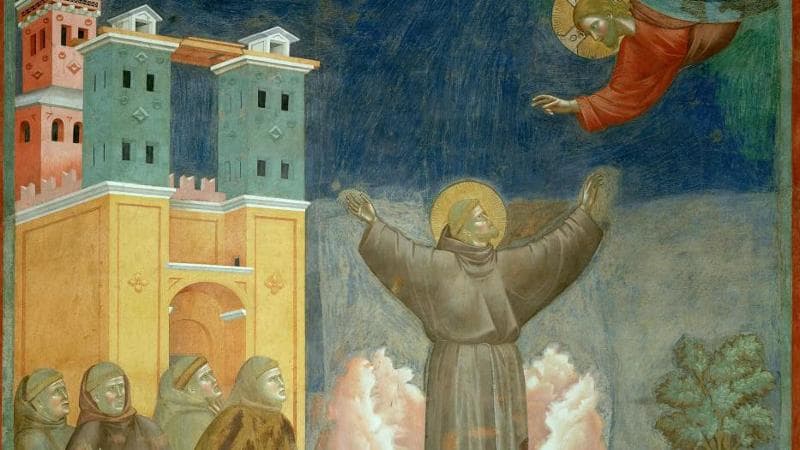
Francis was, in fact, a great preacher. When he preached — I’m not exaggerating — he put on a show! Everyone who saw and knew him says so. He acted! When he told a parable, he would stage the whole thing from beginning to end, playing every character. He was extraordinary! And he used simple, spontaneous language, completely unlike that of the men of the Church: no complicated words, no learned quotations in Latin. And so he managed to make himself understood by everyone, even those who could neither read nor write.
In short, anyone who met Francis felt touched in their very soul. More and more people decided to follow him. And within a few years, that small band of men would become a sea, an ocean. It sets out along the roads of the world and will conquer it.
© 2026 Giulio Einaudi editore s.p.a., Turin
Francesco. Il Cantico by Roberto Benigni, Einaudi Stile Libero, 96 pages, €13.50. Published on 6 October. This extract is taken from the monologue broadcast on Rai Uno on 4 October.
This article was reviewed by an external translation partner