
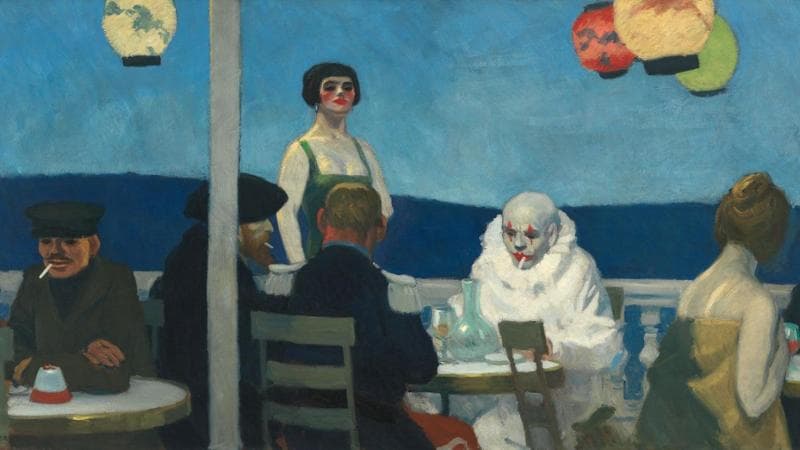
Anyone lucky enough to visit the Edward Hopper exhibition in Pisa should keep a few things in mind — and enjoy the experience. Essentially: three theses, their antitheses and the inevitable synthesis.
The poet of American loneliness
The first is that Hopper is the poet, even before he is the painter, of American loneliness: of the emptiness that emerges not in the boundless expanses of the prairies or among the mountains of the country’s interior, but in the far vaster and deeper void that opens up in the cities of the East Coast, whether the metropolis of New York or some little-known New England town caught in the drowsy light of an ordinary dawn.
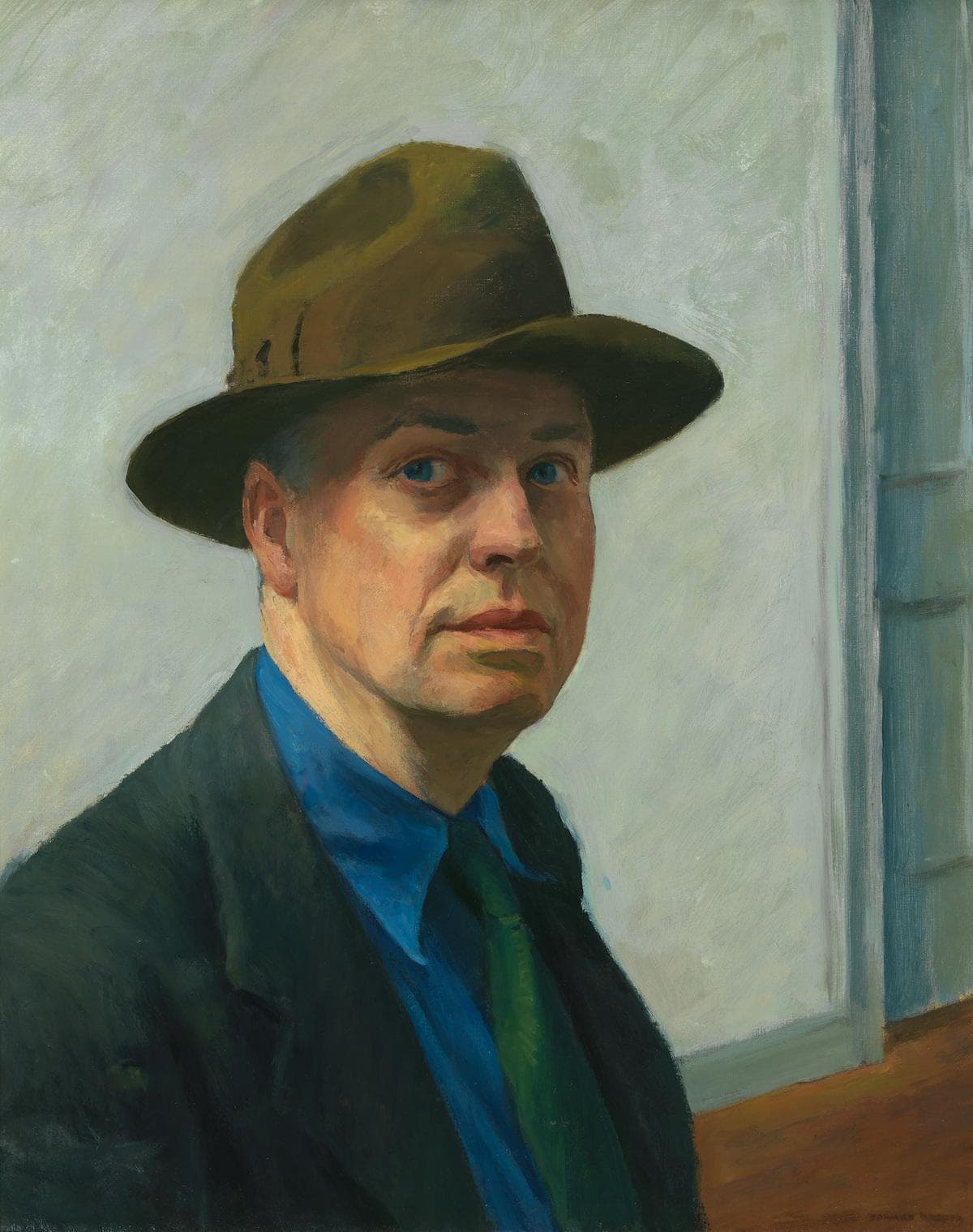
It is there that he places his men and women, their eyes cast down, fixed on some inanimate object or simply staring nowhere. And it is there that he abandons them: lost figures.
Jo, his muse and his enemy
The second is that in a great many of these paintings, the female figure portrayed or transformed is his wife, Jo — Josephine Nivison — his companion for 60 years of his life, who outlived him by just ten months and who, by their silver wedding anniversary, was already writing to him: “We deserve the Croix de Guerre for distinguished service in battle.”
We see her slender as she was not, sitting on an unmade bed; or voluptuous as she was, in an office beside the desk of a colleague or boss, looking at a sheet of paper on the floor and preparing to pick it up with a gesture whose barely nascent sensuality taps at the viewer’s mind. His muse, his agent, his beloved and irreplaceable enemy.
America’s forgotten men and women
The third is that these characters — the late-night customers in a nameless bar, the people using vending machines in the middle of nowhere — are the “forgotten men (and women)” upon whom, as Ezio Mauro argued in his 2018 essay L’uomo bianco, the electoral success of the man furthest removed from that category, Donald Trump, was built through the most cynical of deceptions.
So much for the three theses. Now prepare for the antitheses.
Beyond loneliness
First antithesis: in reality, Hopper spares his figures the sentence of loneliness, carrying them beyond its threshold.
That is the argument Antonio Spadaro makes in his book Oltrecolore. What isolates them, in fact, is the widespread assumption that meaning lies in the single moment, rather than the course of events in which that moment unfolds.
As if switching on a light and revealing the solution to a mystery, Spadaro writes instead that “in Hopper’s paintings, figures are caught waiting for something to happen, as though a revelation were within reach. The answer lies beyond the surface of the painting. The resolution of that waiting is not given, but suggested as something inevitable. There is a certainty that something must happen or someone must arrive, even though we do not know what or who. Hopper is therefore the master who knows how to capture the unstable instant in which life reveals itself as a desire for some form of salvation.”
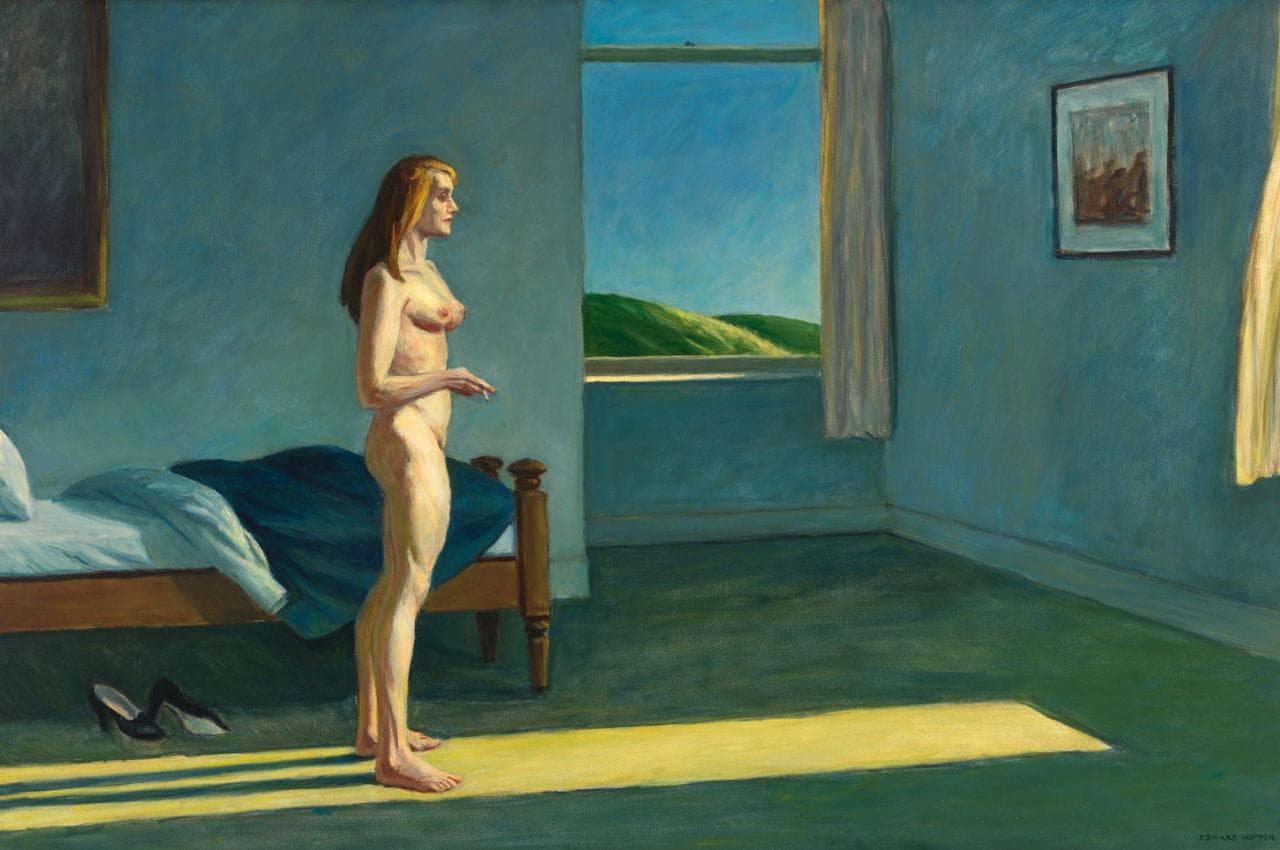
According to this antithesis, the woman on the bed in Morning Sun is not alone. She is simply waiting: for a distant lover, for forgiveness, for the telephone to ring, for us — who, year after year after year, will come to keep her company, caressing her with our gaze.
The artist in Hopper’s shadow
Second antithesis: that woman is none other than Jo, hidden behind the greatness of her husband.
She, too, was a painter — and he took the brush from her hand. Invited to exhibit at the Brooklyn Museum alongside the emerging artists of the day, she persuaded the museum to find room for him as well, helping to launch his career.
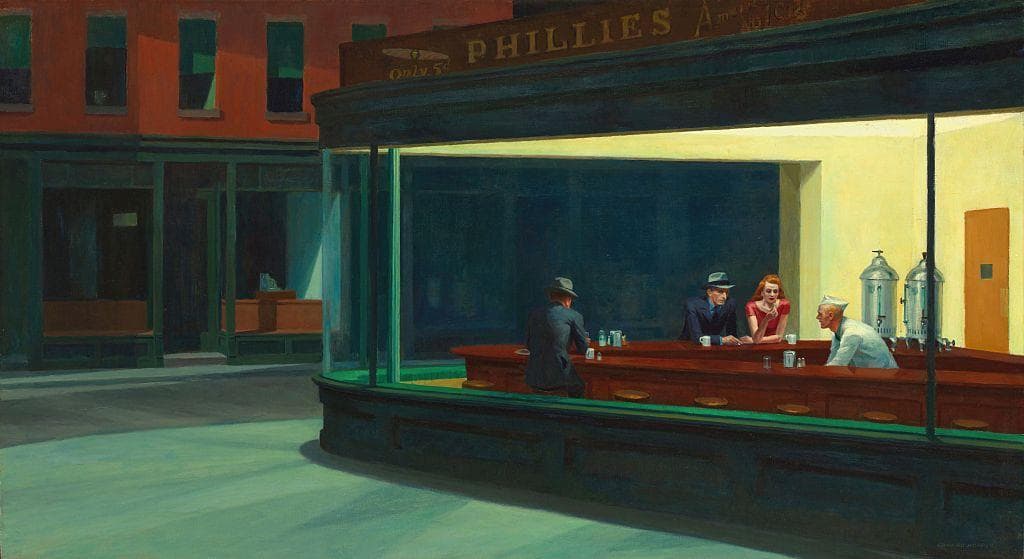
She settled for posing, promoting him and suggesting titles — Nighthawks was her title too. She accepted living in the shadows of those paintings filled with light. She saw him send her cat away and forbid her from driving. And yet, mysteriously, she never stopped loving and hating him — but above all, loving him.
No political painter
Third antithesis: Hopper was not thinking about the forgotten, the dispossessed, those left behind on the road to prosperity. He was no revolutionary, reformer or progressive.
He accepted the world as it was, America as it was. He put himself in his subjects’ shoes — he is one of the nighthawks, just as he appears in other paintings — but without empathy. Whether he was registering an absence or heralding a presence, for him it was an artistic question, never an ideological one.
The truth is in the eye
So, whether you love cats or women’s emancipation, whether you believe in revelations or are a pessimist, whether you are for or against Trump, make your synthesis — and then forget it.
It is all in your gaze. There is no truth beyond the frame.
This article was reviewed by an external translation partner