
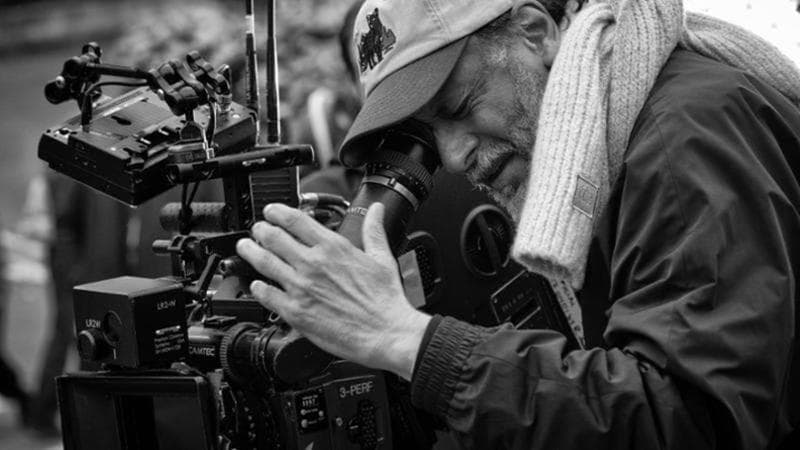
NEW YORK — It is the most controversial film of the year, and it has not even been released yet. Luca Guadagnino’s “Artificial” — the story of OpenAI and the ousting and return of Sam Altman — was commissioned by Amazon, which later decided not to distribute it following a $50 billion deal with the company.
Neon, the formidable Oscar powerhouse behind Anora, stepped in. After seeing the trailer, Altman has already said it “looks awful”.
"Artificial” had its world premiere last night at the New York Film Festival, at Alice Tully Hall in Lincoln Center. On stage were Damon Albarn, who composed the score, and the Brooklyn Youth Chorus, providing the film’s most elemental human presence: the voices of children. Then the lights went down and a story began that is about technology, but above all about people, ambition, fear and power.
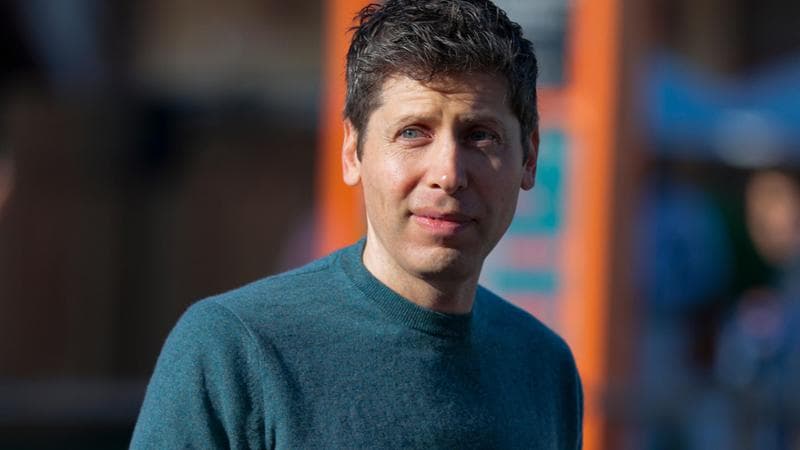
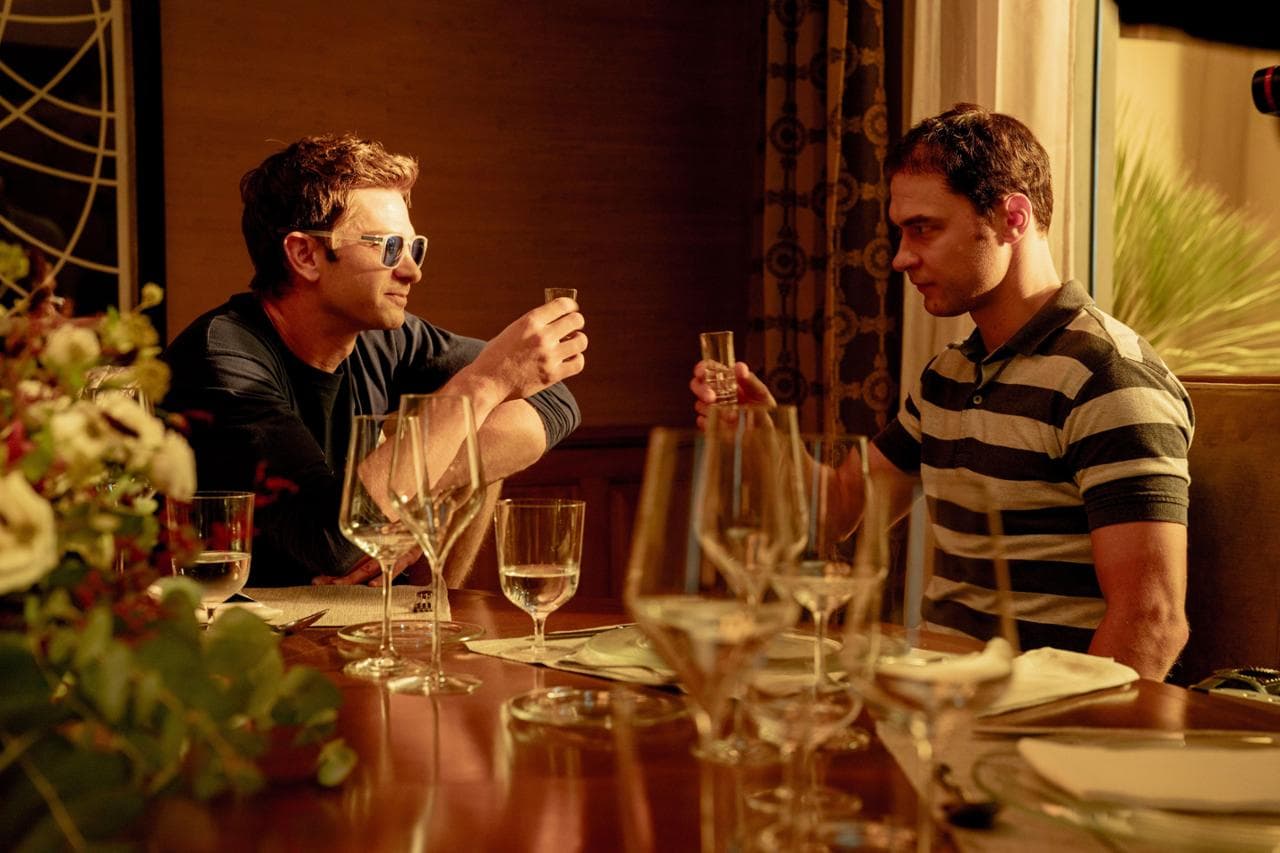
The “artificial” in the title is not only the intelligence OpenAI is building. It may also refer to Sam Altman himself, whom Andrew Garfield portrays as a man capable of shaping his own image, relationships and consensus around him while remaining ultimately inscrutable. Opposite him, Yura Borisov plays Ilya Sutskever, the brilliant scientist who remains faithful to the company’s original mission and finds himself at the heart of the revolt.A small company founded as an almost utopian laboratory grows at breakneck speed until everything short-circuits in November 2023: Altman is ousted, only to return to the helm five days later. As the closing credits roll, the audience gives the film a long, warm round of applause.
Guadagnino spoke to us about "Artificial”, which was shot almost entirely in Italy, in Ivrea, Turin and Reggio Emilia, with just five days of filming in San Francisco. Monica Barbaro plays Mira Murati, while Ike Barinholtz plays Elon Musk.
The film opens in the US on December 25 and in Italy on January 20, distributed by I Wonder.
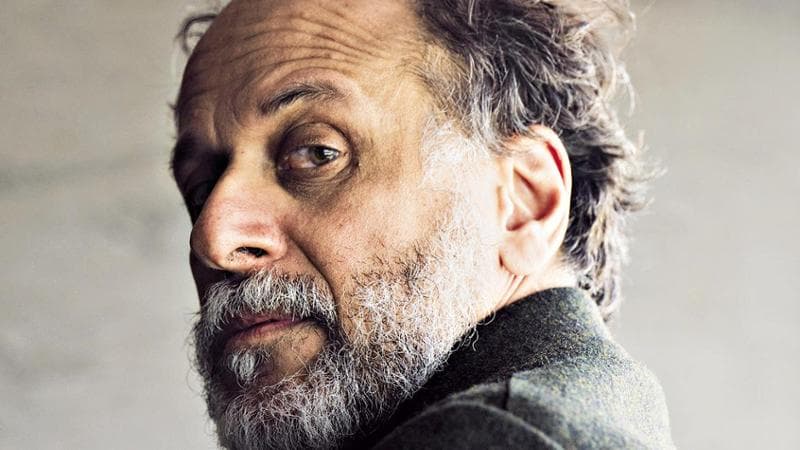
Why did you make this film?
“For the simplest of reasons: my friends at Amazon sent me the script. I knew the OpenAI story very well and, as a newspaper reader, I had followed Sam Altman’s ousting and his reinstatement a few days later, but I didn’t have the broader perspective that would allow me to understand what had actually happened. In a slightly piratical move, I immediately sent the script to a few actors I love: Yura Borisov, Monica Barbaro and Andrew Garfield. They came back to me saying, ‘We want to do it.’ So I went to Amazon and asked: shall we make it? They said yes. In Hollywood, it can take a year for a film to go into production. I convinced them that this was something we needed to make straight away. What interested me was the contrast between someone like Ilya Sutskever, an entirely cerebral figure but also a deeply ethical one, and, on the other side, a man who is almost a kind of bodily dysfunction: Sam Altman. In him, I sense a profound ease in the way he handles relationships.”
How did you approach the screenplay? “Meticulously, and with a huge amount of research, because I can’t use my imagination unless I know exactly how things happened. We worked on the script in increasingly minute detail, with the screenwriter and my team of researchers, so that we could remain completely inside the reality we were depicting. The film was repeatedly vetted for accuracy by lawyers one hundred per cent. And sometimes reality is far more surprising and disconcerting than fiction.”
Are the conversations real?
“A large part of the dialogue consists of things they actually said.”
Did you ever try to meet Sam Altman?
“No, no, no. No.”
Not even out of curiosity?
“Absolutely not. I don’t know what I would gain from meeting him now. And we didn’t want to create even the slightest conflict of interest.”
Has OpenAI asked to see Artificial?
“I haven’t received any requests or any formal communication. But a lot of people have asked me to see the film, people who are in some way close to Altman, and I know for a fact that they will see it when it comes out. It seems clear to me that the reaction won’t be positive, because Altman has already said, after watching the trailer, that the film ‘looks awful’. I find that an interesting judgement coming from him, however childish it may be.”
Why did Amazon decide not to distribute it?
“You’ll have to ask Amazon. It was their decision. All I can say is what they said publicly: that they didn’t believe they were the right home for the film. We found Neon. They saw the film, loved it and took it on. For my part, I can tell you that I’ve made five projects with Amazon, I’ve always worked very well with them and I believe I will continue to do so.”
Is Hollywood now afraid to take on the tech giants?
“I don’t know whether there is a fear of taking on the tech giants, but conflicts of interest are as old as the world itself, and we Italians know a thing or two about that.”
In what sense is this a Luca Guadagnino film?
“All my films are mine, the successful ones and the unsuccessful ones. There is a powerful misconception that authorship comes from the screenplay. The Nouvelle Vague taught us that Hawks, Hitchcock and Lang were among the greatest auteurs of all time, and they hardly wrote any of their masterpieces. Cinema isn’t just a language of words; it is also a language of images and editing. A film doesn’t die on the screenwriter’s page. That is where it begins to live.”
Cinema is also about timing and coincidence.
“This film is the perfect example. In early May 2025, a screenplay about this subject came my way. I felt I wanted to make it, so we made it immediately and finished it. Since then, the subject has become a hot topic, both on the world stage and in public debate. There was no way of predicting that a Silicon Valley oligarchy would come to control, from a position of dominance, an invention as seismic as generative artificial intelligence. It was a coincidence, but also an intuition about life.”
Today there is open talk of apocalypse and the extinction of humanity.
“These arguments are particularly interesting when you look at them from the perspective of the people making them. OpenAI began as a non-profit, but in order to get more chips and beat Google it became a for-profit company. Once competitors began to emerge, people started talking about how dangerous the technology was. And the danger is obvious. Artificial intelligence requires vast expanses of data centres to operate, a kind of lung that is suffocating the environment. Geoffrey Hinton says it clearly: OpenAI and ChatGPT have opened Pandora’s box, and nobody knows how it will end. But at the same time, they are pursuing their own interests. We can never separate prophecies about the end of the world from the economic agendas behind these enormous concentrations of power, which now stand above nation states.”
Trump now wants to call it “Super Intelligence”. Your film is called Artificial.
“The advent of digital technology, then virtual reality and now artificial reality — the idea that each of us can shut ourselves away in unreal worlds — is very interesting. You have to ask why we feel this need. We are losing our sense of the body. And yet this is very much a film about bodies. Ilya’s body, so tense, solid and somehow detached from his genius. Altman’s, lanky and able, through movement, to adapt to the surfaces around him. Mira Murati’s statuesque beauty, almost a form of separation between herself and everything else. Or Elon Musk’s body, slightly foolish and slightly tormented. I told Ike, who plays him, ‘Don’t judge Musk.’ We have to remember what he did in this story, but also where he came from.”
The question of truth keeps coming back.
“Ilya tells the truth: ‘Americans lie.’ And Altman replies: ‘It’s not that we lie. We use the truth according to what needs to be said at that particular moment.’ It’s a form of cynicism that reminds me of a kind of politics that has abandoned parrhesia: the politician has to say the right thing at the right moment, even if it completely contradicts what he said before.”
This is a story about young people making decisions of enormous consequence.
“You think of youth as the age when you make a revolution and break with the established order. The age when you have values that aren’t necessarily material ones. And yet the young people at OpenAI are devoted exclusively to their own financial gain, their own personal satisfaction. The scene in which Ilya says they have to start again without Altman and the employees ask what will happen to their bonuses and stock options is authentic. We didn’t make it up.”
Artificial was shot almost entirely in Italy.
“Five days in San Francisco, and everything else between Ivrea, Turin and Reggio Emilia. Some of the actual locations weren’t available, so together with the production designer we recreated them at full scale on sound stages and in empty spaces, as faithfully as possible. We had photographs, floor plans and people who knew those places. I think the reproduction was about ninety per cent faithful.”
San Francisco has a very strong presence in the film.
“It is the city of the American utopia. It was the city of benign capitalism, of the New Deal, of cultural and social ferment, of the LGBTQ+ community, of Harvey Milk. Just look at the murals in Coit Tower. It is the California Dream. Then Silicon Valley arrived, took the California Dream and sucked the utopia out of it from within, like an insect devouring another insect and leaving nothing but its shell. You can see it when you go there: young people ravaged by fentanyl, poverty alongside what may be the greatest concentration of wealth in the world. It is a city I love madly. It is also Hitchcock’s city.”
Karen Hao, the author of Empire of AI, was a consultant on the film.
“Her book was extremely important to us, both for the details and for the broader picture. I share her view that this is a story about power, rapacity and the desire of a small elite to detach itself from the world. It is absolutely a form of imperialism. But I grew up with an unshakeable secular outlook. I have no desire to preach or to tell audiences what they should think.”
Do you personally use artificial intelligence?
“Once I had to design a street lamp. It was a Friday and I needed a rendering quickly. I bought the most powerful application and signed up to ChatGPT for an hour. I gave it this enormous prompt and what came out was hideous, completely useless. I waited for the rendering from my architects and cancelled my subscription.”
What frightens you about AI?
“I’m afraid of people who want to use it as a substitute for the creative process. If someone wants AI to create something, they are perfectly free to do so, and I’ll be happy to see the result. But I’m an analogue person: for me, the effort involved in the process is the most interesting thing. The relationship with the screenwriter, the production designer, the costume designer, the make-up artist, the actor, the editor, the people working on sound, the people making the music. With a prompt, I would have missed that entire wonderful process of meeting people, exchanging ideas, making mistakes and being surprised. For me, none of that can be replaced.”
Damon Albarn composed the score.
“In San Francisco, Stefano Baisi, who designed the sets, suggested that I listen to the Gorillaz’ Plastic Beach as though it were a single piece, and I listened to it like an opera: an almost symphonic project, built out of pop songs but containing a dystopian future within it. So I asked Damon to create a kind of concept album for Artificial, moving between electronic music, symphonic music, ballads and dub. The result is extraordinary.”
This is also a film that people are waiting to pass judgement on. What kind of reaction do you expect?
“You can’t control reactions. All you can do is make the best film possible and then hope for a response from a real audience.”
The translation of this article was reviewed by a Language Service Provider