
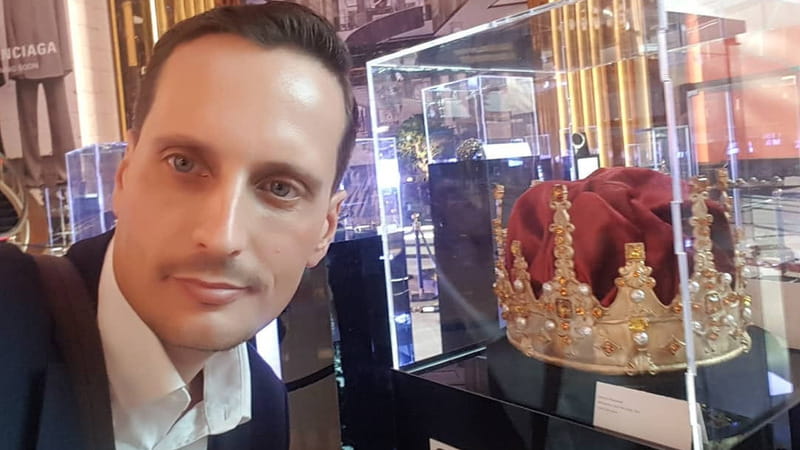
ROME – Lidia Poët’s insect-shaped brooches. Maria Callas’s jewels, worn by Angelina Jolie. Joséphine Bonaparte’s jewelry set in Napoleon. And then the jewels inspired by the treasure of San Gennaro in Parthenope, and Lady Gaga’s headpiece in The Devil Wears Prada 2. Behind all these accessories, these cinematic jewels, stands one craftsman: Simone Picchio, 51, who was born into the trade.
His father, Mauro, founded the company Pikkio in the late 1960s as a wholesaler. Simone, who holds a degree in economics and business, was headed for a career in finance, but in the early 2000s he chose to join his father and his sister Alessia.
Since then, he has transformed the family firm and made it a benchmark for both Italian and Hollywood cinema. “Every now and then, at 7 in the evening, I see on social media that my university friends are already at the gym, while I’m still in the workshop. But I don’t regret my choice: making a living from creativity is the best thing there is,” he says.
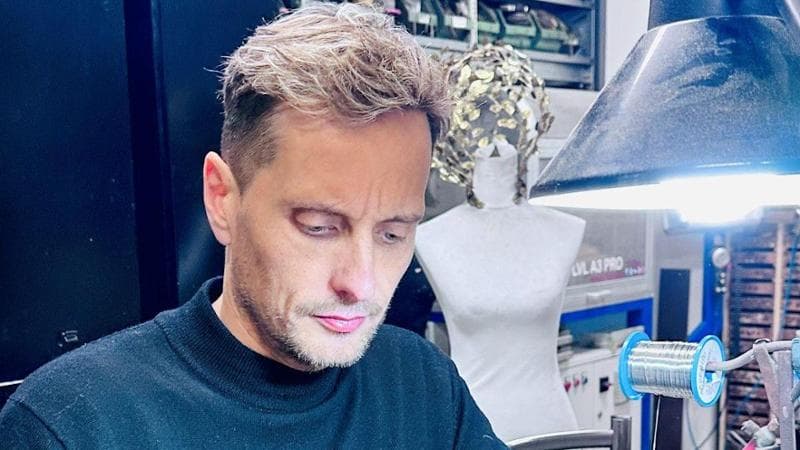
Until February 15, Cinecittà si mostra, in Rome, presents the exhibition Mani d’oro (Golden Hands): a new display of original costumes and accessories, including those used by costume designer Molly Rogers for The Devil Wears Prada 2, selected from Pikkio’s own repertoire.
How do you become a metalworking craftsman, a jeweler for the movies?
“As children, my sister and I used to spend time in our father’s warehouse, enchanted by all these costume jewels. As soon as she finished high school, she decided to work with Dad. My studies were supposed to lead me into financial brokerage, but my artistic side was calling me.While I was at university, to make a bit of extra money, I made resin objects with the woman who later became my wife, and we sold them at craft markets. When the time came to decide what to do with my future, the idea of working in an accountant’s office or in finance made me so sad that I asked my father if I could join the company. At first it was only to handle the accounting side, then I moved on to the creative side.”
Who were your teachers?
“First of all, my father, who is still a pillar of Pikkio today. Then my mentor and teacher was the costume designer Alberto Spiazzi, who used to come to our workshop and quietly introduced us to film and theater productions. I learned the craft by doing it and by working with all the costume and set designers I’ve worked with over the years.”
The list of costume and set designers you’ve worked with is a long one: from Gabriella Pescucci and Carlo Poggioli to Massimo Cantini Parrini, Milena Canonero and Alessandro Lai. How does the creative process work with them?
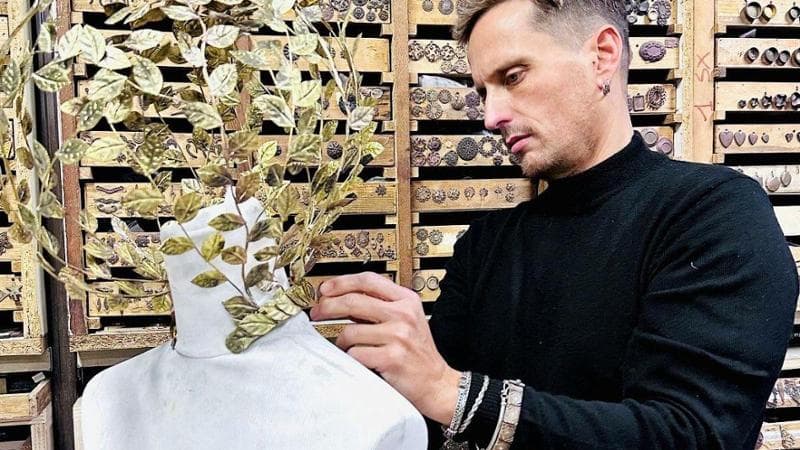
“Deadlines in this kind of work are getting tighter and tighter, so sometimes you have to develop a kind of empathic telepathy, which comes with experience. By now I know the tastes and passions of many of these masters and I go along with them, also because in this field, so much more goes unsaid than is said. The accessory always comes last, but it is very important: when it’s right, it helps tell the character’s story; when it’s wrong, it can mislead the viewer.“The more information I can gather, the better; even the personality of the characters who will wear those accessories is a great help to me. After the first meeting with the creative, who may be a set designer or a costume designer or even a fashion designer, because we also work for fashion, the project begins. There’s a first phase of rough shaping, of prototyping, which is then tested: think of the size of rings, or the fact that a brooch has to have a certain weight. Right now we’re working on metal masks for a party, and they have to be light, stay on by themselves and be easy to wear, as well as beautiful, of course.”
Unlike goldsmiths, you have to work with non-precious alloys. What is the biggest challenge?
“It all depends on the request. There are jewels that have to be replicas of something that exists, as was the case with Callas’s jewels for Pablo Larraín’s film Maria, obviously in non-precious materials, in this case brass with gold and silver plating and synthetic stones.The creative challenge comes when they ask us to make ‘fashion’ pieces: that’s where you can let your creativity run wild. We’ve even created wearable jewelry pieces such as muffs, panniers and ruffs, bringing something entirely new to the market. We always take our cue from the story that has to be told, and we draw inspiration from something that already existed, like a fabric ruff.”
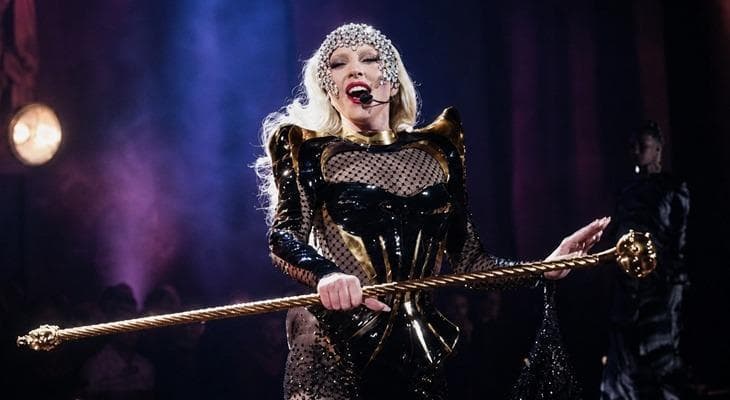
Do those more creative pieces include the heart-shaped headpiece worn by Lady Gaga in The Devil Wears Prada 2?
“Unfortunately, the timelines for that film and for the work with Molly Rogers were so tight that we couldn’t create anything ad hoc. We proposed a great many different accessories and then the costume designer chose this one. She needed something that would decorate the face without overshadowing it.”
You have accessorized major stars. Have you ever had the chance to interact with them?
“There’s never time for a fitting for the accessories. The people who make the costumes get the outfit fitting, which is fundamental and vitally important for made-to-measure work; those who make accessories never get one. We’re the last in line because accessories are thought of at the very end. But with The Devil Wears Prada 2 something incredible happened.”
What happened?
“One Sunday morning, I got a call from an assistant set designer who told me that director David Frankel had seen the costume workshop backstage, fallen in love with our creations and decided to create a new set featuring all the jewelry in the workshop. But that the space was large, and they needed a huge number of pieces. So I had to organize a van carrying ten times the material I had already sent, practically the entire archive, and ship it to Milan by Monday. In the film all of this is visible for a very few seconds and only in the background, in a scene with Stanley Tucci talking to Meryl Streep backstage at the fashion show. You catch a glimpse of one of our pieces, but behind it there’s a whole world, an entire showroom with fresh flowers and mirrors, which in the end you practically don’t see in the film. That’s the movies for you.”
How do you work to make jewels look beautiful in film or on TV?
If they’re antique jewels, their beauty lies in their age, so they have to be aged through oxidation. All the jewels from ancient Rome to the Renaissance are left in brass and then brushed until they shine; finally they’re treated with glass paints, metal reagents that blacken them. We also work to bring out the chiaroscuro that costume designers love so much, so that on camera the object doesn’t look flat.“Then there’s the work on the stones, which have to be set after removing the talc, which in synthetic stones serves to refract the light but which is not right for cinematic photography.”
And modern jewels?
“There you find a compromise: the shine of the jewel, which when finished is as if it could be sold in a jewelry shop, has to be toned down a little by sanding, scratching, doing what time does naturally. The stones are given a patina so that everything blends together, preventing the lights from flaring on camera and creating a fake, kitsch effect.”
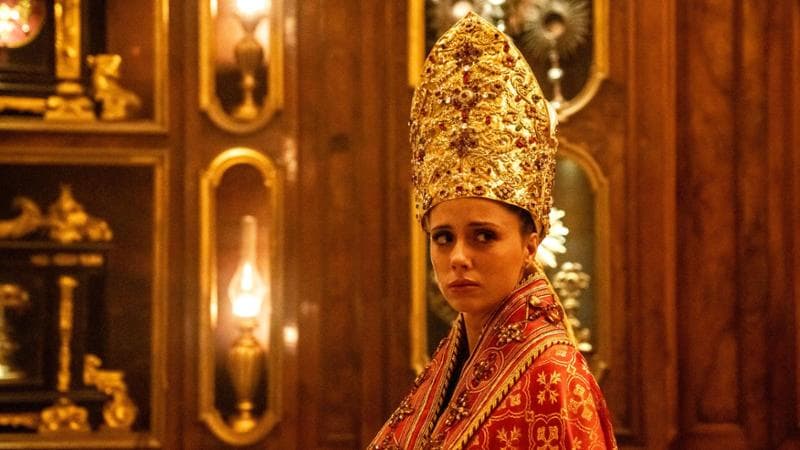
Can you tell us how you and costume designer Carlo Poggioli worked on the jewels for Parthenope, recreating the treasure of San Gennaro in your own way?
“When I was asked to make that dress, because it was really a dress made of jewels more than an accessory, the information was contradictory: it had to be that, but also not that, because there was a copyright problem. We had to evoke it but it couldn’t be replicated.
“Poggioli acted as a filter for Paolo Sorrentino’s wishes, and several times we had to take the piece apart because it looked too much like the original. Going through hell, purgatory and heaven, we arrived at the solution. We should also consider that one of the requirements was that the outfit withstand sudden movements and action. We couldn’t do any kind of testing. We supplied the department with extra pearls and extra crosses so that if anything got lost they could step in. It was a wonderful experience, even if a very demanding one.”
Some people contact you to make the jewels from a particular film or series. Which one is the most popular?
“After the release of the series The Law According to Lidia Poët, we were swamped with requests from husbands who wanted to give her brooches to their wives, especially around Christmas. And to think I didn’t even have a Netflix subscription. It’s a bet we made with costume designer Stefano Ciammitti. The first time he came to make the selection for the first season, I opened a drawer with some vintage 1970s insect brooches; he was won over, and I said: ‘You know, I’ve been dreaming for years of creating an insect collection.’ We started from there and then we had such a huge boom that now we can’t even keep up with the requests.”
How many people work for you?
“There are about a dozen of us, fifteen with the freelancers: our whole family, and then some employees divided between the soldering workshop and assembly. Even my mother, after retiring from the Rome Registry Office, now lends us a hand.”
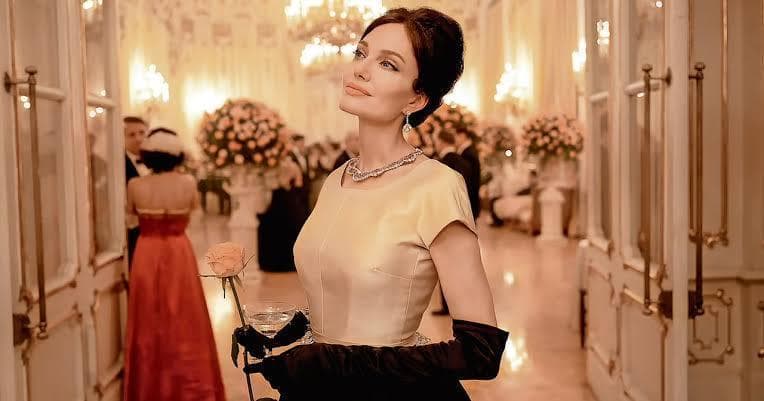
What’s the difference between working for big American productions like Bridgerton or The Devil Wears Prada and Italian films?
“The difference is one of scale. Clearly I’m rooting for our cinema and for Italian taste, which for me is the pinnacle. Unfortunately, lately people have been working in a frantic way on both fronts. American productions obviously have other resources, and their advantage is that they don’t have to make difficult choices.Something similar to what happened with The Devil Wears Prada had already happened with Ridley Scott’s House of Gucci. They had to dress a store set in the 1990s, with a more understated look than the 1970s and ‘80s. We had made a minimalist choice, ten more elegant pieces, and then the assistant set designer called me at seven in the morning to say that the director had judged the display too poor.She was already standing in front of the warehouse, and I rushed over: I opened the drawers and she kept saying, ‘I’ll take everything.’ An Italian production couldn’t have done that.”
Is the relationship different with American set and costume designers?
“If I’m dealing with Italians, I stick very closely to their requests; if I’m dealing with Americans, I know I can be freer, because they care more about quantity. For productions like Bridgerton or The Gilded Age, either because I don’t have all the information I need or because they think on a broader scale, if they ask me to send images of evening jewelry sets, I draw on pieces from the 18th century to the early 20th, even though the series are set in the late 19th. They are more flexible.”
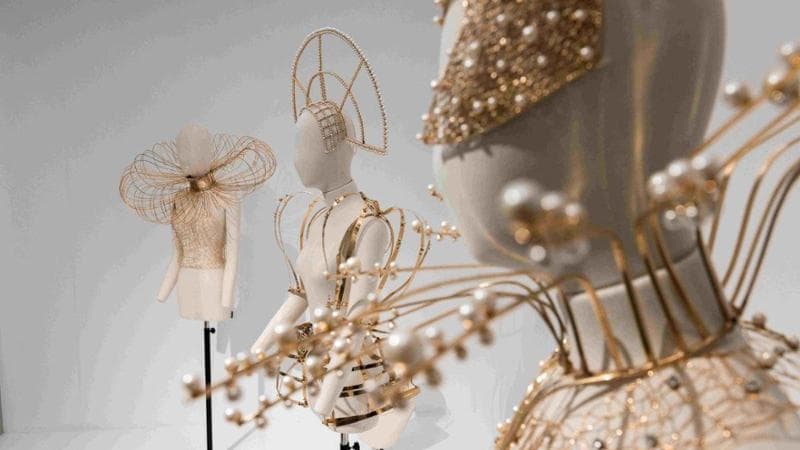
At a time when special effects created with artificial intelligence are all the rage, is Italian artisanal excellence still considered an added value?
“To me, absolutely. That’s what I think, and in my heart I hope so. Perhaps the sector will become increasingly niche, but I hope that people with culture and sensitivity will continue to value what is real over what is artificially recreated. After all, there aren’t many workshops like mine. I’ve talked with American costume and set designers who told me: why don’t you open a workshop in Los Angeles, since no one there does what you do? But I’m staying in Rome.”
This article was reviewed by an external translation partner