
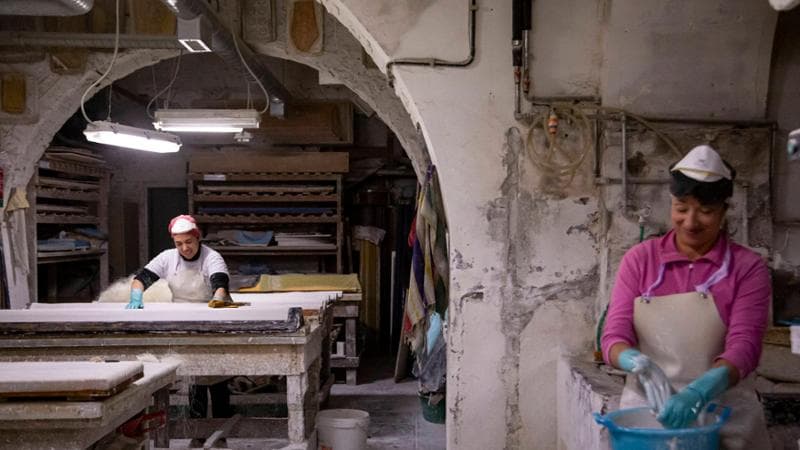
Walking along Via Tirso, just steps from Villa Albani in Rome, white footprints mark the pavement. Light and irregular, they lead to a door of clear wood and glass.
Crossing the threshold of number 105 opens up a world of handcrafted mouldings, friezes, ceiling roses, lampshades, and decorative elements.
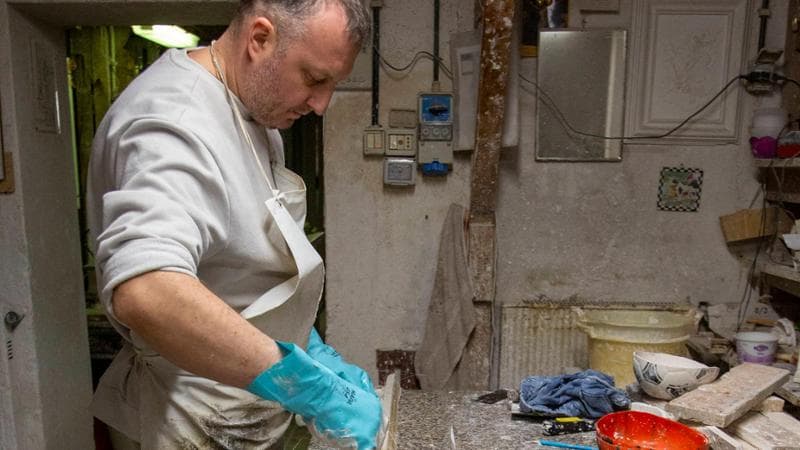
Amid soft curves and sharp lines, Stucchi Cecere comes into view—the family-run workshop that has been working plaster for nearly a century in the Trieste-Salario district.
The early years: 1932-1945
Carrying the business forward are siblings Claudio and Danila Piacentini. They represent the third generation of a story that began in 1932, when their grandfather Amedeo decided to open a small shop in nearby Via Basento.
"Three years later, in '35, he moved here," recalls his 60-year-old grandson, "because he needed more space. It is a craft that was always part of his life."
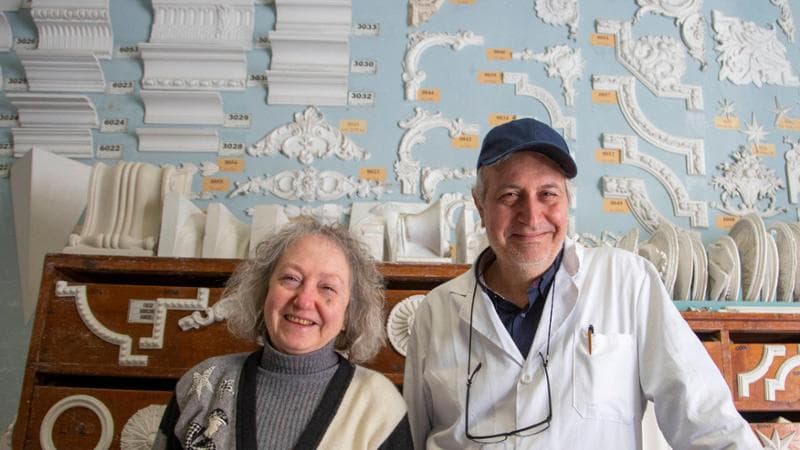
Born in 1909, Amedeo worked until the dawn of the new millennium. "Etched in my mind," remembers 64-year-old Danila, who holds a degree in literature and a doctorate in Semitic linguistics, "is the image of him stirring fish glue in a large pot to make the moulds. The smell was overpowering."
It was a passion that did not stop even with the onset of the war, when Amedeo, drafted into military service, left everything in the hands of his wife, Elia.
The boom in the 1950s
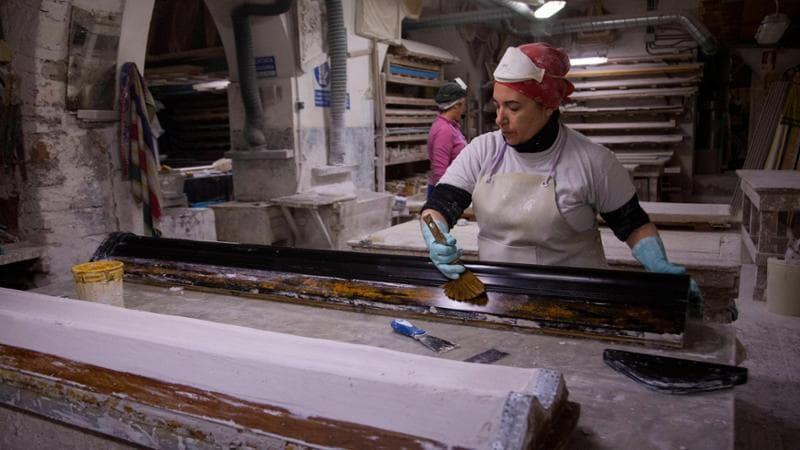
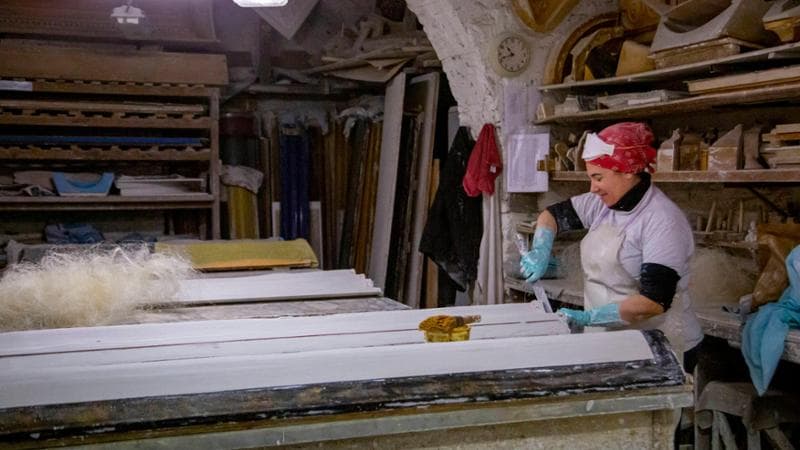
Then came the boom of the 1950s: the workshop expanded into a vast 600-square-meter space bustling with workers, plasterers, and restorers. Hands mixing plaster, water, and natural fibre to create decorations destined for Rome's residences and historic buildings.
"However, our father Rinaldo, our grandfather's son-in-law," Danila continues, "introduced true innovation by using silicone moulds instead of fish glue."
It is a tradition that constantly renews itself without ever abandoning the simplicity of its materials or the physical labour required.
"This is work done standing up for hours. It requires immense patience, dedication, and a spirit of sacrifice. No machinery exists for making decorative plasterwork—only the strength of your hands and the intelligence of knowing how to create," the siblings remark.
Growing up in the family shop
Having grown up among fresh, newly cast, and worked plaster, they spent their childhood summers in the shop. "I used to straighten old nails because nothing was ever thrown away," adds Claudio.
Before taking the reins of the business alongside their grandfather and father in the late 1990s, Claudio worked as an electrician, while his sister was an adjunct professor.
"I taught at La Sapienza University in Rome," Danila points out. "Even now, I dedicate my free time to research. But this place represents our family, especially our grandfather. We are here for him, for his efforts and his dedication.
"The workshop has accompanied us throughout our lives. Even though we have fewer clients than in the past, the idea of closing has never crossed our minds. I handle administration, and Claudio handles the rest."
This article was reviewed by an external translation partner