
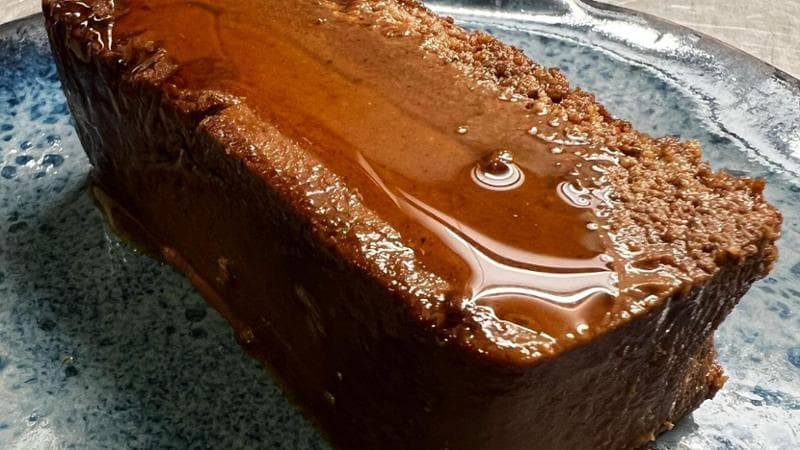
Bunet is one of the great classics of Piedmontese dessert-making—a traditional pudding made with eggs, milk, cocoa, and amaretti biscuits. It likely owes its name to the fact that it was once prepared in a mould shaped like an upside-down hat, known as bonèt in the Piedmontese dialect. Chef Valentina Chiaramonte of Ristorante Consorzio in Turin shares her version: faithful to tradition, but with a few personal touches to make it even more indulgent. "As I’m not from Piedmont," the Sicilian chef confides, "I started with the traditional recipe but made a few small changes. I added two or three ingredients to make it creamier and more indulgent, while keeping it incredibly easy to make at home."
Ingredients
The key, the chef explains, lies in sourcing fresh, high-quality ingredients.
Amaretti biscuits ("We use the soft amaretti di Mombaruzzo")
200 g amaretti biscuits
60 g caster sugar
500 ml whole milk
80 g dark chocolate (70% cocoa), melted in a bain-marie (double boiler)
40 g natural unsweetened cocoa powder
1 tablespoon Persico liqueur
2 tablespoons rum
4 whole eggs + 1 egg yolk
1 g salt
For the caramel
150 g sugar
50 ml water
Hand-crumbled amaretti
Start with the caramel: heat the sugar with a splash of water in a pan, without stirring, until it turns amber, then immediately pour it into the bottom of a loaf tin.
Meanwhile, heat the milk to 80°C. Crumble the amaretti by hand into a bowl, making sure to leave some larger pieces for a slightly coarse texture.
In a separate bowl, whisk the eggs with the cocoa powder, sugar, melted dark chocolate, and a pinch of salt. Combine this mixture with the crumbled amaretti and warm milk, finishing with the liqueurs.
Pour the mixture into the caramel-lined loaf mold and bake in a bain-marie (water bath) at 170°C, with the fan set to minimum, for roughly thirty minutes.
Dark chocolate for added creaminess
One important detail, Chiaramonte reveals, is the addition of dark chocolate with at least 70% cocoa content, which gives the dessert a denser, silkier texture and prevents the amaretti from sinking to the bottom during baking.
"The secret, in my opinion, is adding a little dark chocolate, which makes the pudding much thicker and creamier. It also gives it more structure, helping to keep the amaretti evenly distributed throughout the mixture during baking."
Baking time and the touch test
Every oven behaves differently, so baking times are indicative: the secret is gently touching the centre of the bunet with a fingertip. It should still be soft, uncracked, and not entirely firm. After baking, leave it rest in the fridge for twenty-four hours; only then will it reach the right consistency and develop a harmonious flavour.
The 24-hour rest
Much like caponata or parmigiana, this is one of those dishes that peaks twenty-four hours after preparation. It is the perfect dessert to make ahead, prepared in generous quantities, to enjoy at leisure over the following days.
The result is a velvety, balanced and elegant dessert, both in flavour and appearance, with subtle bitter notes and a hint of liqueur that make it one of Piedmont's best-loved traditional desserts. Kept properly refrigerated, the bunet keeps well for several days, tasting even better as time passes.
This article was reviewed by an external translation partner