
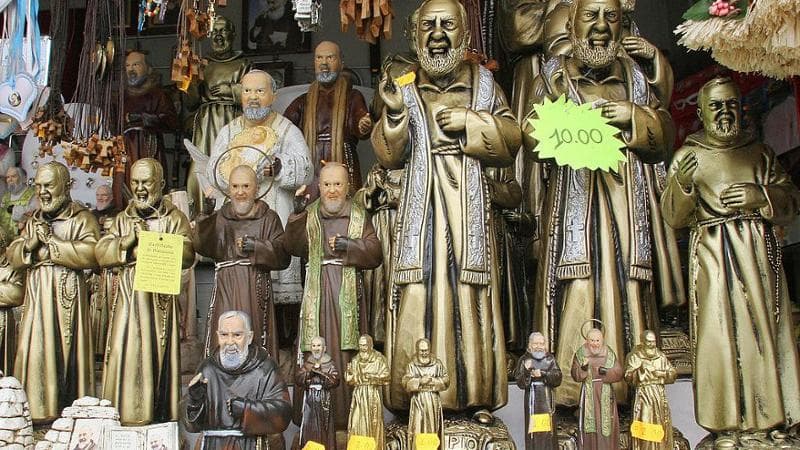
SAN GIOVANNI ROTONDO — No one had imagined there could be redundancies — job cuts — even in a sacristy. Least of all Pope Paul VI, who in 1970 formally recognised the role of church attendant, paving the way for those doing the job to be given contracts and proper employment status.
In San Giovanni Rotondo, Puglia, the friars who run the shrine dedicated to Saint Pio — Padre Pio of Pietrelcina, a member of the Order of Friars Minor Capuchin who was canonised by John Paul II — arrived at a meeting with the sacristans accompanied by a battery of lawyers.Then came the announcement that stunned the room: “We have to begin dismissal procedures for 38 of you.” The reason? “Ask the head of personnel,” says Rinaldo Totaro, guardian of the Capuchin friary, as he changes after celebrating Mass for the 100th birthday of Brother Ludovico.
Donations from the faithful
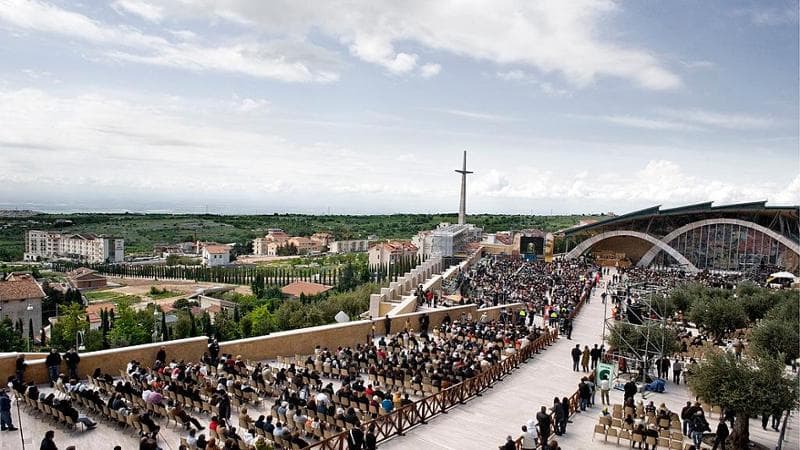
The 89 employees of the foundation that runs the shrine are overseen by accountant Matteo Pappalardo. “Those workers cost us €1 million a year. And the only money we can use to pay them comes from donations. Visitor numbers have fallen, and 24 of the 34 shops on Viale Padre Pio have closed. But we want to preserve jobs, and we will put forward our proposals as part of the procedure.”
As in all major industrial disputes — at Fiat, Whirlpool or the former Ilva steelworks — talks will now begin around the negotiating table.But there will be no managers in suits and ties on the other side of the table. The employers are friars, often elderly, who live on charity.Like Father Fedele, 92, uncle of Five Star Movement leader Giuseppe Conte: “The sacristans don’t work here anymore. Now we have the nuns.” For the past three years, in fact, the sisters have been taking the place of paid employees.
The unions protest
For the CGIL, the left-wing trade union confederation, the decline in visitor numbers is therefore merely a pretext and “could set a dangerous precedent”, warns Pierluigi Di Stasio, secretary of the Foggia branch of Filcams CGIL.
The dispute has dragged on for years: the other side, dressed in friars’ habits, has never applied the collective agreement.Judging by the crowds in recent days, the union officials would appear to have a point.
Last Sunday, there was a one-hour queue to get in, while restaurants were full even in the middle of the week.“But this is the peak month,” explains Sara Alessandrini, a Catholic travel blogger who was here in July. “Something needs to be done to relaunch the destination. Pilgrimage routes are very popular now. And people are increasingly looking for a religious dimension, as shown by the success of the film about Saint Carlo Acutis, which has brought a boom in visitors to Assisi.”
In San Giovanni Rotondo, by contrast, arrivals fell by 21.7% in the first seven months of the year, from 129,471 to 101,345. Of course, 2025 was the Jubilee year. But overnight stays have totalled 191,000: by the end of the year they are unlikely to reach the 448,000 recorded in 2018. And while San Giovanni Rotondo was Italy’s second-largest religious tourism destination after Rome in 2016, it has now fallen to third place, overtaken by Assisi, the city of Saint Francis.
“The numbers aren’t what they were 20 years ago,” acknowledges Bruno Di Maggio, one of the sacristans whose job is now at risk. He started out as a bricklayer and earns €1,400 net a month. He has two children to support, but bears no grudge against the friars: “They don’t have the money they need for the new contract. And they won’t go through with the dismissals.”
The letter to the Pope
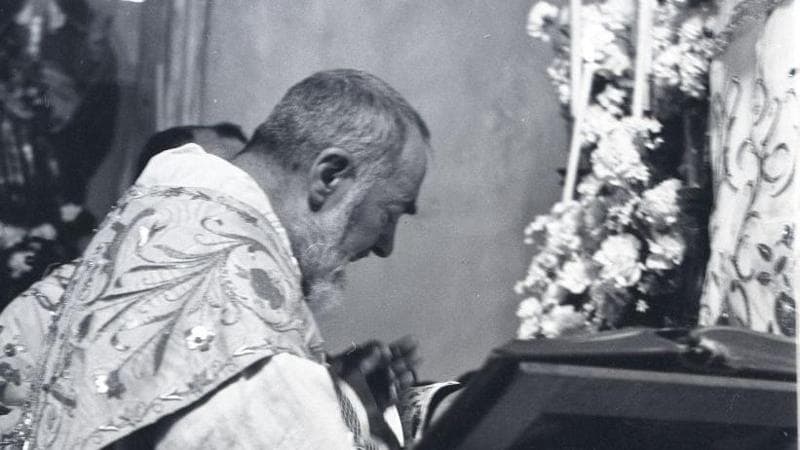
The others are worried. They have written a letter to the Pope: “We ask you to remember that behind a dismissal procedure there are people. That behind a line in a set of accounts there is a life.”The fall in visitor numbers is intertwined with the difficulties facing Casa Sollievo della Sofferenza, the debt-laden hospital founded by Padre Pio, as well as the wider healthcare economy in the area.“We have also opened a dispute with another religious foundation that provides rehabilitation services,” says Giuseppe Mangiacotti of CISL, a trade union confederation with Catholic roots.But the threat of dismissals comes in the wake of a dispute involving a unionised employee — Antonio Laporta of CGIL — who is demanding compliance with the collective agreement signed by Italy’s 2,000 sacristans with the Federation of Clergy Associations.At the heart of the dispute is the application of Appendix A, which provides an additional €300 a month for those working in shrines. Laporta brought legal proceedings against the foundation and in February secured his tenth victory.The dispute centred on the distinction between visitors and pilgrims. The friars argued that people come to San Giovanni Rotondo as pilgrims only on a limited number of days — such as September 23, the anniversary of Padre Pio’s death — while during the rest of the year visits are primarily cultural and touristic, meaning Appendix A should not apply.The Bari Court of Appeal disagreed. “The shrine is widely known to be the destination of continuous and ongoing pilgrimages by devout believers. If that is the case (and it is), there are no grounds for denying the applicability of Appendix A.”Francesco Dileo, the provincial head of the order, has instructed its members not to speak publicly.
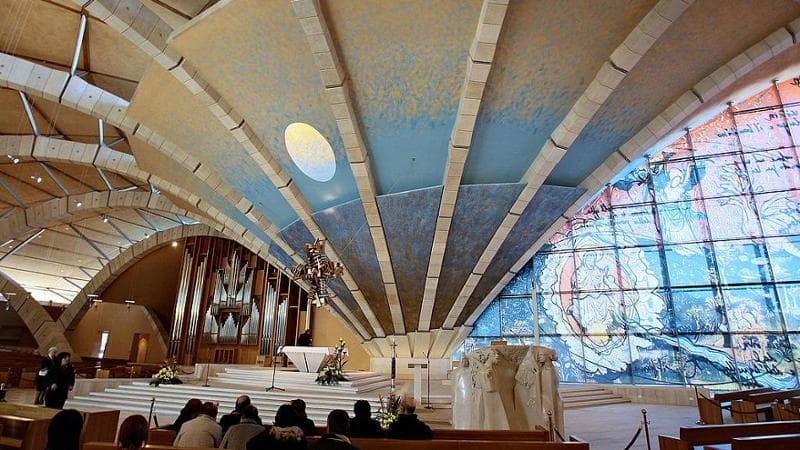
Franco Moscone, bishop of the diocese, does answer questions.“I hope there will not be disputes serious enough to result in mass layoffs. If there are wage claims, they should try to resolve them. If there is surplus staff, they should assess that on the basis of pilgrim numbers around the shrine. But there should be no immediate cuts.”
The translation of this article was reviewed by a Language Service Provider