
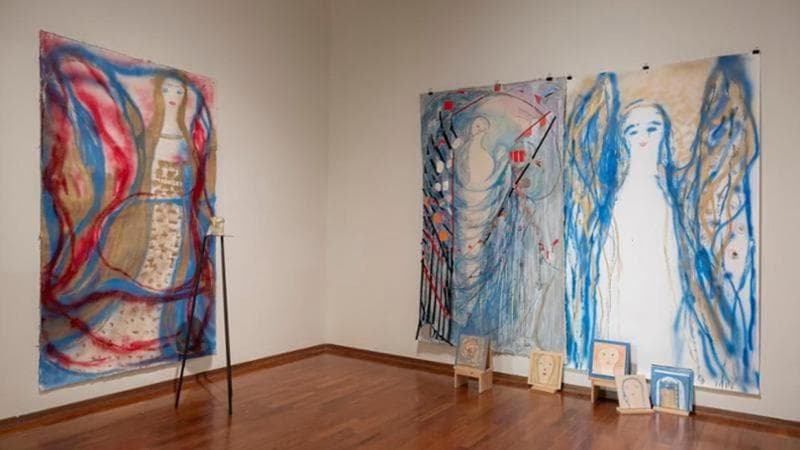
A three-part exhibition reveals the strength and delicacy of an extraordinary artist who brought together art and everyday life, the visible and the invisible, the finite and the infinite. The tribute comes a century after her birth. As the only woman in the Arte Povera group, Marisa Merz brought her own distinctive — one might even say feminine — perspective to the experimental approach and the innovative use of materials shared by her fellow artists.
“Marisa Merz. La danza delle ore” (The Dance of the Hours) opened on Thursday at Turin’s Fondazione Merz, GAM and Castello di Rivoli, as Artissima, the city’s international contemporary art fair, gets under way. The fair runs until 1 November.
Curated by Chiara Bertola, Sébastien Delot, Francesco Manacorda, Beatrice Merz, Chiara Parisi and Marianna Vecellio, the exhibition is complemented by a new project by Tacita Dean, who was invited into Marisa Merz’s former home and studio in Turin to create a film and a series of photographs capturing the memory of the place and its power to generate images and ideas.
It offers a contemporary perspective on a space that preserves the profound continuity between domestic life and artistic creation.
“The exhibition grew out of an idea by Chiara Bertola and Francesco Manacorda, the directors of GAM and Castello di Rivoli,” says Beatrice Merz.
“The centenary was the perfect opportunity to celebrate my mother, but I didn’t want to do it alone, so we joined forces. It’s an exhibition made up of different stories and intersections. The exhibition is ultimately a unique undertaking, but our collaboration will continue through other projects.”
Fondazione Merz: the art of transformation
The first part of the exhibition begins at the Fondazione Merz, which Beatrice chairs and where she has co-curated the show with Sébastien Delot.
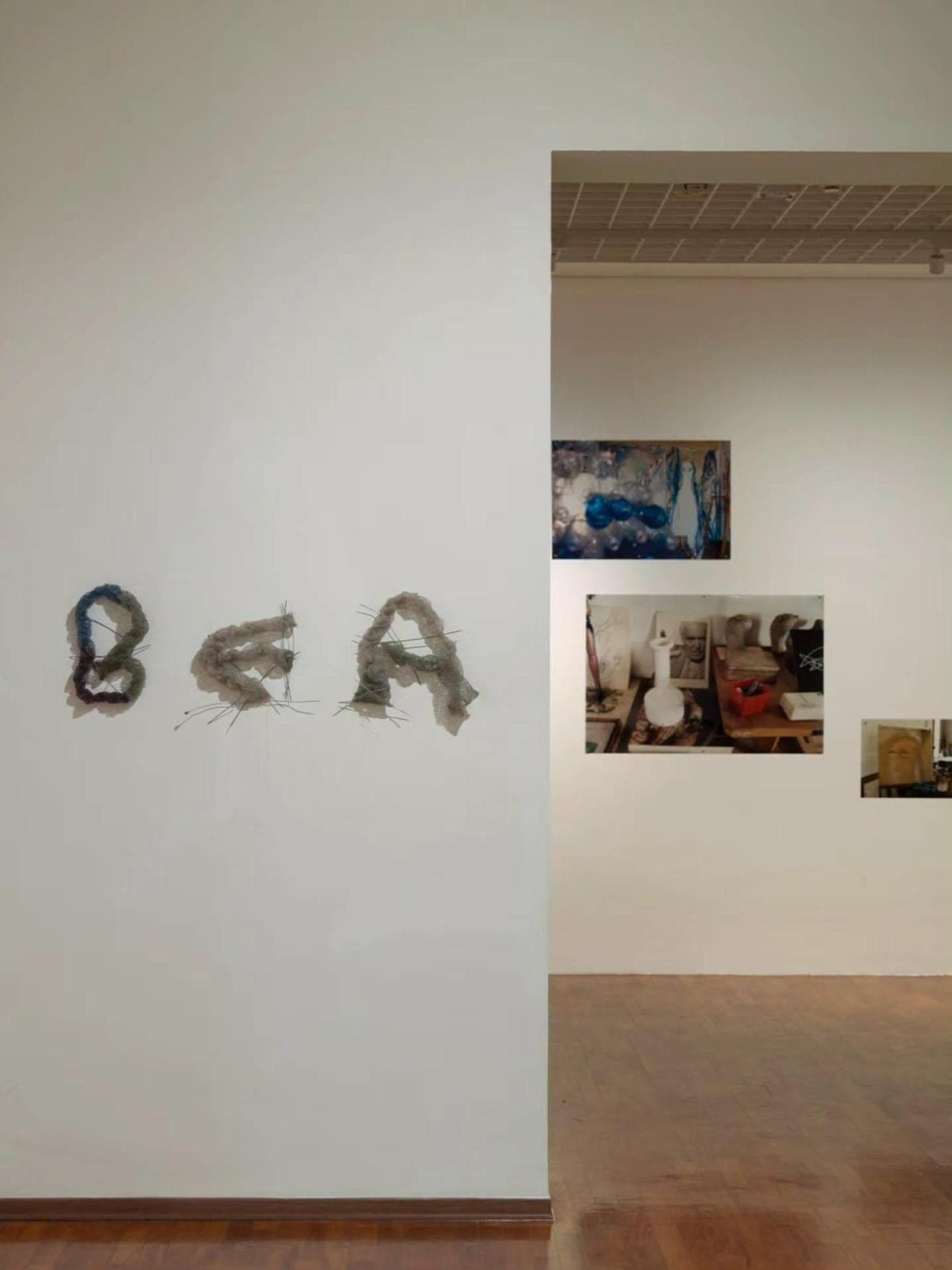
Here, the emphasis is on experimental research through the transformation of materials — a metamorphosis that involves both matter and images. The exhibition explores the creative processes behind Merz’s works, from her celebrated small heads to faces that are sometimes barely sketched out, yet always intensely expressive and almost sculptural.
There are also delicate meshes created by knitting not with wool but with copper wire, which she used, for example, to fashion tiny shoes.
“It’s an art you experience with both the mind and the heart,” says Delot.
“In this space,” the curators explain, “visitors can access the artist’s innermost world, her nascent thoughts, intuitions and the dialogue that accompanies the creative process. What emerges is a personal language in which high and low, highbrow and popular culture, artistic practices and everyday activities become intertwined.”
GAM: where art meets everyday life
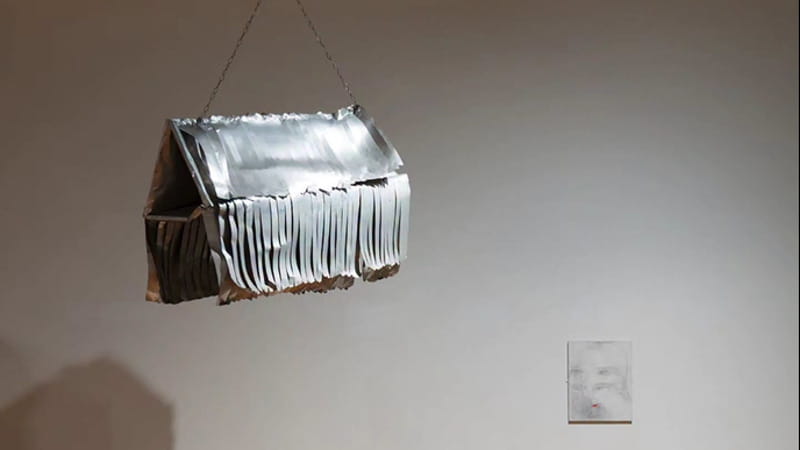
At GAM, the focus shifts to the home, the original setting for Marisa Merz’s artistic practice, and to domestic space as both studio and workshop.
Here, historic works are displayed alongside a significant collection of previously unseen pieces from the artist’s home. Materials such as copper, thread, fabric, wax and clay once again bear witness to the constant transformation of matter and thought.
Among the works on display is Living Sculpture, a 1966 piece from the Museo Sperimentale that belongs to GAM’s collection and has been restored for the occasion by the Centro Conservazione e Restauro di Venaria.
“Here we see Marisa in a museum setting, with historic works alongside more intimate pieces,” says Chiara Bertola, who co-curated this section with Chiara Parisi.
“The exhibition itself becomes a metaphor for artistic creation, which feeds on relationships unfolding over time. One of its defining features is impermanence, the unfinished nature of work that always remains open to something else.”
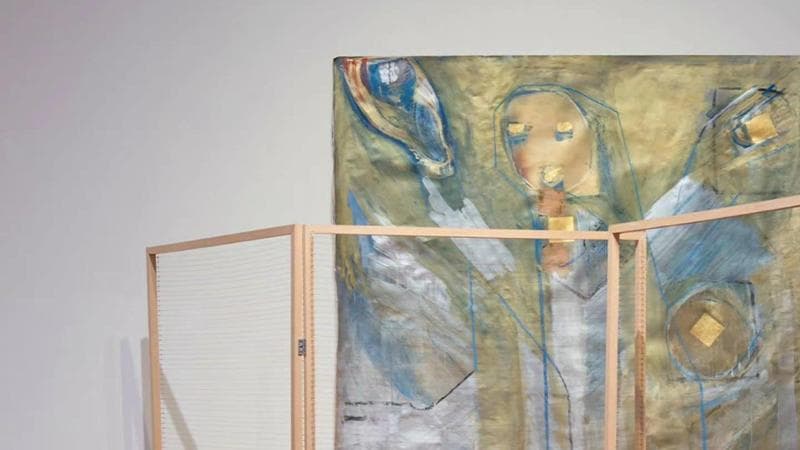
Faces emerge here too, with restless, sometimes alien gazes, alongside figures of angels.
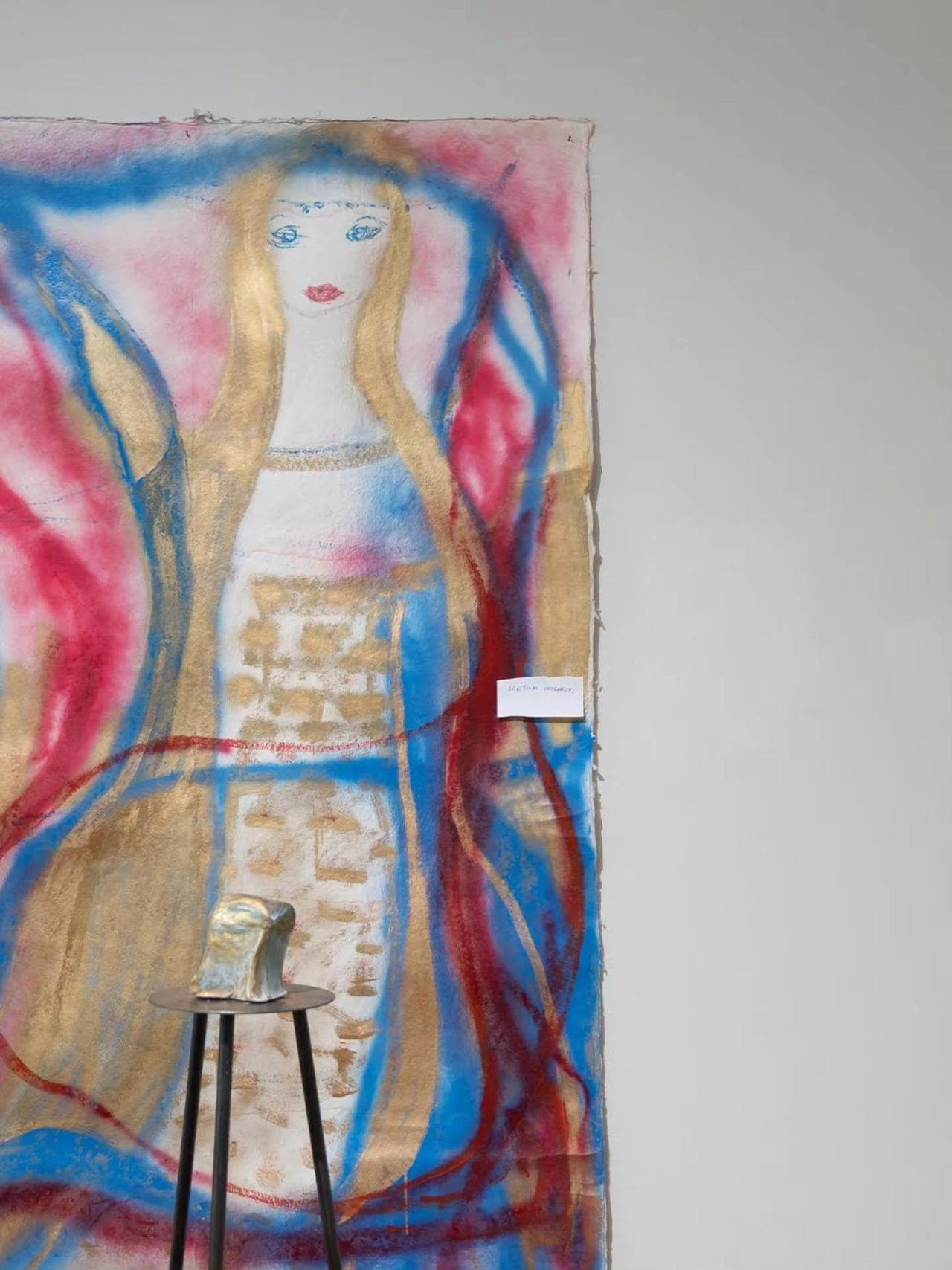
Angels also appear at Castello di Rivoli, where the exhibition continues in the Manica Lunga gallery.
“Marisa Merz had a desire to remain elusive, to resist being categorised, to reach towards parallel universes,” says Francesco Manacorda, who curated this section with Marianna Vecellio.
“The figure of the angel thus takes on the meaning of an invisible presence that manifests itself in the exhibition.”
Castello di Rivoli: beyond the visible world
The Castello di Rivoli exhibition opens with a reconstruction of E il naufragar m’è dolce in questo mare (And to Be Shipwrecked in This Sea Is Sweet to Me), an installation Marisa Merz first presented in 1980 at Turin’s Tucci Russo gallery and, in a new version, at the 39th Venice Biennale later that year.
The work forms the centrepiece of an exhibition featuring more than 50 paintings, drawings, installations and sculptures. Together, they explore the environmental and spiritual dimensions of her artistic practice and the ability of art to give form to what lies beyond the visible world.
The exhibition also includes contributions from ten contemporary women artists whose creative processes or artistic perspectives resonate with those of Marisa Merz: Leonor Antunes, Micol Assaël, Beatrice Bonino, Miriam Cahn, Tacita Dean, Thea Djordjadze, Lara Favaretto, Daiga Grantina, Armineh Negahdari and Solange Pessoa.
This article was reviewed by an external translation partner