
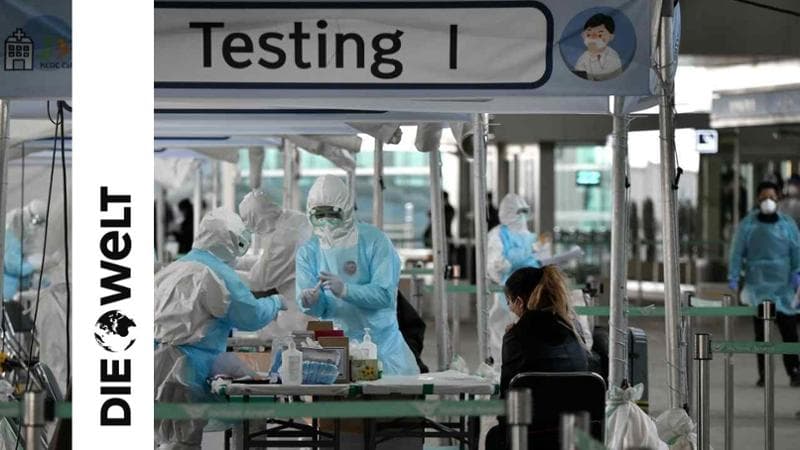
Millions of deaths, lockdowns and mass vaccination campaigns rolled out in record time. The Covid pandemic marked a global upheaval whose effects continue to be reflected in mortality statistics years later.
Although the pandemic has long since ended — officially, according to the World Health Organization, on 5 May 2023 — excess mortality persists in many parts of the world: more people are dying than would have been expected on the basis of trends in previous years.
This is confirmed by an analysis of life-expectancy trends in 34 industrialised Western countries. The study was carried out by the Max Planck Institute for Demographic Research in Rostock, one of the world’s leading centres for population studies, together with researchers from the prestigious British universities of Oxford and Cambridge.
The researchers analysed demographic data covering the years from 2020 to 2024. The figures offer some interesting insights and point to two fundamental conclusions.
The first is that, in most European countries, despite the pandemic now being over, life expectancy remains below the level that had been projected for each country before 2019.
The second is that in some countries life expectancy has recovered much more quickly than in others. This has been particularly true in Eastern Europe, where vaccination rates in many countries were lower than in Western Europe.
Which raises a question: is there a connection between the two?
The mortality figures
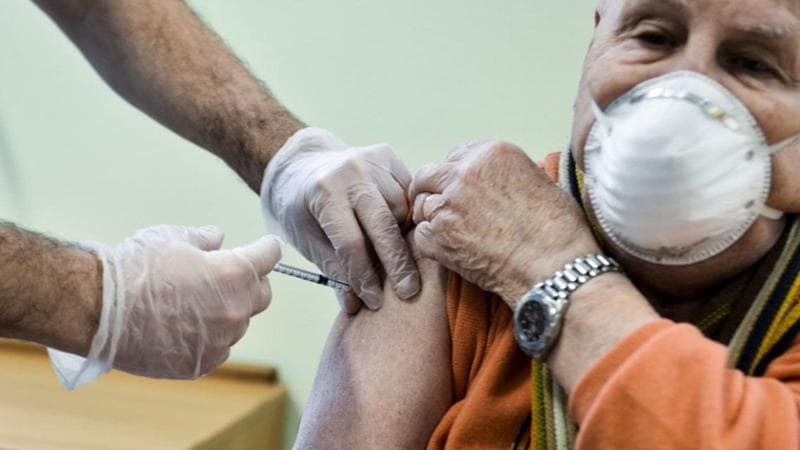
Mortality data show that in Western Europe, where vaccination was widespread, death rates remained lower during the acute phase of the pandemic. Many lives were saved.
Since then, however, life expectancy has failed to return to its pre-pandemic trajectory. By the end of 2024, life expectancy in Germany was still almost six months below pre-pandemic projections. According to this calculation, life expectancy in France was 0.59 years below the projected level in 2024, compared with 1.08 years in the Netherlands.
In Poland, Bulgaria and Slovakia, by contrast, life expectancy had fallen by as much as four years during the catastrophic winter of 2021. Today, however, there is virtually no measurable excess mortality left in these countries.
A study that made headlines around the world
The issue had already been examined by researchers. In 2024, the specialist journal BMJ Public Health published a study that attracted considerable international attention and circulated particularly widely among vaccine sceptics.
Its authors suggested that vaccines might have played a part in the high mortality rates recorded during the pandemic. The paper immediately drew fierce criticism from scientists, including Li Yang Hsu. In a response, the professor of infectious diseases described its conclusions as “neither reasonable nor responsible”.
In early August 2026, the study was finally retracted, against the wishes of its lead author.
The official reason for the retraction was that the study spread “misinformation about the possible causes of excess mortality” and was based only “to a limited extent on original work” by its authors.
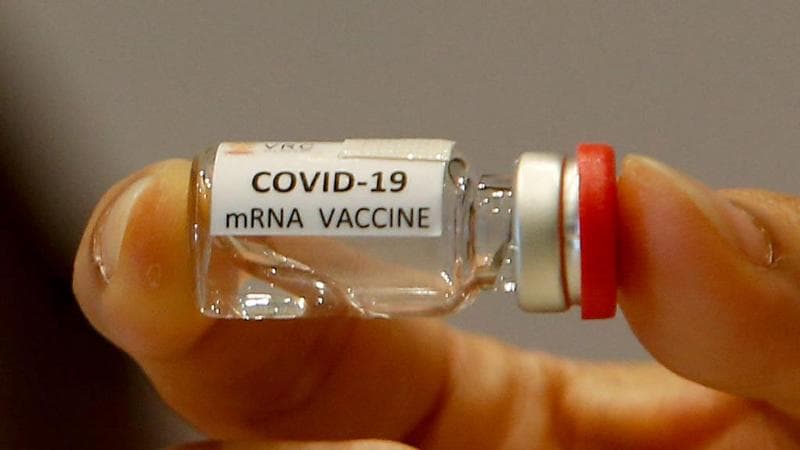
Alongside suggestive passages about vaccine-related harm and alleged mRNA gene therapies, it contained the highly insinuating claim that “governments may not be able to publish detailed data on deaths broken down by cause”, although the authors argued that such information could have helped establish whether, among other things, “vaccinations or other overlooked factors played a decisive role” in the high number of deaths in 2021 and 2022.
The authors’ central argument was this: the peak of the global mortality wave had coincided with the introduction of mass Covid vaccination.
It is not disputed within the scientific community that, in rare cases, some people — including young people — have died from complications associated with vaccination. In several countries, including Germany, vaccination recommendations for younger age groups were changed.
Nor were the data used in the subsequently retracted study ever challenged on scientific grounds.
Interpreting the data
What was strongly disputed, however, was the way those data were interpreted.
One of the fundamental criticisms was this: the researchers had reported excess mortality across 47 Western countries, but had failed to take the next logical step and compare, country by country, excess mortality with vaccination rates.
This was despite the fact that those figures were available from the same freely accessible sources. Such a comparison would probably have led the researchers to different conclusions.
Were mRNA vaccines safe?
Research has continued, and population data are now available for the years after 2022 as well. If Covid vaccines really were causing deaths on a large scale, this ought to be visible in those figures.
The question, then, is how many vaccinated and unvaccinated people died during and after the pandemic. That is precisely what researchers in France examined last year.
A large study compared vaccination status with mortality data for more than 27 million people. Researchers examined the entire French population aged between 18 and 59, following them from their first dose of an mRNA vaccine, beginning in May 2021, until the study ended in May 2025.
The results left little room for doubt.
Among vaccinated people, deaths from severe Covid were 74 per cent lower. Beyond this expected protective effect, their all-cause mortality— which would also include any deaths not recorded as vaccination-related — was 25 per cent lower.
The conclusion was that, according to these data, vaccinated people lived longer on average overall. On the basis of these figures, there is no convincing case for arguing that mRNA vaccines caused an increase in mortality.
But why, in Germany, France and many other parts of the world, are people still dying earlier than they did before Covid and the vaccination campaigns?
Jonas Schöley offers a relatively simple explanation. He is one of the lead authors of the Max Planck Institute for Demographic Research analysis mentioned earlier.

Speaking to WELT, he says: “When a new and deadly virus emerges, it is not particularly surprising, at least initially, that population life expectancy should fall over the medium term”.
There are historical examples of this too. When European settlers brought diseases such as smallpox, measles and respiratory infections to the Americas, an estimated 90 per cent of the indigenous population died. Life expectancy among that population collapsed.
Over the longer term, however, it began to rise again, partly because the survivors were more resistant to those viruses.
What is causing excess mortality?
A seasonal example in Germany is influenza. In the winter of 2017-18 alone, an estimated 25,000 people died from flu, many of them elderly. But because influenza waves occur every year, these deaths are already factored into projections of overall life expectancy.
“After Covid, too, it will take time for life expectancy to find a new equilibrium,” Schöley explains. Any unrecognised and potentially fatal vaccine-related harm, he adds, “has nothing to do with it”.
Yet Schöley confirms that lower vaccination rates in countries such as Poland, Bulgaria and Slovakia may indeed have contributed to the particularly rapid recovery in life expectancy following the shock of Covid — but in a very different way from what might initially be assumed.
Precisely because vaccination rates were lower in these countries at the beginning of the pandemic, very large numbers of the most vulnerable people died during the terrible Covid winter of 2021.
And because every person can die only once, the number of deaths fell in subsequent years, and did so more quickly than in countries such as Germany, where a larger number of elderly people and people with heart disease or diabetes had survived Covid.

“In Bulgaria, by the end of 2022, an estimated 3.4 per cent of the over-65s who would still have been alive under normal mortality conditions were missing — roughly one in 30,” says the demographer Schöley. “That significantly alters the structure of the population. The surviving population tends to have lower mortality. As a result, after the shock, statistically calculated life expectancy rises rapidly”.
The phenomenon has long been known in classical demographic research as the “harvesting effect”. It occurs, for example, during heatwaves. In exceptionally hot months, more people than average die, particularly the elderly; in the weeks and months that follow, mortality rates fall by a similar amount.
With complex events such as Covid, this displacement of deaths over time can continue for several years.
Before publishing its study, Schöley’s research team is trying to estimate the true scale of the “harvesting effect” in the context of the Covid pandemic. Other studies have already done so for Lithuania, Greece and Poland, and to some extent for England.
To demonstrate conclusively that this effect is responsible for the rapid recovery in life expectancy in some parts of Eastern Europe, however, would require a more complex analysis than Schöley is currently planning.
According to the researcher, it would be necessary to examine in detail how the composition of the population changed during the pandemic. Exactly how many elderly people died? How many had diabetes? How many suffered from heart disease, organ disorders or other risk factors?
Those data probably exist, including for Bulgaria. Researchers would, however, have to gather them from public authorities and local databases.
Whether, more than three years after the official end of the pandemic, anyone will still undertake that work remains to be seen, the demographer concludes.
Copyright WELT/LENA — Leading European Newspaper Alliance
This article was reviewed by an external translation partner