How China became indispensable to the western Pharma industry
Marie Bartnik
Pharmaceutical companies are increasingly reliant on China, but governments — particularly in Europe — have been slow to respond
3 min read
The pharmaceutical industry is setting its sights East. In its search for a new generation of obesity treatments, Danish drugmaker Novo Nordisk has turned its attention to China. The company will pay up to $2.6 billion for the rights to market an experimental drug, developed by local biotech firm Hengrui Pharma, outside China. Innovation is booming in this fast-growing market, and Western pharma giants are racing to tap into it to replenish their Research and Development pipelines. AstraZeneca recently struck a deal worth up to $18 billion with China's CSPC, while Merck signed a $2 billion licensing agreement with Hansoh.Yet the biotechs thriving in Shanghai and Suzhou are not confining their research to obesity treatments.
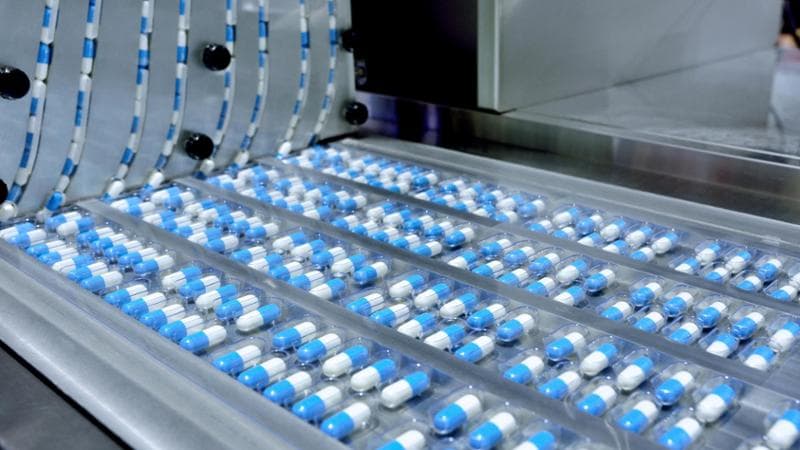
Capsules on a pharmaceutical production line
They are also making major strides in oncology, the pharma industry's largest market. Indeed, the successor to Keytruda—Merck's blockbuster cancer drug and the world's top-selling oncology treatment—may well come from China. A therapy developed by Chinese firm Akeso and licensed to US-based Summit Therapeutics promises to outperform the blockbuster in clinical trial efficacy.
Chinese companies have also become powerhouse players in antibody-drug conjugates (ADCs)—targeted cancer therapies that pair a chemotherapy dose with an antibody designed to target the patient's tumour directly. In just five years, Asia's share of the global drug development pipeline has surged from 28% to 43%, surpassing both the United States and Europe, according to consultancy McKinsey. By 2024, Asia already accounted for nearly two-thirds of biotech patents granted worldwide—five times Europe's share.
China's Booming Biotech Sector
"The dynamism of China's biotech ecosystem is unlocking vast licensing opportunities for Western pharma giants," says Sébastien Malafosse, a fund manager at Edmond de Rothschild Asset Management, fresh from a trip to China. "Chinese companies aren't yet offering breakthrough innovations, but they are developing cutting-edge drugs targeting in-vogue receptors and mechanisms of action. The level of innovation there is exceptionally impressive."
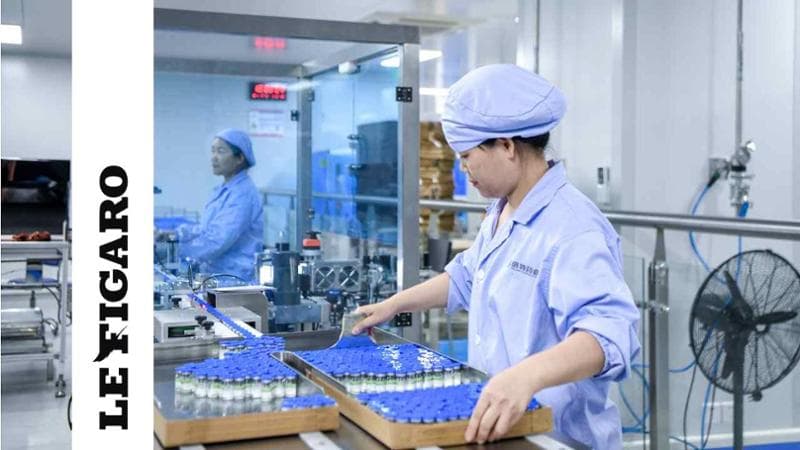
Licensing deals with Chinese companies were virtually non-existent a decade ago. Today, they account for around 40% of all global agreements, valued at $115 billion, according to GlobalData. Yet Western pharma companies are doing more than just cherry-picking new molecules from China. They are increasingly relying on Chinese firms for various stages of drug R&D—and now, even for manufacturing their most innovative treatments. French biotech Adcytherix, which raised €105 million a few months ago to develop an ADC, states bluntly that it manufactures its molecules in China, "like everyone else." The biotech praises the incredible work capacity of its Chinese contractor, WuXi, operating around the clock. "Their efficiency and work capacity are unmatched," explains Jack Elands, CEO of Adcytherix. "They are extremely flexible, which is crucial for us. We don't have a laboratory; our teams solely handle project management." "If we don't use the top contractors, others will," adds Thierry Laugel, partner at Kurma, a healthcare-focused investment fund. "Today, 50% of the pharmaceutical R&D market is concentrated in China."
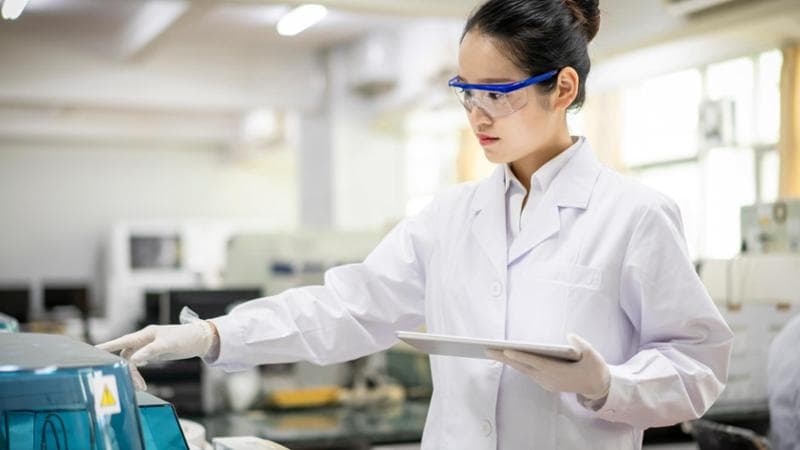
Manufacturing active pharmaceutical ingredients
China has become indispensable to the Western pharmaceutical industry
Many Western biotechs and pharma giants conduct their preclinical studies—tests carried out in labs or on animals—and Phase 1 clinical trials, when a drug is first administered to humans, in the country. "Chinese contractors carry out these stages two to three times faster and at a third of the cost compared to Europe," explains Rafaèle Tordjman, founder and president of Jeito, a biotech investment fund.
Beyond the initial development phase, Chinese players generally hand over to their Western counterparts. "Western players take over in Phase 2 or 3 and usually produce the commercial batches," explains Alexandre Clauzet, Head of Healthcare at UI Investissement." Yet the reality is that a large portion of production originated in China. Sometimes pharma companies no longer have a choice: by outsourcing these steps for so long, we have lost the know-how needed to carry them out in Europe or the US.
This momentum is now cascading downstream.
China already accounts for a large share of active pharmaceutical ingredient production—the molecules that give medicines their efficacy—for mature drugs. It is now gaining market share in innovative treatments—a segment that was previously the exclusive domain of European and American firms. "Pharma companies are increasingly manufacturing their newly FDA-approved innovative products and biosimilars at sites in China," notes market research firm GlobalData. Although the share of these drugs remains low, it is rising inexorably, reaching 6.7% of innovative medicines partly manufactured in China in 2025, up from 1.8% in 2022.
Among the pharma giants opting for this path are Johnson & Johnson, which outsourced manufacturing of the active ingredient for its monoclonal antibody Imaavy to WuXi Biologics, and GSK for its cancer drug Jemperli.
Washington backs down
Governments have not remained indifferent to China's rapid rise.The Coins Act, passed in the United States last year, sought to introduce scrutiny of transactions involving sensitive technologies with certain countries, including China. However, pharma giants pushed back and appear to have won their case. The US administration is currently working to soften the legislation—aiming to preserve Big Pharma's ability to source innovative Chinese molecules to replenish its R&D pipelines, Reuters recently reported.For now, the European Union is focusing its efforts on reshoring the production of active ingredients for mature drugs, such as antibiotics and insulin, rather than the drugs of the future.
(Copyright Le Figaro - Lena/Leading European Newspaper Alliance)
This article was reviewed by an external translation partner