
“Arms exports out of control” on one side. “Reliable rules for a secure Switzerland” on the other. A glance at the slogans used by supporters and opponents of the proposed changes to Switzerland's War Materiel Act is enough to see just how deeply the issue has divided the country.
At times, listening to and reading what the two camps have to say, it is hard to believe they are even talking about the same thing.
On 29 November, Swiss voters will decide whether to approve changes to the law governing arms exports. Early opinion polls suggest the Yes and No camps are neck and neck. To understand what is at stake, it is worth looking at what the law permits today and what would change if the reform is approved.
Under current rules, export licences cannot be granted if the destination country is involved in an armed conflict or systematically commits serious human rights violations. The same applies if there is a risk that the weapons could be used against civilians or re-exported without Switzerland's prior consent.
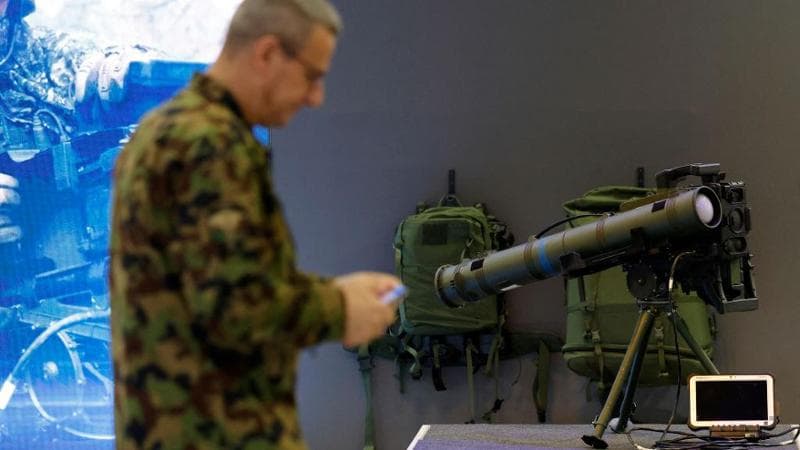
A parliamentary majority believes these restrictions have become too stringent in a rapidly changing geopolitical landscape. It has therefore voted to relax them, giving the Federal Council — Switzerland's government — greater flexibility to respond to emerging challenges.
The most significant change would allow military equipment to be supplied to a partner country involved in an armed conflict, provided the sale was compatible with Swiss neutrality and the country's foreign policy or security interests.
The list of partner countries is set out in a government ordinance, meaning the Federal Council can amend it. It includes most European countries, as well as Argentina, Canada, the United States, Japan, Australia and New Zealand.
The Federal Council would also be able to depart from the usual export criteria for any country in exceptional circumstances, where doing so was necessary to safeguard Switzerland's foreign policy or security interests.
Another change concerns re-exports. Countries purchasing Swiss-made military equipment would no longer automatically have to seek Switzerland's permission before transferring it elsewhere. However, Switzerland would continue to require such approval, through a non-re-export declaration, whenever foreign policy, neutrality or security considerations made it necessary.
“The arms industry accounts for peanuts in the economy”
For opponents of the legislation, who presented their case to the press on Monday, the proposed changes would open the door to Swiss weapons once again being authorised for use in war zones.
That warning comes from the Greens, the Social Democratic Party (SP) and the Evangelical People's Party (EVP), alongside several NGOs and the Swiss Bishops' Conference.
Their fear is that removing the existing safeguards would allow any country receiving Swiss weapons to pass them on to others. Swiss arms could end up in Sudan or be used by Israel in the Gaza Strip. Opponents also warn that Switzerland would be left with some of the most permissive arms export legislation in Europe.
For Alicia Giraudel of Amnesty International, “This vote is not just about arms exports. It is about Switzerland's credibility when it claims to defend human rights, the rule of law and international law.”

The inclusion of the United States and Argentina among the designated partner countries is another source of concern.
“It would amount to a blank cheque for Trump, Milei and company, who trample on human rights and democracy,” opponents argue.
They also point out that Ukraine has been excluded from the proposed relaxation of the rules.
“And that was under pressure from the Swiss People's Party (SVP). It is cynicism in the service of the arms industry,” says Fabian Molina, a Social Democratic MP from Zurich.
“What's more, the industry doesn't need this law, because unfortunately it is doing very well,” says Lisa Mazzone, president of the Greens.
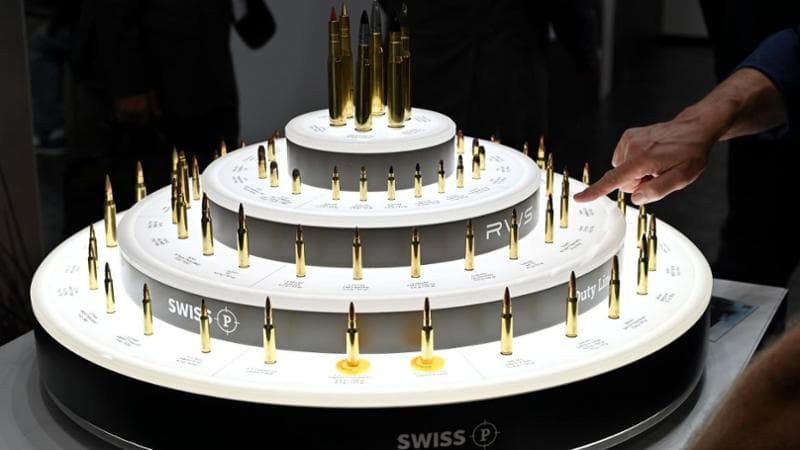
The Geneva politician condemns the lobbying behind the reform, pointing out that “the arms industry contributes peanuts” to Switzerland's GDP.
Marc Jost, an Evangelical People's Party MP from Bern, recalls that a few years ago a popular initiative known as the Corrective Initiative sought to tighten restrictions on arms exports. It was eventually withdrawn in favour of a compromise.
“Calling that consensus into question so soon after it was agreed undermines public trust in the authorities,” he argues.
“Politics must adapt to new realities”
Supporters of the legislation, who are due to present their arguments on Thursday, reject this bleak assessment.
Their camp includes Switzerland's centre-right and right-wing parties — the Swiss People's Party (SVP), the Radical-Liberal Party (FDP), the Centre and the Green Liberals — as well as the country's leading business organisations and trade associations, together with groups close to the military.
“Under the current rules, Swiss manufacturers are sometimes no longer considered for international procurement contracts,” warns Swissmem, the association representing Switzerland's mechanical and engineering industries.
For Economiesuisse, the country's leading business federation, the changes are essential to securing the future of the Swiss arms industry.
“Having our own defence industrial base is essential to the Swiss army's defence capabilities and, consequently, to our country's security,” the organisation says.
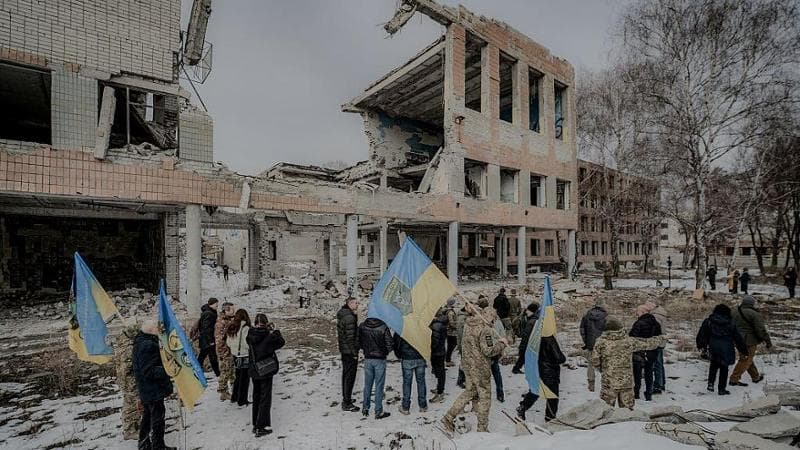
On Ukraine, Céline Weber, a Green Liberal MP from Vaud, argues that Switzerland cannot simply brush aside its policy of neutrality.
“If we were to supply weapons to Ukraine, or even authorise their re-export, we would have to do the same for Russia.”
For Sidney Kamerzin, a Centre Party MP from Valais, the proposed law does not betray the compromise reached after the withdrawal of the Corrective Initiative.
“The very nature of politics is to adapt to new realities. When that compromise was reached, the global geopolitical situation was completely different. Today, we need to give the Federal Council room to manoeuvre so that it can make decisions on a case-by-case basis, taking account of neutrality, growing threats and our interests.”
Copyright Tribune de Genève-Lena/Leading European Newspaper Alliance)
This article was reviewed by an external translation partner