
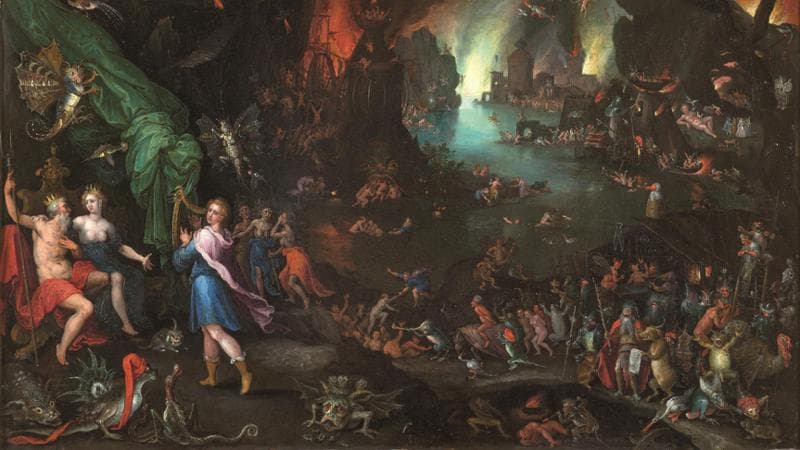
In Naples in 1697, the Flemish painter Abraham Brueghel died. The son of Jan the Younger, he had been living in Italy for almost 50 years and was one of the most highly regarded still-life painters of his day. With his death, the story of the dynasty of painters founded by Pieter came to an end.
The Brueghels is the title of the exhibition at Palazzo Reale in Milan, curated by Carlotta Striolo and based on a project by Bernard Aikema, which traces the artistic journey of the dynasty across four generations, beginning with its founder, Pieter the Elder.
An unmistakable style
For all the diversity of their subjects, the Brueghels’ work retained distinctive and unmistakable characteristics — their surname became what contemporary marketing would call a “brand”.
Their surname became what contemporary marketing would call a “brand”
It all began in a village called Brueghel, circa 1525, according to Karel van Mander, author of the first Pieter the Elder biography. Van Mander's source is considered both essential and misleading to the artist's reputation.
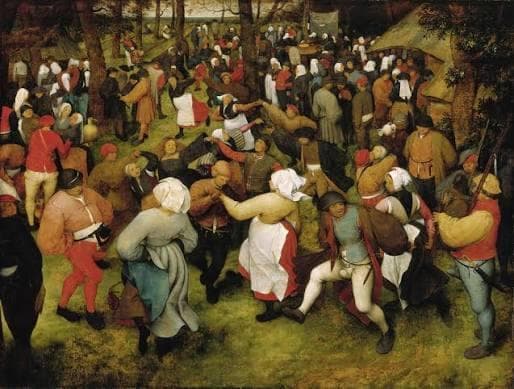
Among the few established facts of a life that remains relatively obscure is a journey to Italy between 1551 and 1554, which introduced Pieter to mountains, volcanoes and classical ruins. Initially a draughtsman, producing designs for Cock’s engravings after Bosch, Pieter later emerged as an original artist in his own right. His visionary fantasies gradually gave way to teeming, realistic depictions of the traditions, pastimes and mentality of ordinary people.
Ordinary people
Ordinary people — ugly, coarse, toothless and badly dressed, the kind the upper classes laughed at. Perhaps Pieter himself initially did too: van Mander recalls his nickname, “the Jester”, and tells how he enjoyed slipping into peasant wedding celebrations, pretending to be a relative of the bride or groom so that he could observe everything around him.
These were people whose lives revolved around work, lived in rhythm with nature and the changing seasons, with little respite beyond dancing, fairs, bird-catching, skating and games.
A sophisticated, self-aware artist
But Bruegel — he dropped the “h” from his surname in 1559 — did not paint for peasants, nor was he one himself. He was a sophisticated and self-aware artist, and the Flemish objectivity of his representations — the almost miniaturist attention paid to the tiniest detail — was merely the alphabet of a much more complex language.
The viewpoint of all these works confirms it: painter and viewer alike look down from above on the elemental life unfolding beneath them. “He painted,” wrote his friend, the geographer Ortelius, “things that cannot be painted.” And in his pictures there is always another layer of meaning to be sought: one must “understand what has been painted”.
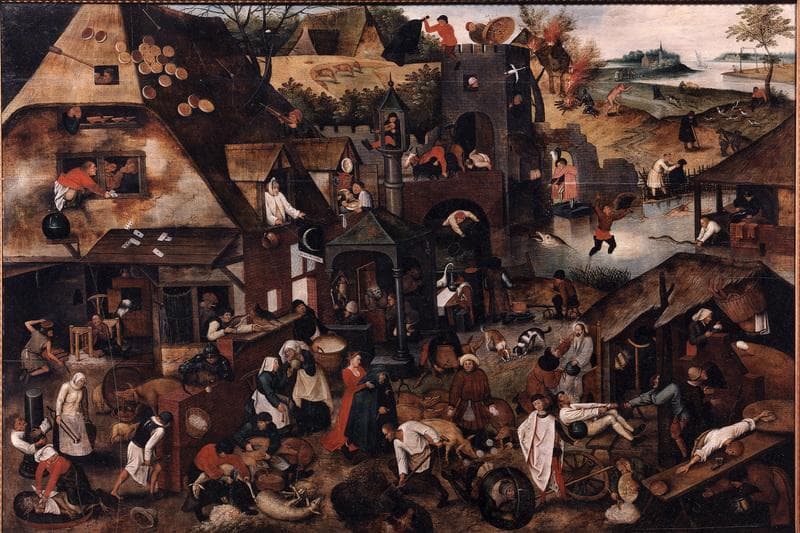
Although their true meaning remains ambiguous, Pieter’s paintings, invariably small or medium-sized, were an immediate success among the merchants and burghers of Antwerp and Brussels.
Yet when he died in 1569, just as the war that would engulf the Low Countries for 80 years was beginning — eventually leading to the independence of the secessionist Protestant United Provinces and, later, the Dutch Golden Age — he could only have dreamed that his name, and his style, would outlive him. In his will, he asked his wife to burn some of his drawings, perhaps because they were too satirical or politically dangerous.
Among the children he left behind were two sons, Pieter and Jan. The first was five years old, the second just one.
The artistic inheritance
And yet both became painters. They took up their father’s artistic legacy and strategically reclaimed the Brueghel surname. They reproduced and expanded upon his subjects and themes — peasant festivities, proverbs, landscapes, seascapes and Gospel scenes transplanted to the Dutch countryside — helping to codify the iconographic system of painting genres, which also made the works easier to market.
The paths taken by the two sons, however, diverged. Pieter, his father’s namesake and therefore known as the Younger, specialised in fires and visions of hell. Jan, perhaps the true star of the exhibition, devoted himself to landscapes, forests, still lifes and flowers.
Like his father, Jan travelled to Rome, around 1592. There he met Cardinal Federico Borromeo, who chose him as an alternative to the unmanageable Caravaggio and brought him to Milan. It was there that Jan left his masterpiece, the Vase of Flowers, now in the Biblioteca Ambrosiana.
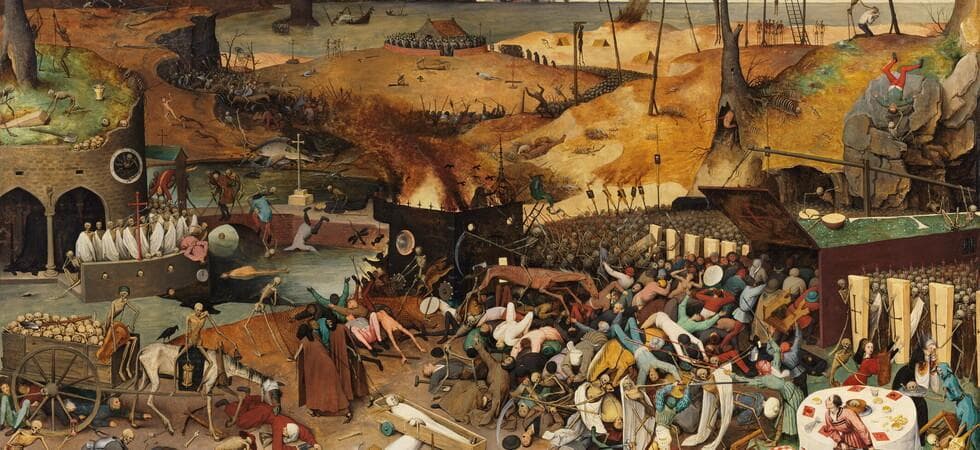
His son, Jan the Younger, also gravitated towards Italy, spending time in Milan and Palermo — where he was accompanied by van Dyck — and specialising in battle scenes, singeries and allegories of war.
A radical choice
More than a century of painting, a single name: a radical and esoteric pursuit of truth that became a style and then a form of serial production, in a family-run enterprise of astonishing efficiency and global reach. The extraordinary breadth of their influence is itself documented by numerous examples.
Family as business, pride and destiny: a story told by paintings, prints and drawings
This is the story told by the 80 works — paintings, prints and drawings — brought together for the Milan exhibition.
The family as business, pride and destiny.
This article was reviewed by an external translation partner