
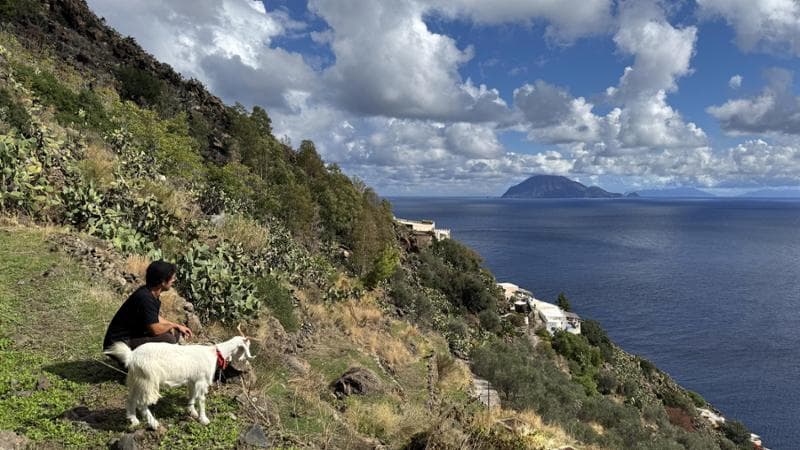
ALICUDI – I'm meeting Alberto at the 560th step. The young arcudaro — as the inhabitants of Alicudi, one of Sicily's Aeolian Islands, are known — explains why he has asked me to climb so far. "The island is selective," he says. "To get around here, to reach a particular place, you have to rely on your own two legs."
Alberto lives in the mid-19th-century house that belonged to his great-grandfather Angelino, next to the cemetery where his ancestor is buried. Centuries-old walls and a solar power system. After studying theatre in Rome and Paris, he rediscovered his roots. Now he dreams of staging Euripides here.
He has named his donkey Fyodor. Inside the house lives Spina, a pure-white baby goat, who shares the space with Birra the cat. Alberto also has a workshop where he makes his creations: handwoven baskets and traditional fishing traps.
Alberto represents a new generation of Alicudi islanders who are trying to stay and build a life here. He dislikes the Italian word resistere, meaning "to resist". Remove the first r, he suggests, and it becomes esistere: "to exist". For him, that is what matters.
He divides his life between the island and the outside world, leaving and returning. Together with his partner Giulia, a Roman with Catalan and Ecuadorian roots, he runs Isola Futura, a project offering visitors an immersive experience of the places and traditional practices that preserve the island's rural heritage.
Alicudi has no roads because of its sheer, vertical terrain. It is a dormant volcano rising out of the sea, with steep, rugged rock faces. Before it was a seafaring community, it was a farming island, a place defined more by the land than by the sea.
Its only routes are mule tracks that climb the mountainside, built to reach the cultivated land higher up and formed by steps of volcanic stone. There are no street names or house numbers. Instead, locations are identified by the number of steps you have to climb to reach them.
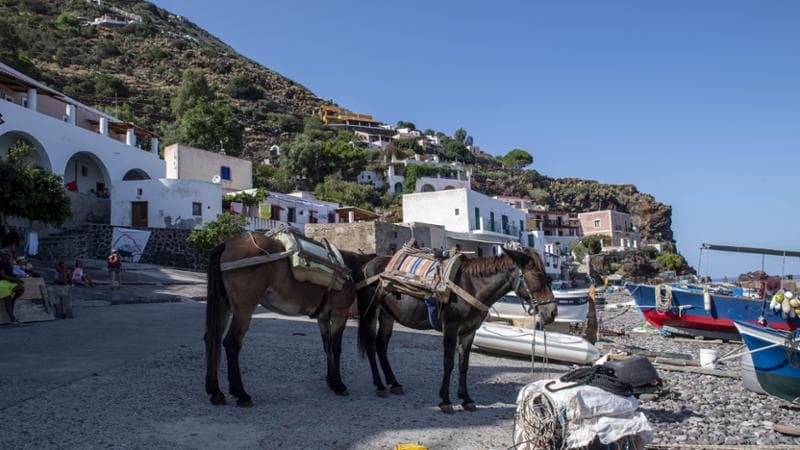
Getting around means walking. There is no alternative. The only means of transporting goods and building materials are donkeys — or, more precisely, mules, which can carry loads of up to 150 kilograms.
The island has no drinking-water supply of its own. Water still arrives by tanker ship, while a proposal to install desalination plants remains under discussion.
Electricity reached Alicudi in 1990, supplied by a diesel-powered generating station. But there is no public street lighting. At night, the island is plunged into darkness, illuminated only by the moon and stars. The sight is breathtaking.
Gerardo, Nanni Moretti's travelling companion in the film Caro Diario (Dear Diary), certainly didn't see it that way. In the film, Moretti's friend flees Alicudi because he longs for modern life: television, lifts, telephones and hot water. He shouts out his demands as he races down the mule track to catch the boat taking him away from the island.
Alicudi has only one or two restaurants, but there is a tradition of eating in local people's homes. So visitors gather around the tables of Adriana, or Gabriella and Silvio, who cook for everyone.
Silvio, a fisherman, is something of an institution on Alicudi. He goes out every day, weather permitting, hauling in his nets filled with "good fish for soups and frying".
"Life is good on the island," he says. "The peace and quiet we have here is a wonderful thing."
He believes in the legends surrounding Alicudi.
"It's true. Women fly. And I cut waterspouts in half. I talk to them."
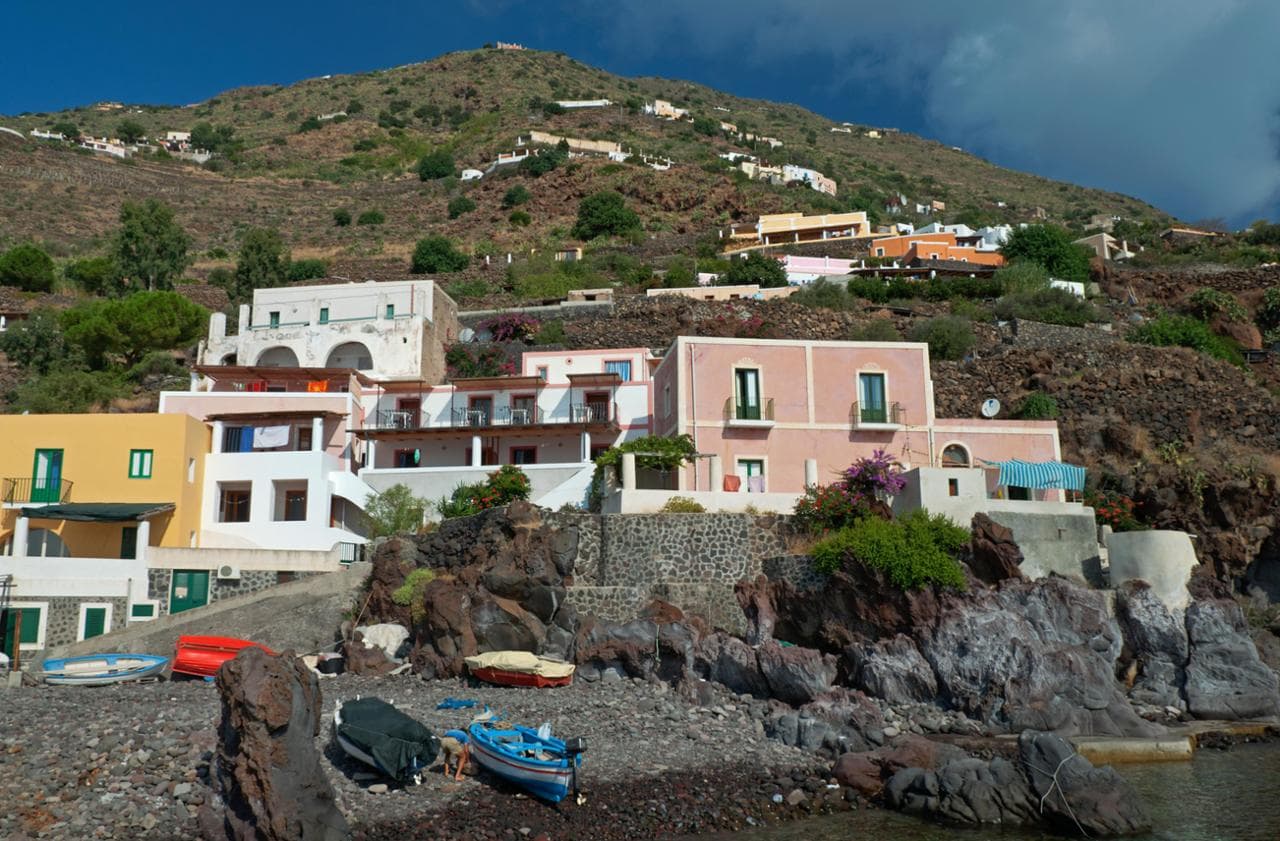
Macrina Marilena Maffei, an anthropologist specialising in maritime culture and a folklorist, has devoted her life to collecting the cunti — stories — and beliefs of the Aeolian Islands.
She warns against turning these traditions into mere folklore, particularly the legend of flying women who could cut through waterspouts to save fishermen, a phenomenon some have attributed to the effects of supposedly hallucinogenic bread once eaten on the island.
Maffei points out that similar stories exist elsewhere in the Mediterranean. She argues that greater attention should be paid to the real women who fished in the Aeolian Islands, bringing their largely forgotten lives into view. She recalls one woman who "gave birth while hauling in her fishing net".
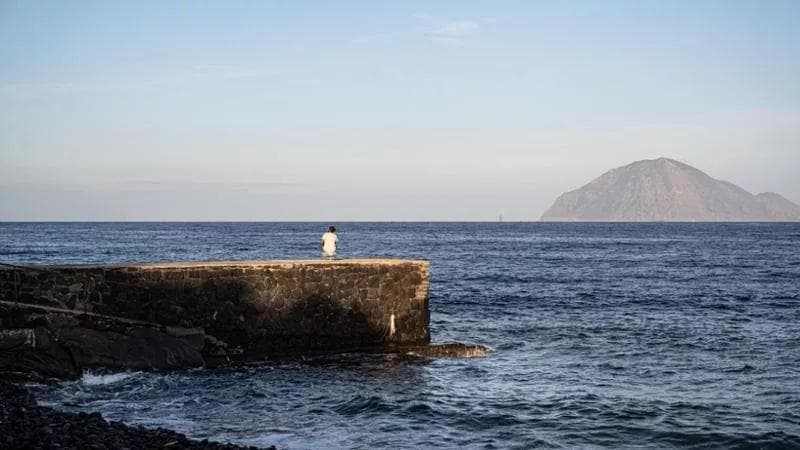
Alicudi is the last island on the map, an outpost in the open sea.
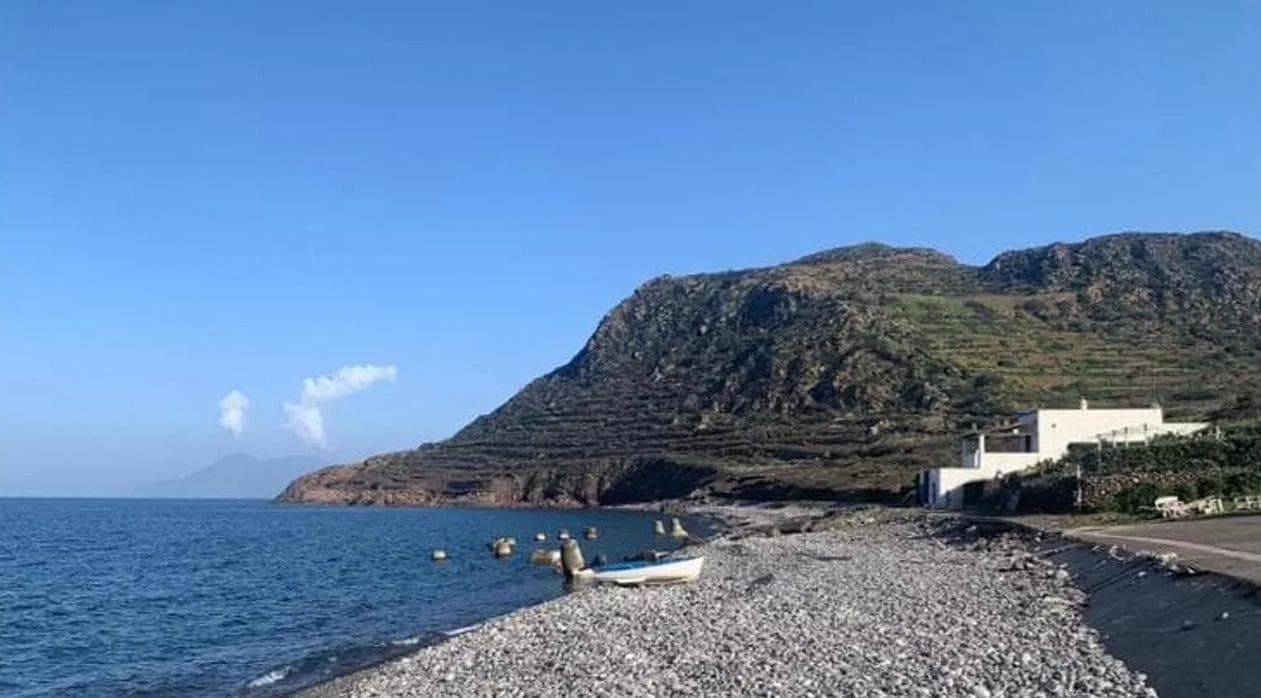
It has a tiny village, with a handful of scattered settlements confined to one side of the island. Traditional Aeolian houses have flat roofs designed to collect rainwater. There are two grocery shops, but no bank, pharmacy or bakery. Beyond the houses lie agricultural terraces, stairways plunging towards the sea, Mediterranean scrubland, heather, broom, prickly pears and caper bushes.
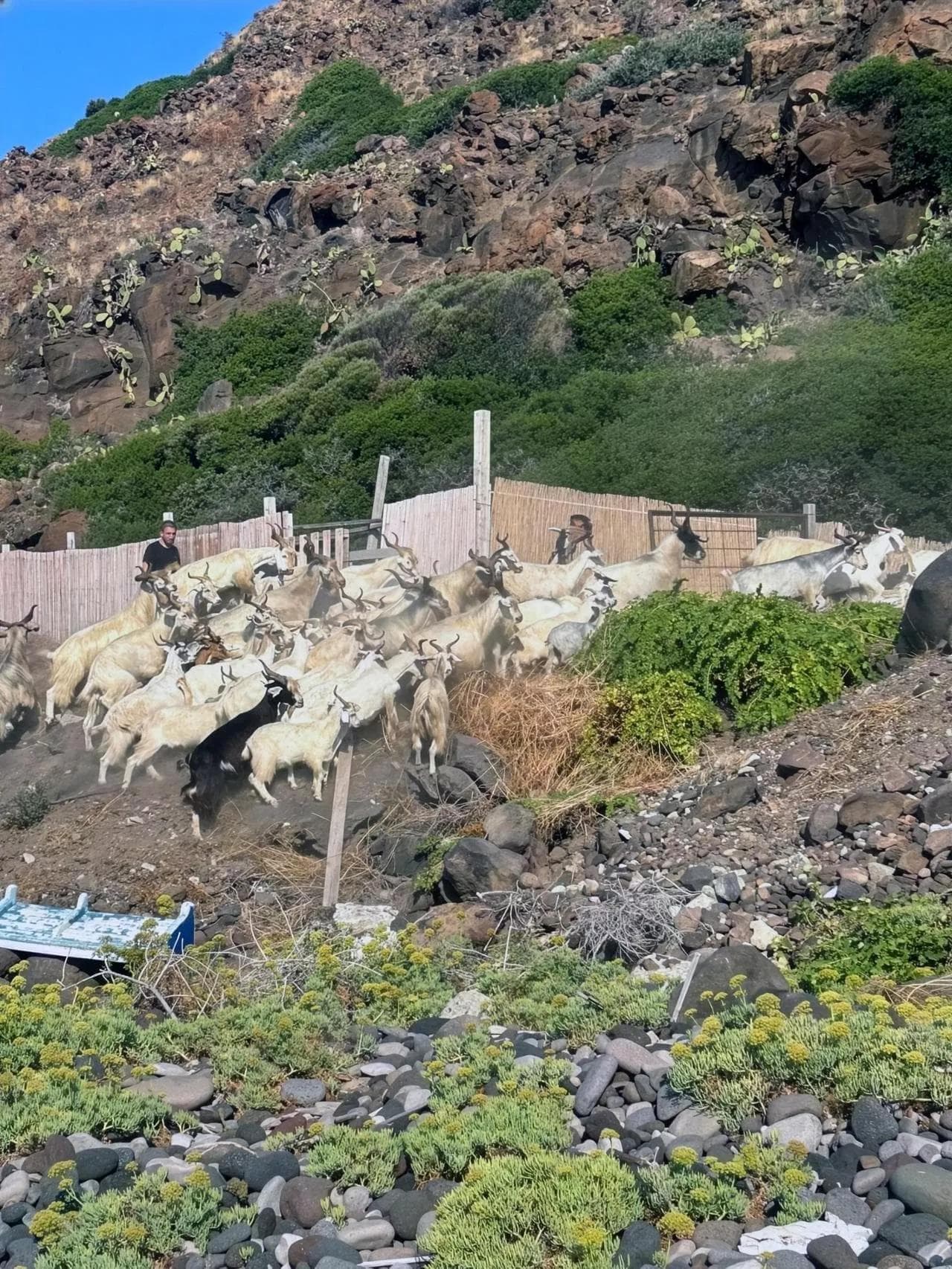
The least populated island in the archipelago has around 100 permanent residents spread across five square kilometres. In summer, that number can increase four- or fivefold.
Some residents fear Alicudi could turn into one giant B&B. Others have noticed growing numbers of selfie hunters in search of Instagram-worthy locations. Property prices have soared.
But the island's geography places its own limits on mass tourism. Alicudi protects itself.
It has an ancient, elemental soul, a spirit rooted deep in the earth.
For Francesca, who returns frequently after spending years as the island's on-call doctor, there are two very different versions of Alicudi.
"There are the summer islands, which become artificial, and the winter islands, which are beautiful. Sometimes nothing can reach us because of the wind or rough seas, but it doesn't matter. You can climb higher, where you feel the island's powerful spirit, which can also be dark.
"Once, all this land was cultivated. It was a place of survival and hard work, gradually abandoned. The islanders began emigrating to Australia, America and Europe."
In March, a boat carrying migrants arrived for the first time, an unusual event given the geography of Mediterranean migration routes.
At dawn, a fisherman spotted 19 Iranians and Iraqis stranded on rocks along a particularly inaccessible stretch of the island. He raised the alarm through the islanders' group chat, prompting the local community to mobilise.
The people here are neither frozen in time nor cut off from the rest of the world. The internet keeps them informed. A Palestinian flag flies on the quayside.
The island's school, once regarded as the smallest in Italy, reopened last year thanks to the enrolment of Nour, aged four, and Yousef, aged five. They are the children of Mohammed and Arbit, a Moroccan couple who work with houses and mules on the island.
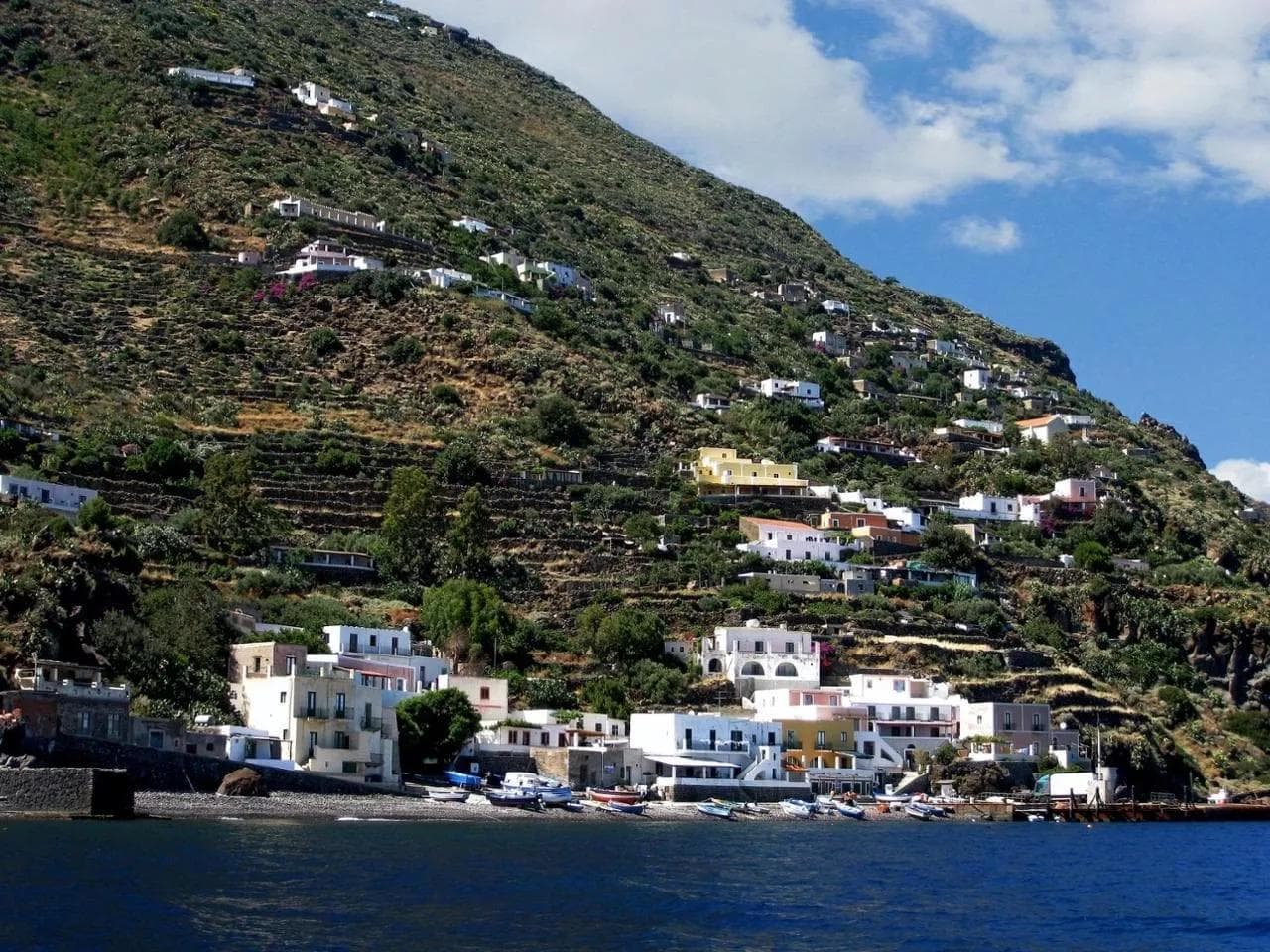
At step 357 stands the “Biblioteca Tra Cielo e Mare Franco Scaglia”, the “Between Sky and Sea Library”, housing 7,000 books donated to the island by Franco Scaglia's wife, Mascia.
Teresa arrived from Milan 30 years ago. She spent 20 years teaching at the island's school before continuing her work for the community, determined to preserve "everything that would otherwise be lost to the wind: photographs, films and books". A certain enchantment still lingers on her face when she talks about "the rock", as she affectionately calls the island.
"In the old days," she recalls, "when the hydrofoil cast off and headed out to sea, the boys lined up along the quay would dive into the water to say goodbye to someone leaving the island who had touched their hearts."
On the boat taking me away, a young man from the mainland sighs.
"Alicudi is harsh. There's nothing here, just donkeys and steps."
I watch the island recede into the distance.
"Alicudi is a source of endless fascination," says Jacques, a Canadian university professor standing beside me. "It gives you a chance to rediscover what really matters."
The translation of this article was reviewed by a Language Service Provider