
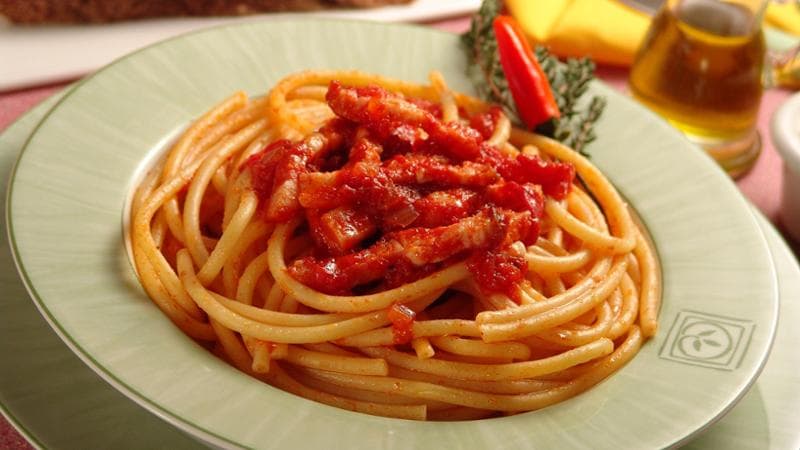
“Amatriciana has been on our menu since day one because, having opened as a trattoria, it was important to us to serve the great classics of Roman cuisine. Amatriciana is one of them. You simply can’t take it off the menu.”
Speaking from the kitchen of her Rome trattoria, SantoPalato, chef Sarah Cicolini shares her recipe for one of Italy’s classic pasta dishes. Amatriciana originated in the mountain town of Amatrice, approximately 140 kilometers from Rome, evolving from a dish eaten by shepherds as they moved their flocks between seasonal pastures into an icon of Roman cuisine.
Mastering the recipe at home is immensely satisfying.
“Our amatriciana has gone through several changes over the years. It took us a while to arrive at a distinctive version, one that would become a reason in itself to come and eat at SantoPalato.”
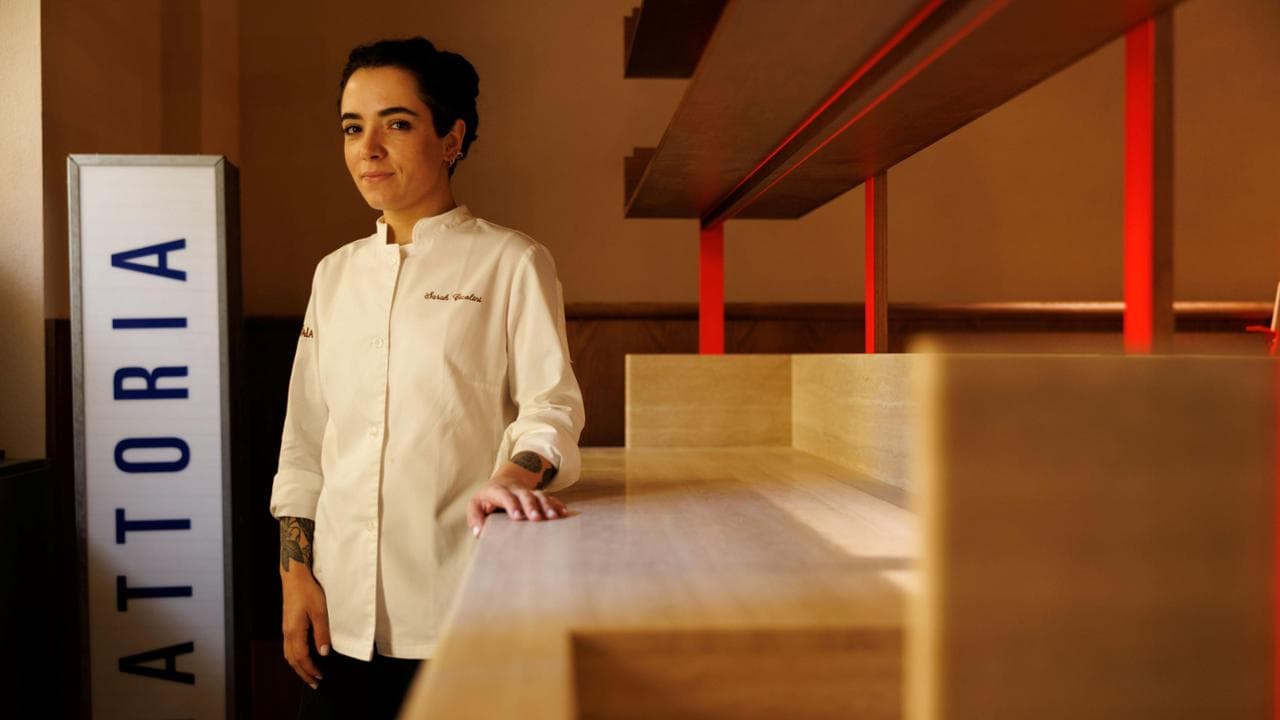
Among the defining features of Cicolini’s version are tomatoes that are never overcooked, guanciale that has been carefully rendered to release its fat, and a balance of acidity achieved with wine and vinegar.
Ingredients
Serves 4
500g canned peeled tomatoes
360g pasta (recommended shapes: mezze maniche, rigatoni, bucatini or spaghettoni)
300g diced guanciale (cured pork cheek)
50ml red wine vinegar
50ml red wine
Freshly ground Tellicherry black pepper, to taste
Salt, to taste
Grated Pecorino Romano, to taste
Method
In a large saucepan, cook the guanciale over a medium heat, allowing it to release its fat slowly until golden and crispy. Remove approximately half and set aside for serving. Deglaze the pan with the red wine and vinegar, allowing the alcohol to evaporate completely.
The secret is in the guanciale
“My advice is to cook the guanciale slowly so that it releases as much fat as possible,” says Cicolini. “You then need to balance that fat with acidic ingredients such as wine and vinegar. But if there isn’t enough fat to begin with, it becomes difficult to get it right.”
Getting the acidity right
“This way, the sauce develops a pronounced guanciale flavour, while the acidity of the tomatoes makes you want to keep eating without the richness becoming overwhelming. Then there’s the vinegar and red wine. We adjust the amounts depending on the type of tomatoes we’re using.”
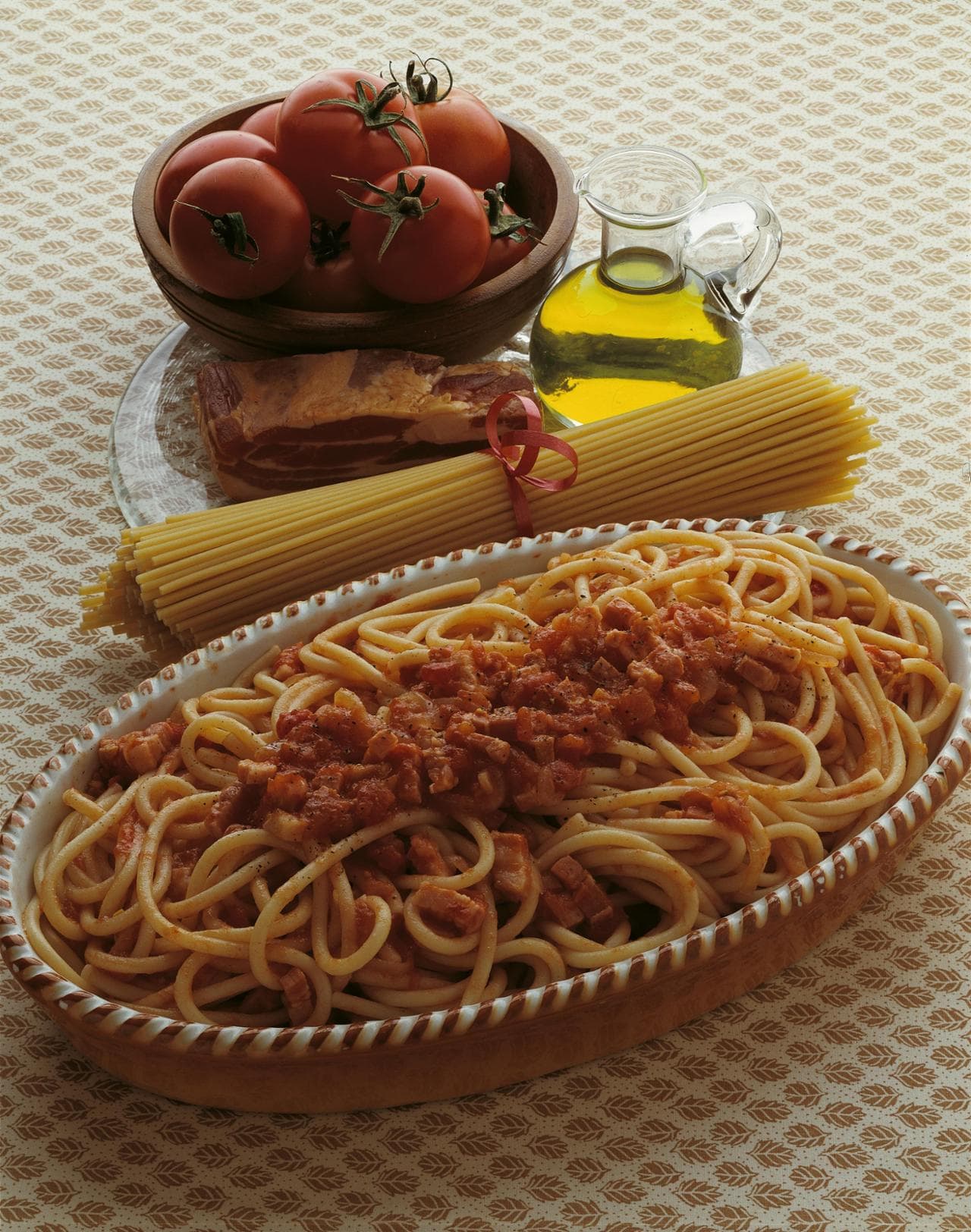
Don’t overcook the tomatoes
Add the peeled tomatoes, gently crushing them with a spoon. Cook over a medium-low heat for approximately 25 minutes, stirring frequently, until the sauce has reduced and developed a glossy consistency.
Add plenty of freshly ground black pepper and season with salt only if necessary.
“We currently use spaghettoni,” Cicolini explains. “In the past, we’ve also used mezze maniche and rigatoni.”
Meanwhile, cook the pasta in a large pot of generously salted boiling water. Drain when al dente and transfer it to the saucepan with the amatriciana sauce. Toss thoroughly to coat the pasta and finish cooking it in the sauce.
Serve immediately, topped with the reserved crispy guanciale, a generous sprinkling of grated Pecorino Romano and a final twist of freshly ground black pepper.
The translation of this article was reviewed by a Language Service Provider