
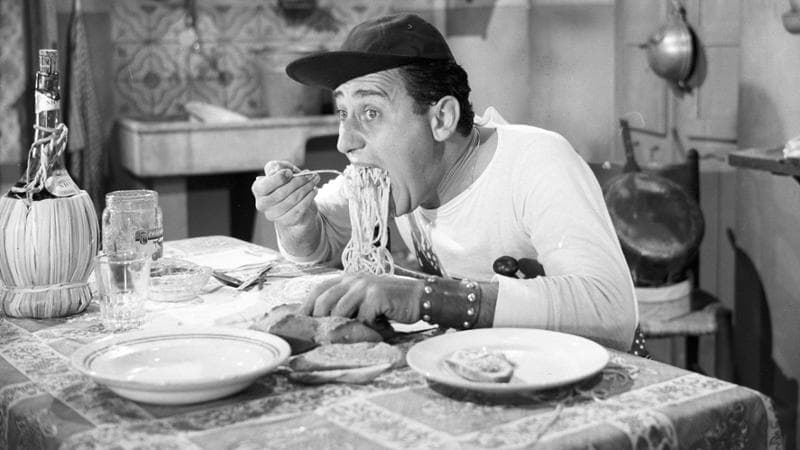
ROME – Pizza and pasta, the traditional emblems of Italian food, are the world’s favourite dishes. Now artificial intelligence has unanimously endorsed the supremacy of Italian cuisine. Rankings compiled by ChatGPT, Gemini and Claude all place pizza Margherita, spaghetti carbonara, spaghetti with tomato sauce and lasagna at the top.
The centuries-old art of making do
These are all dishes that combine a centuries-old talent for making do with an extraordinary ability to turn poverty into culinary excellence.
Pizza is perhaps the ultimate example. It is the most widely consumed food in the world, as well as the most internationally recognised Italian word. As far back as 1598, it appeared in A World of Words, the first Italian-English dictionary, written by John Florio, the celebrated linguist of Italian descent who had a profound influence on Shakespeare.
The stomach’s emergency service
Originally a kind of social safety net, pizza satisfied the age-old hunger of the people. The Italian writer Matilde Serao called it "the stomach’s emergency service".
Today, it is the world’s most popular comfort food, combining great taste with sustainability.
That is partly because a truly good Margherita is made with fior di latte or mozzarella from the previous day, when the cheese has begun to lose moisture and might otherwise go to waste. It is recycling at its most delicious.
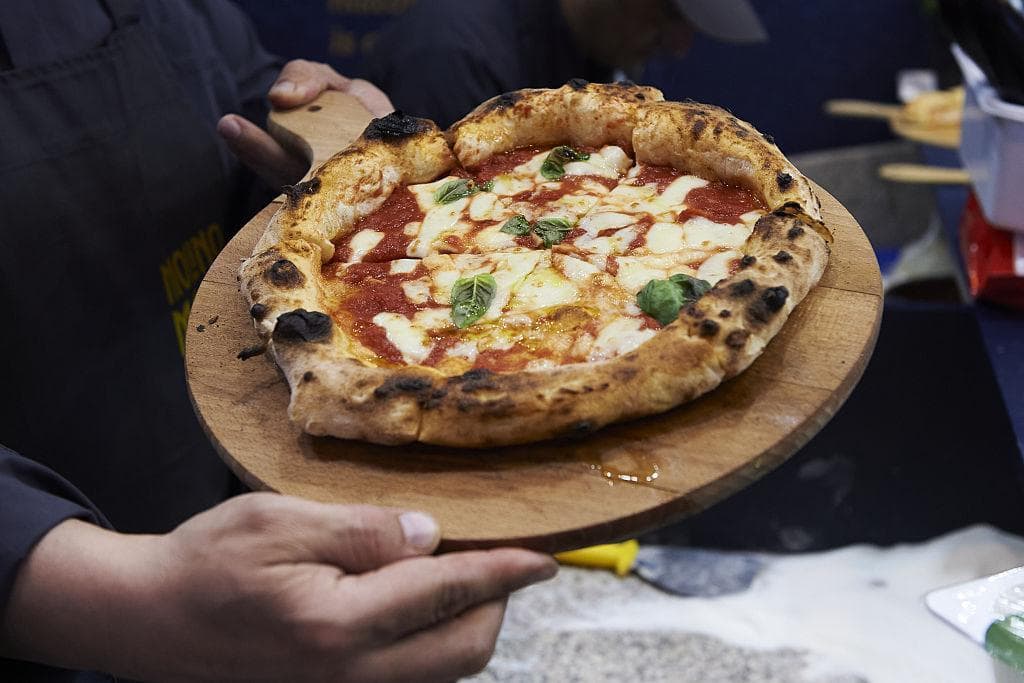
Crisp on the outside but soft within. Stretchy yet firm. Raised around the edges and thin in the middle. Neither too moist nor too dry. Neither overloaded with toppings nor bare. Neither undercooked nor overdone.
In short, it achieves a golden ratio of aroma, flavour and texture, encapsulating an entire treatise on transcendental gastronomy within a circle of risen dough.
It is this mastery that has turned Neapolitan pizza makers into genuine stars, their craft crowned with UNESCO recognition.
Carbonara and Aldo Fabrizi
Next comes spaghetti carbonara, a signature dish of Rome.
Some even regard carbonara as an American invention, arguing that the Allied forces’ K-rations contained eggs and bacon, so all that was needed was the addition of pasta.
But the theory has no real foundation. It may stem from the fact that the first written recipe appeared in 1952 in a Chicago restaurant guide.
A 1959 English cookbook by Dorothy Dale, entitled Italian Cooking, also contains a recipe called "Spaghetti, bacon, egg and onions".
In fact, however, the dish had already been mentioned in 1948 in an article about Rome’s squares by Renato Mucci, published in the Giornale di Trieste.
In 1951, it made an appearance in the film Cameriera bella presenza offresi, in which the great Italian actor Aldo Fabrizi orders a plate of carbonara.
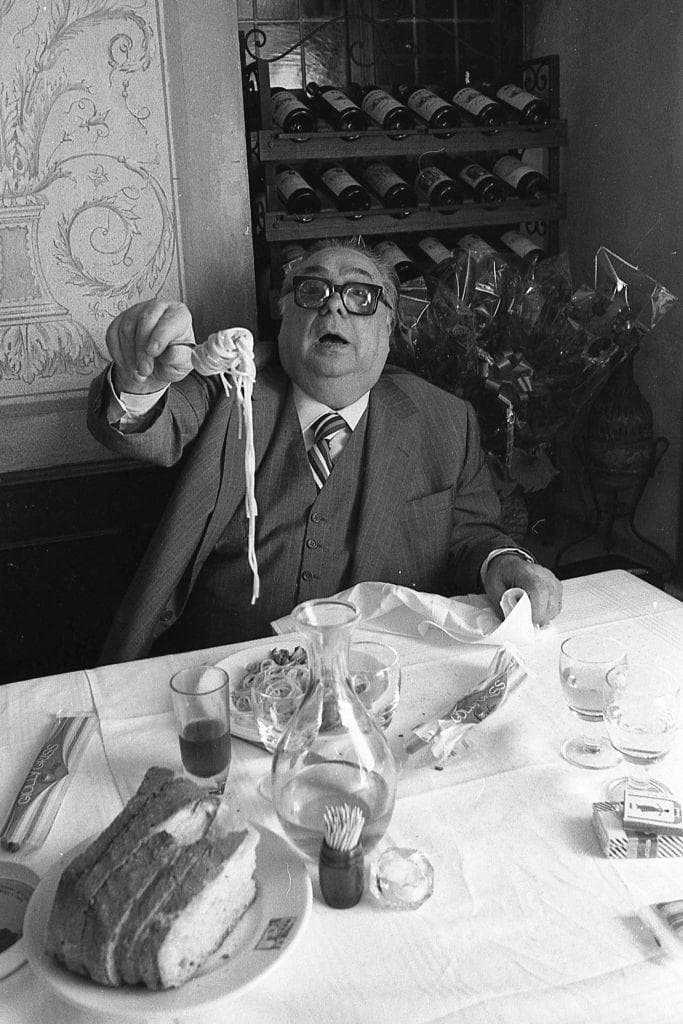
Another unforgettable cinematic carbonara is the one prepared and devoured by Bombolo, the stage name of actor Franco Lechner, in Una vacanza del cactus (1981). Here, trash comedy enters the realm of the sublime.
From Enrico Caruso to Totò
Spaghetti with tomato sauce, another iconic Neapolitan dish, also became a worldwide legend thanks to Italian emigrants, who took it with them wherever they went.
They had some exceptional ambassadors, not least Enrico Caruso.
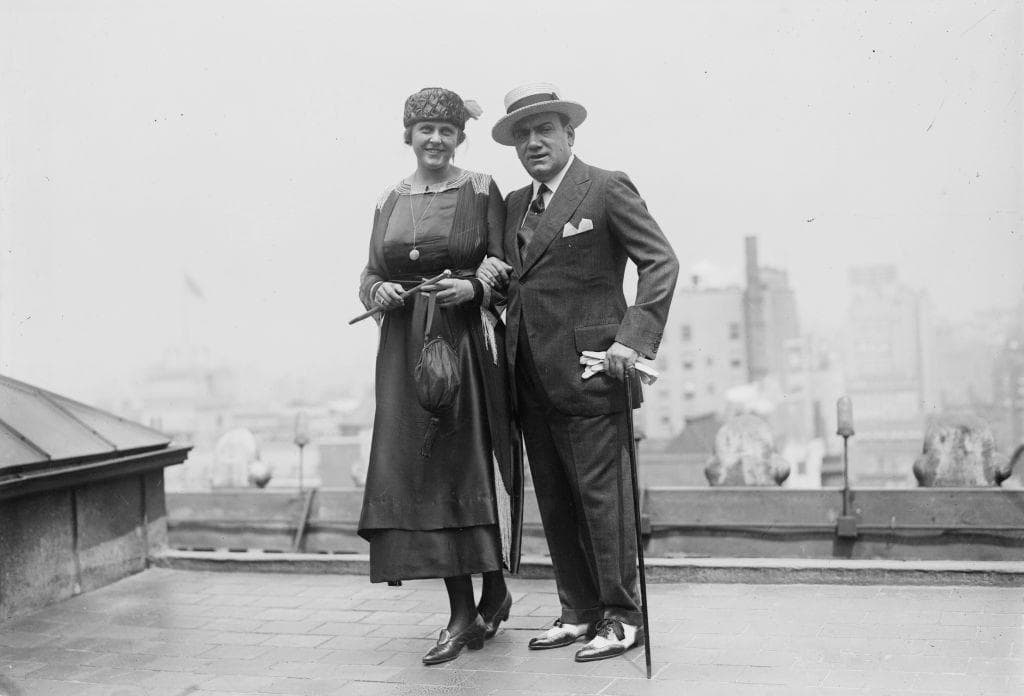
Whenever the celebrated Neapolitan tenor was in New York, he would head to Grotta Azzurra on Mulberry Street for dinner after performing at the Metropolitan Opera.
His enormous plate of spaghetti with tomato sauce invariably aroused the curiosity of English-speaking diners, who tried to discover the secret behind his masterful technique for twirling pasta around the prongs of his fork.
Until one evening, the great Caruso decided to put on a show. He threw away his cutlery and began eating with his hands, smearing tomato sauce all over his face, shirt and tie.
The gesture was later recreated by the actor Totò, whose real name was Antonio De Curtis, in the film Miseria e nobiltà.
The irresistible layered pasta bake
Italy can claim another gastronomic triumph thanks to lasagna.
This delicious, brick-shaped pasta bake is, in fact, the world’s most widely consumed ready meal.
Its origins can be traced back to the gourmets of ancient Rome, beginning with the chef and writer Marcus Gavius Apicius.
He called it lagana, the word from which our modern term lasagna derives. It was a baked dish made with thin sheets of pasta and meat.
There is, of course, a long journey from Apicius’s lagana to the ready-made lasagnas of today. Yet those primitive versions already contained all the essential elements of the dish.
The decisive steps towards its modern form and flavour were taken by medieval chefs at the court of Frederick II in Palermo and the Angevin court in Naples.
They committed the recipe to writing in the Liber de coquina, under the title De lasaniis, Latin for "On lasagna".
It consisted of layers of pasta alternating with cheese and meat, generously seasoned with spices.
Tomatoes were still missing. They would not reach Italian tables until five centuries later. But the essence of the dish was already there.
The arrangement of pasta sheets and cheese in a baking dish already foreshadowed the many varieties of lasagna we enjoy today.
There was both a simple version and a more elaborate one.
For the basic recipe, all that was needed was to alternate sheets of pasta with a rich, full-fat cheese and spices to taste. The result was a firm, compact bake that could be cut into cubes and then speared with a small stick.
But when the guest was a nobleman, the dish had to impress.
The layers of pasta were therefore filled with fried, boiled or scrambled eggs and alternated with layers of ravioli cooked in broth, stuffed either with meat or with roasted figs, almonds and sugar.
Instead of the béchamel sauce we use today, there were generous quantities of grated cheese. The whole dish was crowned with a ring of grilled sausages.
In other words, this was the ancestor of today’s Neapolitan Carnival lasagna.
Bologna versus Naples
Today, Italy’s approach to lasagna encompasses a multitude of regional variations, broadly divided into two great culinary schools: Bologna and Naples.
The Bolognese version features fresh egg pasta sheets, béchamel sauce and minced meat. The Neapolitan version uses durum wheat pasta sheets, tomatoes, small meatballs, provola cheese and ricotta.
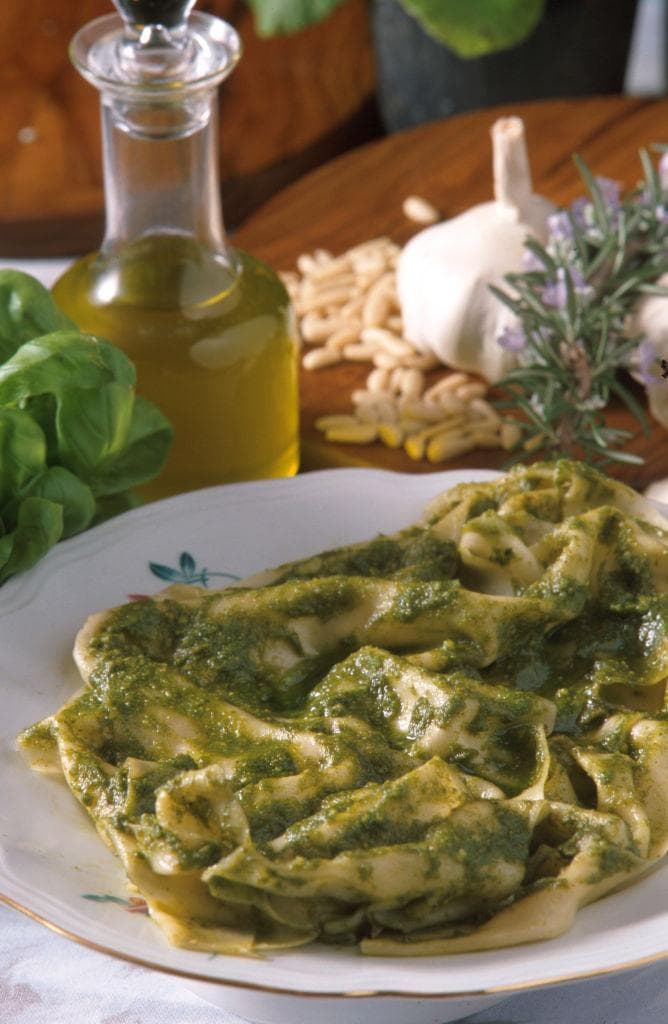
Between these two traditions lies an extraordinary range of regional masterpieces: vincisgrassi from the Marche; Ligurian lasagna with pesto; Veneto’s radicchio pasta bakes; the Mantuan versions made with pumpkin purée, amaretti biscuits and mostarda; Abruzzo’s scrippelle timbales; Sardinian versions made with sheets of pane carasau flatbread; and Sicilian lasagna with aubergines.
It is, in short, that familiar plural identity that makes Italian cuisine at once one and many, local and international.
The truth is that lasagna is rather like your mother. You only have one, but everyone’s is different.
The translation of this article was reviewed by a Language Service Provider