
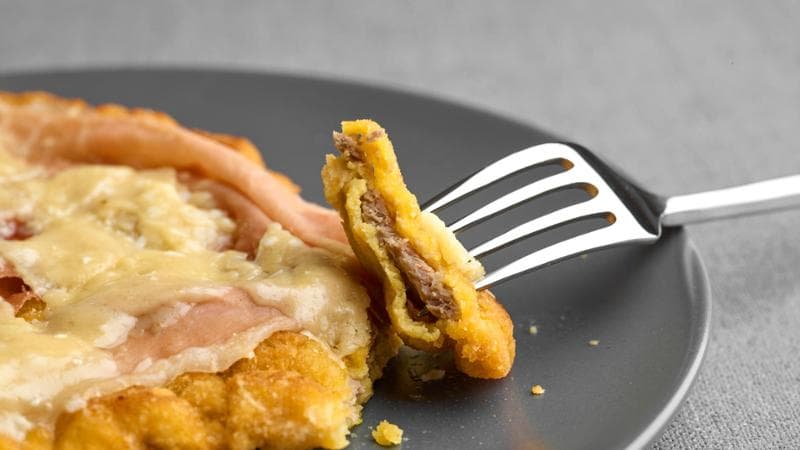
Before Pellegrino Artusi, recipes described as “Bolognese” were mostly associated with pasta, particularly lasagne. But Science in the Kitchen and the Art of Eating Well, his landmark cookbook, includes a recipe for cotoletta alla bolognese, ushering in a new, lavish way of cooking a slice of meat. Artusi’s version calls for slices of cheese and shavings of truffle, but no prosciutto.
Also known as Petroniana — when truffle is added to the classic version with prosciutto and Parmesan — after Petronius, Bologna’s patron saint, cotoletta alla bolognese is a gloriously rich main course.
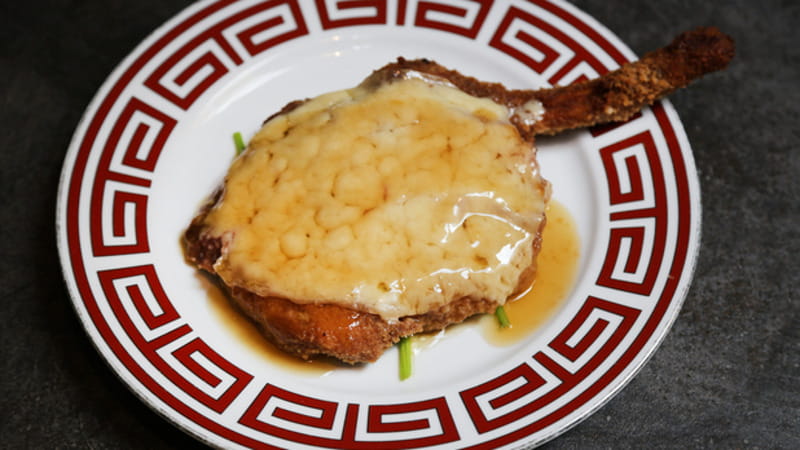
At Al Cambio in Bologna, chef Matteo Poggi serves a version that remains fairly faithful to tradition, with two notable exceptions: he uses veal jus instead of stock, making the dish even richer and juicier, and leaves the bone attached to the cut of meat, a feature that has become something of a signature.
“Ours always comes on the bone. Although serving it this way has now become something of a new tradition, we were among the first to do it a few years ago. We use the loin with the rib still attached. At the end of the day, making cotoletta alla bolognese is actually quite simple,” says Poggi, who takes us through the recipe step by step.

You will need a bone-in veal chop weighing around 250 grams; breadcrumbs and beaten egg for the coating; vegetable oil for frying; meat stock; prosciutto crudo or lightly aged culaccia; and Parmigiano Reggiano, aged for no more than 20 months.
Pound gently and coat generously
First, gently pound the meat — but not too much. It is best to leave it fairly thick so that it remains juicy and has some bite.
Start by coating it in breadcrumbs made from stale bread — the chef recommends white bread — then dip it in beaten egg before coating it in breadcrumbs once again. This helps create a substantial coating that adheres properly to the meat and turns crisp when fried.
The perfect fry
Before frying, leave the breaded meat to rest in the fridge for about half an hour. This gives the coating time to set properly.
Poggi uses vegetable oil for frying, adding a little cocoa butter to raise the smoke point and allow the cotoletta to fry at a high temperature without burning. If you do not have cocoa butter, there is an easy alternative: “You can add a little clarified butter.”
The chef’s tip
“The oil temperature should never rise above 165-170°C, and you should never fry the cotoletta for more than two minutes on each side. Otherwise it absorbs too much oil, which is then released into the pan when you reheat it in the stock.”
Make it the day before
“Cotoletta alla bolognese began life as a next-day dish, a way of using up leftovers. People would make classic cotolette alla milanese and, if there were any left over, cook them in tomato sauce with peas or turn them into cotolette alla bolognese.
"Today it’s a dish for special occasions, but historically it was something you ate the following day. That’s why,” Poggi continues, “my advice is to fry it the day before. That gives it time to rest and makes it even better.”
Finish it in a covered pan
Once fried, drain the cotoletta well, pat it dry and leave it to cool. Then cover it evenly with slices of lightly aged culaccia and shavings of Parmigiano Reggiano.
Covering the entire surface generously and evenly ensures that every mouthful has the right balance of flavours and ingredients.
Place the cotoletta in a pan with a little meat stock, cover and cook gently until the cheese has melted. The amount of stock is important to keep the meat moist and succulent. If it begins to dry out during cooking, simply add a little more.
How much stock? “I always say it should come halfway up the cotoletta, although obviously that depends on how thick you make it.”
Once it is ready, serve with a few flakes of salt and, as they do at Al Cambio, a side of spinach.
This article was reviewed by an external translation partner