
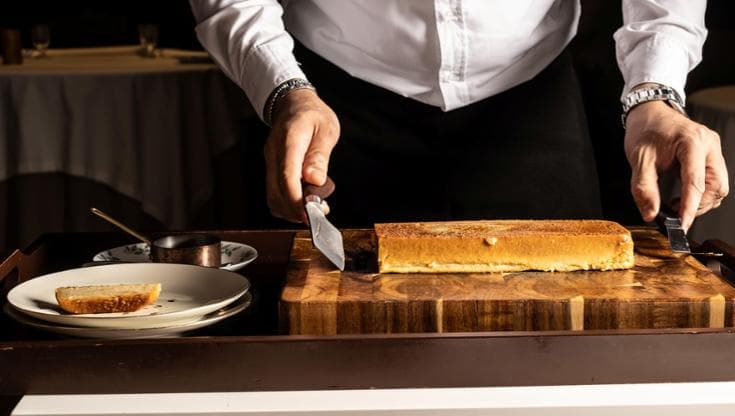
Turning leftover stale bread into a cake is a small lesson in domestic economy: nothing goes to waste, and everything is transformed.
Bread cake has a place in many regional cuisines and family traditions; it has an old-world feel, yet embodies thoroughly modern principles such as zero waste and recognizing the value of what we already have.
Across the many existing recipes, ingredients may vary—some add raisins, dried fruit, candied peel, or chocolate—but the core principle and method for making it always remain the same.Chef Filippo Baroni’s version is particularly interesting because it makes the most of the simplicity of this dessert. Bread, milk, eggs, and sugar, plus a caramel at the bottom of the pan.
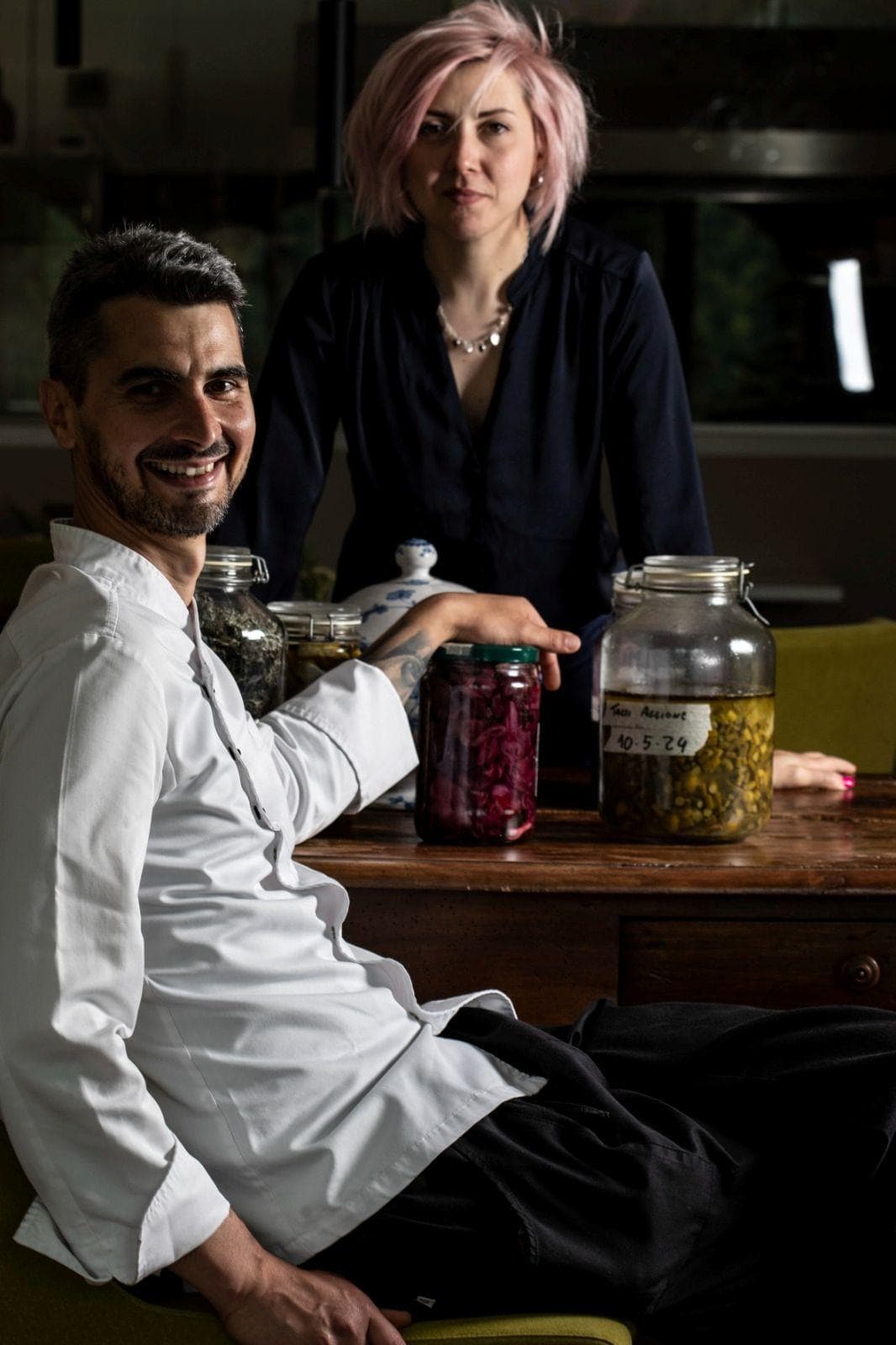
At Mater, the restaurant Baroni leads alongside Marta Bidi in Moggiona di Poppi, in the heart of the Casentinesi Forests (in the province of Arezzo), the cake remains the same all year round. The only thing that changes with the seasons is what goes at the bottom of the pan: caramel is always there, but in summer it can be replaced by blackberries or grapes macerated in Moscato wine.
At the restaurant, Baroni explains, the finest slices of bread are brought to the tables; what remains are the loaf ends and broken slices, which used to become breadcrumbs. Those leftovers gave rise to the cake—a dessert rooted in common sense, as the chef calls it. “People talk a lot about sustainability today, but for me it’s really just common sense. The idea is to take a scrap ingredient and present it in a traditional guise that guests appreciate.”
Ingredients
(Serves 6–8)
For the cake:
● 500 ml milk
● 150 g stale bread, crust included
● 125 g sugar● 3 small eggs
For the caramel:
● 100 g sugar
● 100 ml water
Method
Preparing the caramel
First, prepare the caramel. Place the sugar and water in a small saucepan and heat without stirring. Cook until it reaches your desired color. The darker the caramel gets, the more bitter notes it will acquire. Pour it into the bottom of a loaf pan (roughly 20 cm / 8 inches long) and spread it evenly.
Soaking the bread
Tear the stale bread into pieces, keeping the crust, and leave it to soak in the milk. Once softened, add the sugar and eggs, and blend everything until smooth and fairly liquid. Pour it into the pan over the caramel.
Bain-marie baking
Place the loaf pan inside a larger baking dish and pour about two centimeters (1 inch) of water into the outer dish to bake the cake in a bain-marie. Cover the loaf pan with aluminum foil and bake in the oven at 180 °C (350 °F) for 30 minutes.
Remove the foil and continue baking for another 20 minutes, still in the bain-marie.
Checking for doneness
To check if it’s done, insert a toothpick: the cake should remain moist, but the mixture should no longer be excessively sticky. The result is halfway between a cake and a pudding—soft and moist.
Baroni suggests using a conventional oven setting.
Resting and serving
Allow the cake to cool completely in the pan and then let it rest, ideally overnight. Resting allows the texture to set, making it easier to unmold without breaking.When ready to serve, invert the pan onto a serving plate so that the caramel ends up on top.
Variations
Caramel is the base version, but the same recipe can vary with the seasons. You can arrange fresh blackberries or grapes at the bottom of the pan, pour the batter on top, and proceed in the same way. Once inverted, the fruit will sit on top.
At Mater, the bread is made with Verna and Gentil Rosso flours, but Baroni reassures us that any good stale bread will do at home.
This article was reviewed by an external translation partner