
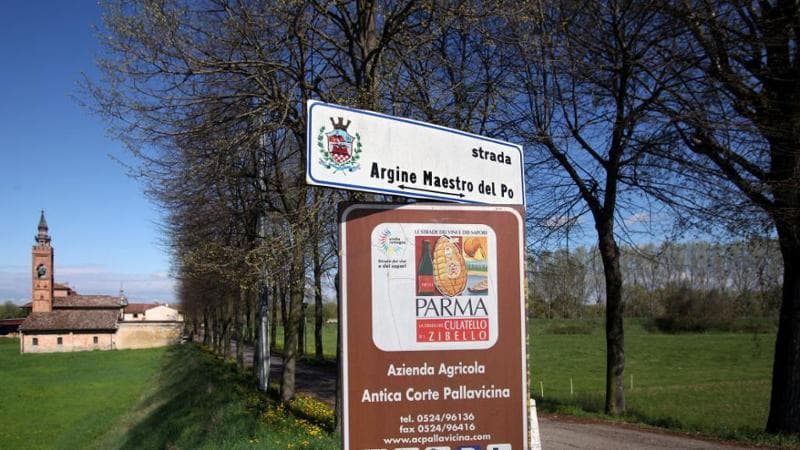
A wooden plaque at the entrance to the cellar leaves no room for doubt: the culatello served at King Charles III’s table comes from here, from the lowlands of the Po Valley, at Antica Corte Pallavicina in Polesine Parmense, near Parma.
The man who makes it and tends to it until it is ready is Massimo Spigaroli, who speaks with great discretion about his relationship with His Majesty. He does admit, however, that the trust and affection the King has shown him over the years never fail to move him.
Their first meeting was some 20 years ago, and the relationship continues to this day, as the cured meats still hanging from the cellar beams attest.
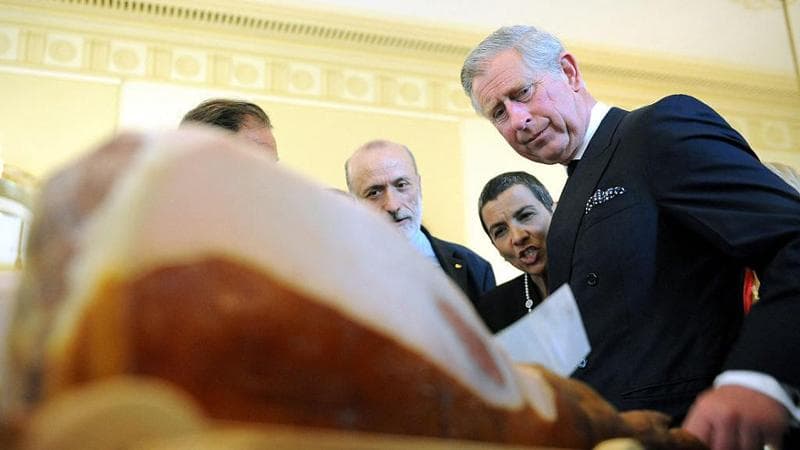
“He recognises something special in our craftsmanship and in our land,” says Spigaroli. And this recognition is paid not just to one man, but to an entire region and the 20 artisans who produce around 90,000 Culatello di Zibello hams every year.
Why here?
There is a reason why Culatello di Zibello, a cured pork delicacy with Protected Designation of Origin (PDO) status, comes from the heart of the lowlands around Parma.
Here, the River Po sets the pace of life, while the mist shapes the flavours. What emerges is far more than a simple food product: it is the result of a centuries-old tradition born in the cellars of aristocratic estates, where the practicalities of transporting goods once demanded patience and a mastery of preservation.

A Michelin-starred chef and master pork butcher, Spigaroli was one of the founders of the Culatello di Zibello protection consortium and also served as its president. The current president is Romeo Gualerzi.
He takes us through the cellars of Antica Corte Pallavicina, whose restaurant has held a Michelin star since 2011.
“In the past,” he explains, “these cellars were used to age produce brought in from the surrounding countryside. The goods were handed over to the marquises and then transported by water along the Po to Milan, Locarno in Switzerland, or Venice, the gateway to the East. Logistics were very different back then. Goods couldn't simply be shipped out the next morning. They had to stay here and mature.”
It was in this particular environment that the innovation giving rise to culatello took place.
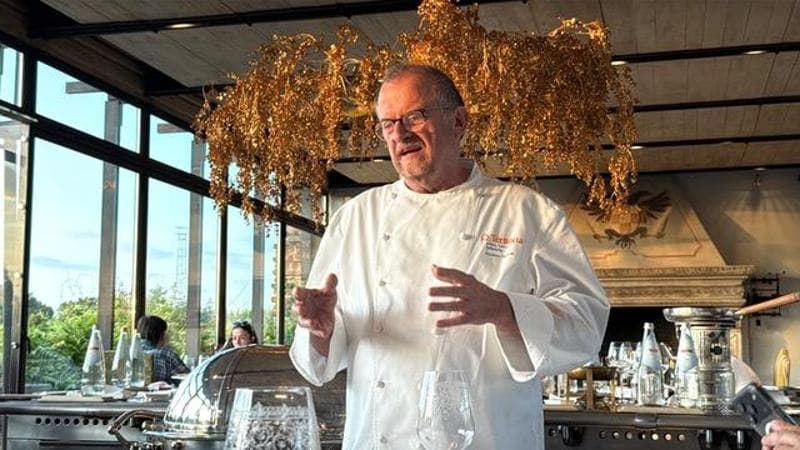
“The miracle happened here. When winters were too mild, you couldn't make prosciutto because the salt wouldn't penetrate the meat properly. So people began dividing the pork leg into two parts: one became culatello, the other fiocco. The experiment worked so well that we never looked back.”
The magic of the cellars
Making culatello follows a strict ritual, governed more by the rhythms of nature than by technology.
The secret to its maturation lies in the painstaking management of the cellar's microclimate.
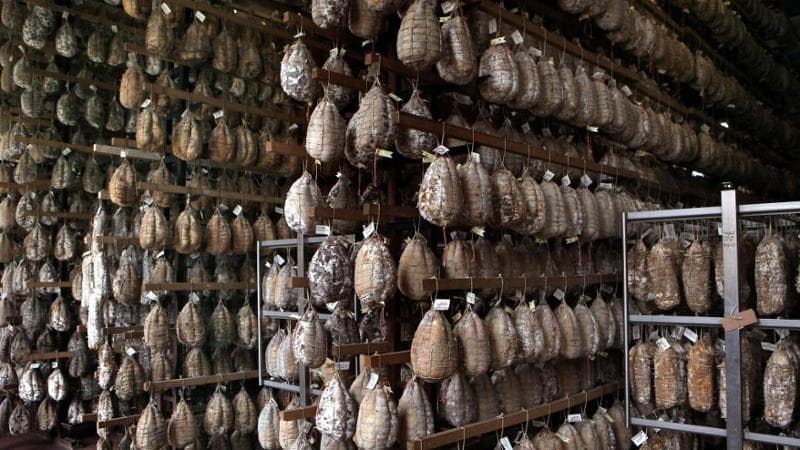
“Every part of the cellar has its own humidity and temperature. If it's warm this evening, we'll keep everything closed, but at around 11pm we'll open the windows to let in the cool air and the scent of the river. Then we'll close them again in the morning. We rely on experience to move the culatelli from one area to another, allowing them to absorb moisture and aroma.”
Today, the Culatello di Zibello consortium has 20 members, with total production standing at around 90,000 pieces a year. That is a far cry from the figures recorded when the product obtained PDO status on 8 January 2009.
“When we received PDO recognition, we were producing just over 6,000 pieces,” Spigaroli recalls. “Before that, there was an association of farmers, innkeepers and restaurateurs. In the first year, we branded just 200 culatelli, and I was among those involved. Today, I have around 5,000 ageing in my cellar, out of my own annual production of 8,000.”
The making of a delicacy
Producing a cured meat of this quality requires carefully selected raw materials and ageing periods that can far exceed the legal minimum, as the master butcher explains.
“We use more mature pigs, aged between 10 and 12 months, sourced exclusively from Emilia-Romagna and Lombardy. We need meat with the right structure and fat content to withstand prolonged ageing. The production rules set a minimum ageing period of nine months, but in our natural cellars we can go as far as 40, 42 or even 45 months.”
And the price? Around €400 apiece.
The cured meats hanging in Spigaroli's cellars have won over some of the world's most discerning palates, finding their way onto the tables of leading international chefs and even royalty.
“We have many distinguished customers who reserve their culatelli in advance, pay for them and then collect them when they're ready. Among our admirers are some of the world's greatest chefs and King Charles of England.
“I met him years ago. He came to visit, we became friends, and he developed a real passion for our product. I'm told he eats a slice every evening.
“But our culatelli travel all over the world. We'll soon be sending one to the Pope, along with other PDO specialities from the region.”
This article was reviewed by an external translation partner