

Italy is one of the world's leading olive oil producers. Thanks to its diverse climates, it boasts a unique biodiversity, featuring over 500 catalogued olive cultivars.
To dive deeper into the subject, we turned to Nicola Di Noia, an agronomist, professional oil taster, and managing director of the Evoo School Foundation.
Not all oils are created equal: how to spot the best
How should you navigate the market to choose a good olive oil?
"First of all, olive oil is neither a mere condiment nor a generic cooking fat. It is a genuine food that, when chosen with care, elevates our dishes while delivering vital health and wellness benefits.
“Not all oils are equal. We should always opt for extra virgin olive oil (EVOO)—the gold standard—because it is extracted mechanically, without the use of chemicals, exclusively from olives.”
How is EVOO made?
“It all starts with flawless olives, untouched by pests and harvested at the precise point of ripeness. Transported in well-ventilated crates—never in sacks—the olives must reach the mill quickly and be pressed as soon as possible.
"The miller carries a heavy responsibility: extracting the oil without losing its beneficial compounds, namely polyphenols and antioxidants. Preserving top quality often means scaling down production volume.”
How can you tell quality?
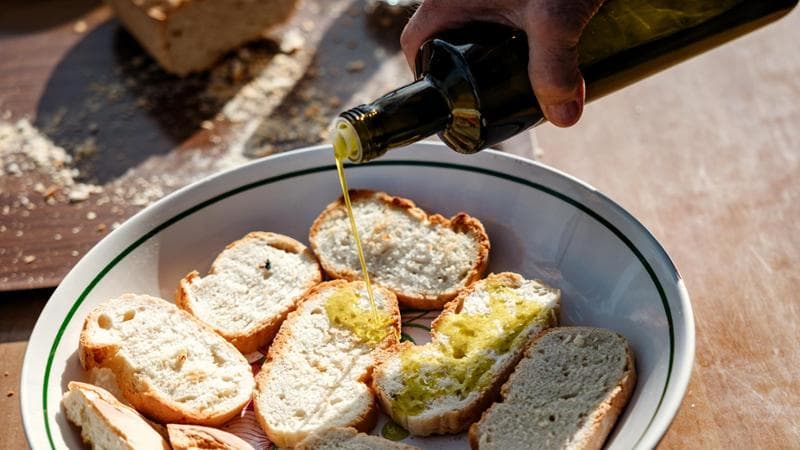
“We must rely on two of our senses: smell and taste. To properly evaluate an oil, always use a small tasting glass—never pour it straight onto bread!
“If we truly want to know whether an oil is good, we have to smell and taste it. Colour is never an indicator of quality; instead, look for herbaceous aromatic notes on the nose (freshly cut grass, tomato, almond, etc.) and a pleasant bitterness and pungency on the palate.”

What are Italy’s main cultivars and their flavour profiles?
“Italy holds a varietal heritage that is unmatched anywhere else in the world: from Casaliva in the north to Bosana in Sardinia; from Itrana in Lazio and Campania to Coratina and Peranzana in Puglia; from Carolea in Calabria to Nocellara in Sicily.
“Every cultivar possesses distinct organoleptic properties shaped by local soil and climate conditions, but above and beyond that, by the extraction and preservation methods used.
“These cultivars yield diverse oils that pair wonderfully with different foods. For instance, a Tuscan Moraiolo, with its intense aroma and assertive bitterness, is a match made in heaven for a rare steak or a hearty legume soup. Meanwhile, a Sicilian Tonda Iblea, which is more vegetal with prominent tomato notes, is ideal drizzled over salads or a Caprese.”
How and where should you store a bottle of oil?
“Unfortunately, olive oil degrades quickly and never improves with age—quite the contrary. The best oil is the one that has just been pressed. We can only slow down the degradation process by protecting it from its three natural enemies: oxygen, heat, and light.
Therefore, always buy oil packaged in dark glass bottles, keep it away from heat sources, and shield it from oxygen. Avoid traditional cruets; they are terrible for preservation.”

Not all oils are alike: the right oil for every recipe
Coniglio alla ligure (Ligurian-style rabbit)
Delicacy and low acidity are the hallmarks of the Taggiasca cultivar. A medium-intensity fruity extra virgin olive oil with a well-balanced bitter-pungent profile pairs seamlessly with regional classics like Ligurian rabbit, complementing and enhancing the natural sweetness of the meat.
Taggiasca olives are also a core ingredient of the dish itself, which heavily features fresh herbs entirely free of spicy notes.
Bigoli in anchovy sauce
This Venetian specialty calls for a specific type of long, rough-textured pasta (bigoli) dressed in a rich, dense sauce made by melting desalted anchovies with plenty of onion and olive oil. It is a bold-flavoured dish, partly tamed by the sweetness of the onion.
The oil—used here in generous amounts—must never be overly assertive, so as not to overpower the delicate balance of the recipe. A medium-to-light fruity extra virgin olive oil, such as a blend of cultivars like Frantoio and Leccio del Corno, hits the right note.
Grilled meat
A robust cut of meat cooked over a grill demands a co-star strong enough to stand up—raw—to the succulence of the ingredient and the inherent bitterness imparted by open-flame cooking.
To play it safe, stick to a versatile variety like Frantoio, highly prized for its low acidity and intense, fresh, vegetal aromas.
Pasta e fagioli (Beans soup)
An ancient, universally comforting dish that is deeply restorative, much like modern comfort food. Beans—and indeed all legumes, especially in soups—seem to bring out the very best in Moraiolo oil when used raw.
It boasts deep, persistent aromas, revealing a bold character and a pleasant bitter edge on the palate.
Sea bass baked al cartoccio
This recipe relies on aromatics that mingle with the juices released by the fish as it bakes in parchment, creating a flavourful and light main course, even though sea bass is not among the leanest fish.
This preparation calls for gentle pairings: a delicately aromatic extra virgin olive oil like Leccino is undoubtedly the wisest choice.
Porcini mushroom soup
When faced with a richer version of this dish, often fortified with potatoes and stale bread croutons, you need an oil with backbone—one that can impart extra character to the finished dish when added raw just before serving.
Enter the pronounced bitter and pungent notes characteristic of Coratina, cultivated primarily in Puglia but also in southern regions like Basilicata and Calabria.
Pasta alla Norma
The distinct tomato undertone that cuts through the vegetal profile of the Nocellara del Belice variety makes it the ideal pairing for this iconic Catania classic.
The ingredients are few but choice: peeled tomatoes, garlic, separately fried long black eggplant, and aged sheep’s milk ricotta.
Extra virgin olive oil gelato
A pleasant fruitiness and a subdued bitter-pungent kick are absolute prerequisites for making gelato with high-quality olive oil.
Green light to the Bosana monocultivar: an ideal pairing for an exceptionally simple yet foolproof recipe featuring milk, a pinch of coarse salt, sugar, heavy cream, and, of course, top-tier EVOO.
This article was reviewed by an external translation partner