
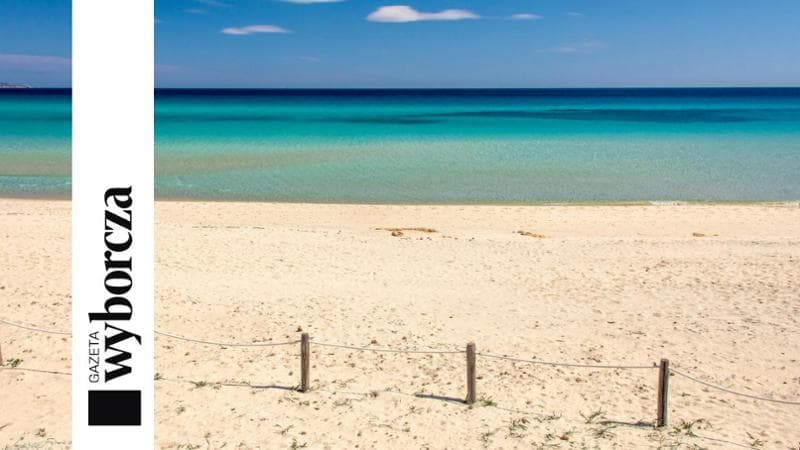
Valeria and her family were enchanted by their holiday on Is Arutas beach, in the Sardinian province of Oristano, in 1979. What captivated them most was the multicoloured quartz sand, whose grains resemble tiny grains of rice. So much so that Valeria decided to take some home to Milan, where she used it to decorate a Zen garden.
"I was 15 at the time," her daughter Silvia recently told the Italian media. "Back then, none of us thought there was anything wrong with taking sand from the beach."
A criminal offence
That "some" amounted to 40 kilograms, which posed no problem for a family travelling by camper van. Years later, however, Valeria discovered that removing sand from beaches was a criminal offence. From then on, the matter weighed heavily on her conscience.
"My mother is no longer with us, but before she died, she begged me time and again to take that sand back," Silvia recalls.
And that is exactly what she did. On July 10, Silvia and her husband travelled to Is Arutas, where, in front of television cameras and accompanied by representatives of the local authorities, she poured the sand back onto the beach. A local environmental official praised her for her "courage and recognition that natural heritage belongs to everyone and that each of us has a duty to protect it."
Turning sand into souvenirs
These are not empty words. When tourists turn sand into souvenirs or commodities, they are literally stripping away natural heritage and contributing to the disappearance of beaches. The courage involved in Silvia's gesture is evident from the numerous online comments arguing that she should have been fined. The official, meanwhile, expressed the hope that her example would encourage others — or rather, discourage other tourists from taking sand in the first place.
The environmental cost of souvenirs from Italian beaches
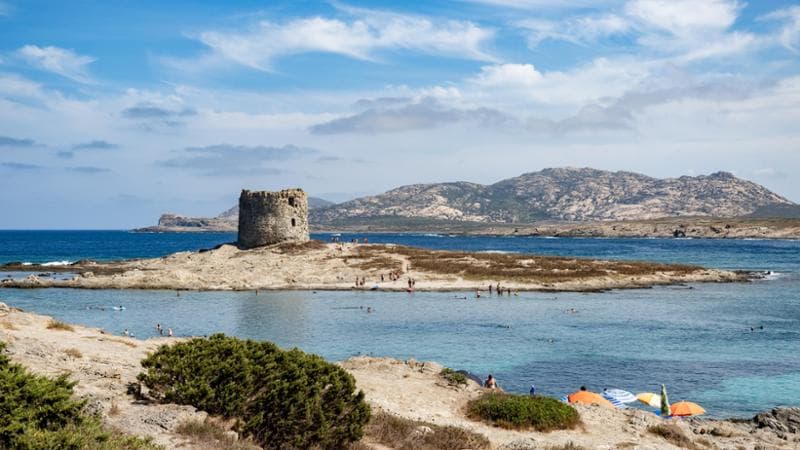
Silvia's story highlights a serious problem affecting Italy, and Sardinia in particular: tourists routinely take sand, pebbles and shells home from beaches as souvenirs, sometimes without realising that they are damaging the ecosystem and accelerating erosion.
At the end of June this year, officials from the Italian Interior Ministry and the Forestry Corps announced the results of inspections carried out on passengers at Olbia airport, on the Costa Smeralda, a favourite destination for tourists. Over two years, they had confiscated four tonnes of sand.
A geologist examined the seized material and recommended returning it to Tramontana, beyond the island of Tavolara, because its composition most closely matched the sand found in that area.
Advertisements offering Sardinian sand for sale occasionally appear online, including on platforms such as Vinted. Last year, for example, a seller was offering a "miniature beach for dolls made from quartz crystals from Putzu Idu beach in the province of Oristano" for €30.
Living organisms
Italian media have cited research by scientists at Lancaster University's Environment Centre, published two years ago in The Conversation. The researchers explain that sand, pebbles and shells should be left where they are. Not only do they provide habitats for numerous living organisms, but they also offer natural protection for homes and infrastructure near the sea.
According to the researchers, the total volume of material on a beach is directly related to its ability to absorb the energy of incoming waves. Removing stones, sand and sediment therefore weakens the beach's capacity to act as a natural barrier against flooding and erosion.
The steep banks of pebbles formed by waves on beaches are often the first line of natural defence against storms. They absorb or disperse wave energy, reducing the risk of waves reaching beyond the beach or eroding sea walls and cliffs. Sand reserves, meanwhile, replenish themselves extremely slowly.
Nowhere else in Italy is tourism growing as rapidly as in Sardinia.
Five million tourists
In 2025, the island recorded more than five million tourists and 22 million overnight stays, an increase of 16% compared with 2024 and 34% compared with 2023. International visitors, who accounted for 56% of tourists last year, outnumbered domestic visitors, who made up the remaining 44%.
One can only imagine the damage to the local ecosystem if every visitor took home even a single shell or a handful of sand.
Stealing sand in Italy can cost you up to €9,300
Since 2019, removing sand from beaches or riverbeds has been classified as theft in Italy. And the prohibition extends well beyond sand: removing all kinds of natural materials, including seaweed and seawater, is also punishable.
The aim is to preserve the balance of local ecosystems, particularly in coastal and mountainous areas.
Why is collecting shells prohibited? Because they provide shelter for marine organisms and help prevent erosion: fragments of shells strengthen the sand. Under Italian law, this type of theft can result in fines ranging from €1,500 to €9,300.
Of course, visitors can collect a bucket of seawater to build a sandcastle. What they cannot do, for example, is fill containers with seawater to take home. Collecting kilograms of shells and sand for private aquariums or to use as household decorations is also prohibited.
Where the removal of sand is a particularly serious problem, local authorities have introduced additional regulations of their own. In Sardinia, sand thieves face fines of €3,000.
Hotels instead of beaches: the sand mafia operates worldwide
In a report published last year, the Italian newspaper Il Manifesto pointed out that sand is the world's second most heavily exploited natural resource after water, with approximately 50 billion tonnes extracted every year.
It is hardly surprising, then, that an illegal sand trade has emerged, reportedly surpassed in scale only by drug trafficking and the trade in counterfeit clothing.
The Italian newspaper cites some particularly disturbing examples of the activities of the so-called "sand mafia" around the world.
In Malaysia, local residents who oppose illegal extraction are simply murdered. In May last year, five people were shot dead.
In the Indian state of Tamil Nadu, the mafia shot and killed five police officers investigating illegal sand mining.
More than 50 farmers met the same fate after refusing to sell land on which the "sand lords" intended to establish mines.
In India, the industry employs 35 million people and generates annual revenues of $100 billion. Equally disturbing examples come from the Mexican state of Chiapas and South Africa.
Indonesia has lost 24 islands as a result of sand extraction.
China and Australia prohibit sand extraction along their own coastlines but import vast quantities from elsewhere, without investigating where the material comes from.
Singapore presents a similar contradiction. Despite priding itself on being "Asia's greenest island", it imports sand from countries including Cambodia and Malaysia, much of it illegally sourced.
Stolen sand is most commonly used to build skyscrapers and hotels.
The translation of this article was reviewed by a Language Service Provider