

Bryan Johnson’s story, at least as he tells it, goes like this. At the age of 42, although he is worth around 400 million dollars – having made his fortune by selling a payment services provider – he is a wreck: overweight, unable to sleep, suffering from joint pain and depression, and losing his hair. So, in 2021 he embarked on an anti-ageing project with an ambitious goal: not just to stop ageing, but to turn back the clock.
Not even his autoimmune disease, which Johnson recently went public about, is holding him back. In autoimmune gastritis, the immune system attacks the stomach lining, increasing the risk of stomach cancer. Johnson nevertheless remains convinced that ageing can be defeated.
Today, at 48, Johnson is regarded as the figurehead of the longevity scene. He has even received blood-plasma from his son, who was 17 at the time. He takes dozens of pills every day and has attracted millions of followers, not least because of his controversial approach. Last year, Netflix dedicated a multi-part documentary to him.
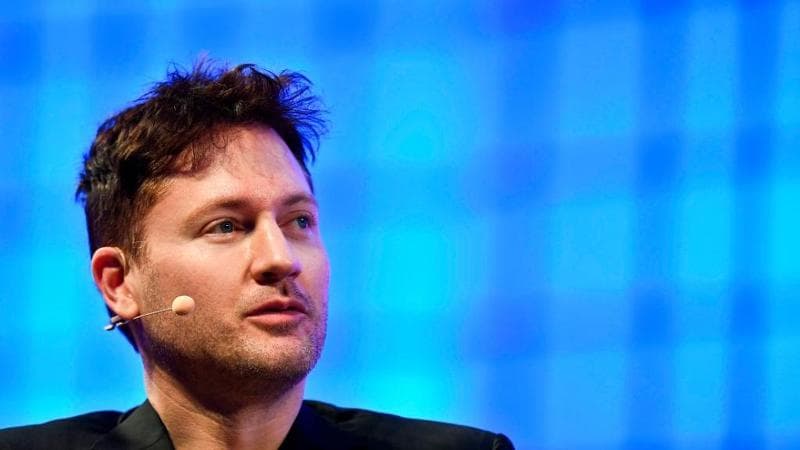
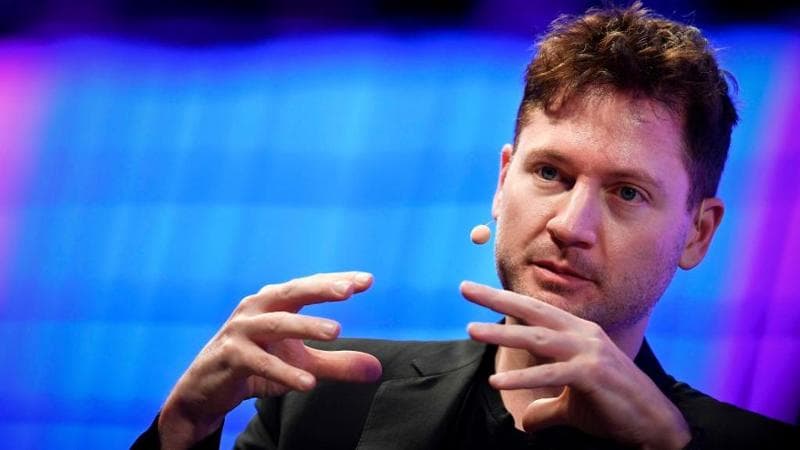
The American lives in Los Angeles, has three children and talks to the journalist about his life via video call wearing orange-tinted glasses which, he says, help regulate his internal biological clock.
Mr Johnson, will you ever die?
“I belong to the first generation that, in principle, will never die.”
What do you mean by "in principle”?
“I’ll probably die from something incredibly ironic.”
Such as?
“I might choke on a piece of broccoli or being run over by a bus.”
But do you really believe you can live forever?
“I don’t think the term ‘forever’ is the right expression, partly because the Earth will probably be destroyed eventually. So, to me, ‘forever’ means living for a very, very long time”.
Let me put it another way: do you think we will eventually be able to stop ageing and eradicate all disease?
“Do I believe we can defeat death? Yes. Do I think we will achieve it within our lifetime? Yes. Of course, that doesn’t apply to people who are already 70 or older.”
Why is not dying so desirable?
“If you ask someone, ‘Would you like to live forever?’, they’ll probably say no, becausethey would get bored. Or because everyone they loved would be gone. Or: ‘What would I do with all that time?’”
Those seem like plausible answers.
“Of course. But ask the same persons a more immediate question — ‘Do you want to be alive tomorrow?’ —their answer will be: ‘Yes, because tomorrow is my niece’s birthday party.’ Or: ‘I have a date.’”
So, what is your point?
“People have a deep, natural desire to live. In fact, I would argue that the strongest desire every person has is not to die.”
Yet many people reach the end of their lives reconciled to death. Some even wish to die.
“I’m not talking about a 90-year-old woman who is seriously ill and suffering excruciating pain. But anyone who still feels reasonably healthy wants to keep breathing, one breath after another.”
What makes you so sure of that? “The point is that as long as death is inevitable, people accept it as the end. But if we really managed to slow ageing, with measurable results, that way of thinking would disappear. Death would no longer be the logical consequence. And that would allow us to look at life in a completely different way.”
Would that kind of life really be available to everyone — or only to a handful of the super-rich individuals? “If you look at how quickly new technologies have been introduced — from the fax machine to the mobile phone, from the Internet to today’s artificial intelligence — you can see that the process is constantly accelerating. Today, even many of the poorest people on the planet own a smartphone or have access to artificial intelligence. Of course, there are still limitations…”
Which is a massive understatement…
“…and yet the fact remains: inequality and access are, of course, central issues of our time. But what many people forget is that, if you look back at the problems societies have faced, the concerns people expressed rarely turned out to be what they were actually worried about. I think it’s unlikely that we’ll be faced with overpopulation or limited resources.”
What do you mean? “Globally, populations are actually declining. We are facing a birth-rate crisis and therefore a reproductive crisis. In short, there will always be problems, but there will always be technological progress too.”
What makes you so sure? Artificial intelligence could also destroy us all.
“You’re thinking too statically. In the 15th century, someone might have said: ‘I’m a farmer, my children will be farmers and my grandchildren will be farmers too.’ Today, with technological acceleration and above all artificial intelligence, we don’t even know what the world will look like six months from now.”
Hold on a moment: six months from now we’ll still be fighting wars, watching television in the evening and working up a sweat doing sport.
“For a very long time, we were able to predict the future from established patterns. Today, however, an unknown variable has appeared: artificial intelligence. It makes the future unpredictable.”
Let’s get back to you. What does a typical day in your life look like? “I wake up naturally between 4.30 or 5 in the morning. My morning routine lasts five to six hours.”
What do you get up to? “I’ve tried to create the most effective routine possible, doing everything that can slow ageing and repair age-related damage. So, as soon as I get up, I use a special light device for my eyes that replicates sunlight.”
Why?
“To regulate my circadian rhythm. Then I do some breathing exercises and put a warm compress over my eyes. We spend an enormous amount of time in front of screens and don’t blink enough. So, I try to compensate for that.”
What do you eat?
“I’m vegan. My team and I reviewed all the available scientific evidence and asked ourselves which foods had the highest possible nutritional value. Those are the only foods I eat. In the morning, for example, I have olive oil, hemp protein, pea protein and collagen peptides. Every day I take around 40 pills for different purposes. One of them is lithium, which has been shown to be linked to a lower risk of Alzheimer’s. I also take specific antioxidants and drugs that may extend lifespan, such as tadalafil, which is available on prescription and is actually used to treat erectile dysfunction.”
And then you exercise?
“Exactly. I work out for between an hour and an hour and a half. I do strength training, cardio, mobility exercises and stretching. Afterwards, I have red-light therapy, go to the sauna and sometimes have oxygen therapy as well.”
That sounds exhausting. Is that it?
“No. After showering and having breakfast, I undergo a long series of measurements. I am the most measured person in the world. Over the past five years, my team has collected around 1.5 billion data points on my body.”
So, are you constantly monitoring yourself?
“I have blood tests taken two or three times a week, I monitor my blood sugar and microbiome, and I wear various devices, such as smartwatches and smart rings, 24 hours a day. We constantly check what works, adjust the approach and discuss the results daily as a team.”
But if you are doing so many things at once, how can you know what is actually working? “I’m sorry, but that’s a rather defeatist attitude. Science has already provided us with an enormous amount of knowledge. I also constantly monitor the effects on my body and identify recurring patterns. Of course, that is no substitute for a perfect scientific study, but my approach is far better than simply waiting for sciencfe to eventually provide definitive answers.”
The average person, however, is not a multimillionaire like you, who can devote themselves to living forever.
“And that’s exactly why I do all this: I’m doing it on behalf of those people too.”
How very noble of you. “Irony aside, I share all my findings and show which measures are most effective in improving anyone’s health and wellbeing.”
And what are they?
“Number one is not smoking. It is by far the most important measure. Number two is exercise. That already becomes more complicated, because age, physical condition and other factors come into play. Number three is getting seven to eight hours of sleep a night .”
None of that sounds particularly groundbreaking. “What people don’t want to understand is that their own habits are making them ill. Eating immediately before going to bed, for example, using your phone right up until you fall asleep, or have irregular sleep patterns. The modern world has corrupted human habits. We have too much light, too much food, too much stimulation and too few limits. Our body is like a clock: it loves routine and regularity.”
But life isn’t just a joyless series of pre-programmed activities, is it? Or to put it another way: your life sounds very controlled, but also – pardon me – boring.
“I’m a martyr for intelligent living. And I don’t tell people they have to do exactly what I do, because I realise that they can’t take it this far. I am the prototype of the immortal human being.”
What do you mean by that?
“I live the way we will live in the future. We will learn to place a much higher value on conscious existence than we do today, when we often just shrug our shoulders at the thought of death and say: ‘That’s just how it is.’”
So, how will we think in the future?
“We will reassess the value of life and treat it with much greater care. We won’t spend our nights partying and getting drunk, or stuffing ourselves with fast food in the middle of the night. We will think more sustainably, including when it comes to our planet. I’m simply a bit ahead of the curve with this way of thinking, and I don’t think people understand it either, at least not yet.”
How do the people close to you feel about such an extreme way of life? “I call my parents every week. My mother, my father, my siblings and the people around me would probably say they are on the same wavelength as meand benefit from everything I do– just like so many other people: I started this project five years ago and struck a nerve. So far, my website has been visited 8 billion times.”
Humanity has always been fascinated by immortality.
“This obsession is as old as human history itself. The modern world, however, is trying to kill us with addictive foods and manipulative social-media algorithms designed to keep us scrolling. But we can fight back. In fact, I believe we are at a turning point for Homo sapiens.”
So, what kind of man will you be at 120? “Hmm… that will be 72 years from now. The reality I’ll be living in will be almost unrecognisable, because we are going through such a profound transformation that I cannot even begin to imagine what the world will look like then.”
But will you still be alive in 2098?
“Yes. And I hope that era will be the most spectacular in human history.” Tages Anzeiger’s note: this interview was conducted before Bryan Johnson disclosed his autoimmune disease. We would have liked to ask him a few more questions about it, but his staff did not respond to our attempts to contact them.
(Copyright Tages-Anzeiger/LENA – Leading European Newspaper Alliance)
The translation of this article was reviewed by a Language Service Provider