
BATUMI, Georgia — “How much is 300 lari in roubles?” a woman asks me in Russian in the lobby of a hotel in Batumi, without even introducing herself.
“I don’t understand,” I reply, pretending to be confused, although several thoughts are racing through my mindHow can someone address a complete stranger without even saying “hello”, let alone “could you please tell me…”? And why on earth should I understand Russian?
“You don’t understand?” the stranger checks. “Oh, well.”
Meanwhile, groups of people are streaming through the hotel lobby, one after another.
“We paid for breakfast, and there isn’t any!” a Russian man shouts at a hotel employee. Clearly dissatisfied with the explanation, he raises his voice and continues to complain.
Orbi City has a terrible reputation. Yet the crowds keep coming
We are in Orbi City. The name will mean nothing to anyone who has never visited Batumi, but among returning tourists and local residents alike, Orbi has become something of a byword. Jokes have been circulating online for years along the lines of: “Stay there if you want to ruin your holiday.”
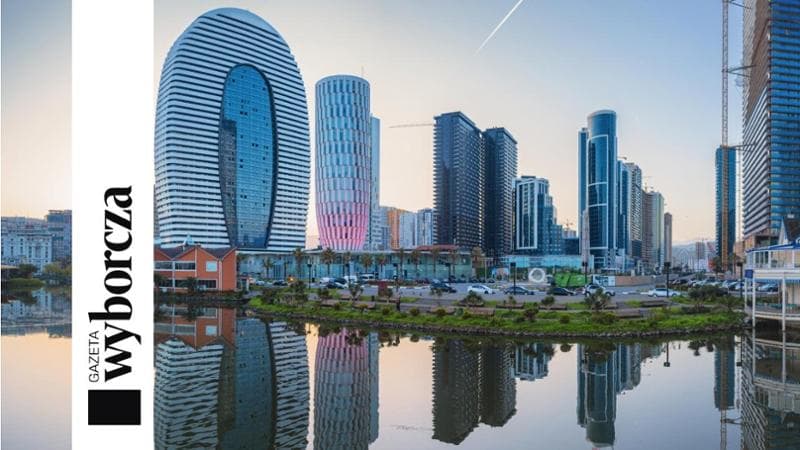
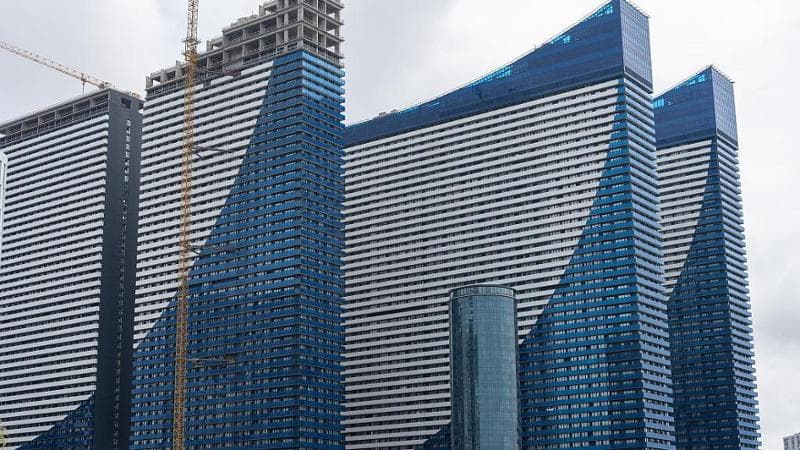
From the outside, Orbi City looks like a flashy slice of Dubai — albeit Batumi’s budget version: dozens of storeys, glass façades, a sea of lights and balconies stretching along the Black Sea coast.
In reality, it is an enormous patchwork of thousands of small apartments, each belonging to a different owner and managed according to their own rules.
You can book a room at Orbi through Booking.com, only to discover on arrival that nobody has any intention of checking you in straight away. First, you have to track down the owner of the apartment you have rented somewhere in one of the complex’s five 55-storey towers.
Then you make your way to the designated reception desk — meaning a hotel room serving that purpose — where women sit among a curious assortment of jars of honey for sale, a miniature Big Ben and a small Newton’s cradle, calculating what you owe on a calculator and taking your cash. Finally, they hand over your key.
At weekends, the hotel’s ground floor takes on the atmosphere of a railway station at rush hour. People arrive constantly, mainly Russian citizens, including some from the North Caucasus, as well as visitors from Central Asia. Groups carrying suitcases and pushing prams mingle with beachgoers returning from the sea, their hair still slightly wavy from the salt water.
Everyone queues for the lifts, each of the six seemingly operating at its own pace. Politeness is quickly forgotten here, because one simple rule applies: first come, first served. The lifts are packed to capacity, and the wait for the next one can stretch to half an hour.
So why, despite all these shortcomings, do people keep coming here? The answer is simple: it is cheap. And property developers know that perfectly well.
Russians are buying up apartments in Batumi
Batumi is expanding before your eyes. Skyscrapers are rising at a dizzying pace, their upper floors already gleaming while construction work continues at ground level. The city’s infrastructure, meanwhile, is struggling to keep pace with the concrete sprawl.
In 2025, the value of Batumi’s property market exceeded $1 billion for the first time. Around 17,000 transactions were completed, 2,500 more than the previous year. According to Colliers Georgia, a property investment services company, foreign buyers accounted for as much as 70% of the increase in transactions. They purchased almost half of all properties sold on the secondary market — 47%, compared with 27% in 2021.
Russians feature particularly prominently in these figures. In 2022 and 2023, following Russia’s full-scale invasion of Ukraine and the announcement of military mobilisation, they bought more than 11,500 apartments in Batumi. Their activity fell to around 3,000 transactions in 2024, but Russian demand rebounded the following year, with 6,000 flat purchases.
Russian media promote Batumi as an attractive place to live and invest.
“Batumi is changing. And with it, our ideas about life and comfort are changing too. NEXT Address — the city’s new landmark, inspired by New York and Dubai,” declares an advertisement broadcast by the independent Russian television channel Dozhd.
Adverts of this kind regularly appear on the channel, even though its journalists have pointed out that Kakha Devadze, the founder of NEXT, donates to the ruling Georgian Dream party, which Dozhd regularly criticises.
According to the research division of Russian property company Astorius, Russian interest in Georgian real estate doubled in the first half of 2026 compared with the same period in 2025. In Batumi, foreigners — most of them Russians — account for 70–75% of apartment purchases in new developments.
“What’s life like in Georgia?” Russians ask one another
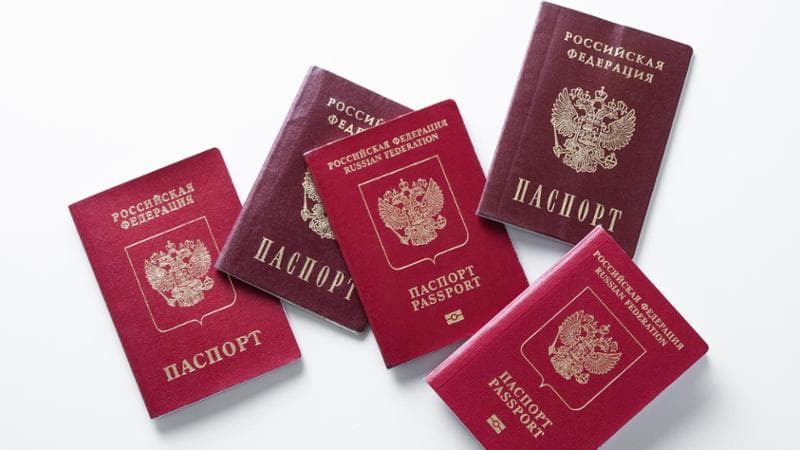
Russians have also become the largest group of foreign nationals permanently resident in Georgia. According to the census, there were 37,700 in 2024, compared with 7,600 a decade earlier. Over the same period, the number of people identifying as ethnically Russian rose by 60.8%, to 42,500.
At the same time, according to the latest figures from Georgia’s National Statistics Office, dating from 2026, some 72,500 Russian citizens live in the country on long-term visas or under other migration arrangements. The official census counts permanent residents, while migration statistics cover a much broader group of people with long-term immigration status.
Posts by Russians seeking advice about moving to Georgia are becoming increasingly common on Russian-language social media.
“I work online, and I have a dog and a cat. What’s life like for you in Georgia? Is the paperwork difficult? Is it hard to settle in? I’m seriously thinking about relocating,” writes a Threads user from Novosibirsk.
One reply reads: “Life somehow feels more relaxed here. For example, alcohol is available around the clock, you can lie down in parks and walk on the grass, there aren't many fences, and there are places where you can watch planes taking off and landing. On the other hand, people have a different attitude to noise, mornings and evenings follow slightly different rhythms, and people are rather relaxed about timekeeping and keeping their promises.”
Another user responds: “If you like showing off, it’s probably not worth it. But if you like this country, its beautiful countryside, low mortgage interest rates, low taxes, how easy it is to register as self-employed, the opportunities to make connections and everything else, then why not?
“It all depends on whether you’re moving to the seaside to enjoy a relaxed, luxurious lifestyle, or because your passport no longer lets you travel anywhere else and this place seems attractive. My friends and I are having a great time here.”
Georgia’s population is growing — but not because more babies are being born
The increase in population is particularly striking in Adjara. Between 2014 and 2024, while most of Georgia was losing inhabitants, this region gained almost 69,000 people, rising from 334,000 to 403,000 — an increase of 20.7%.
Batumi accounts for a substantial share of that growth. Over the decade, the city’s population rose by 54.2%, from 152,800 to 235,700. That is the highest increase of any municipality in Georgia, a country of 3.9 million people.
Speaking to Gazeta Wyborcza, Adjarian journalist and fact-checker Nazibrola Rekhviashvili stresses that the region’s population growth is not the result of a higher birth rate, as the number of births is falling across Georgia.
Instead, it reflects an influx of immigrants, something that is also evident in the labour market: construction companies in Batumi are increasingly looking for Russian-speaking employees for their sales departments.
Rekhviashvili notes that Russians are actively building their own infrastructure, including fitness clubs, nurseries, schools, studios, beauty salons, clinics, cafés and restaurants.
“They have their own communities and don’t even try to integrate with the local population,” she says.
Irma Dimitradze, a journalist at the independent Georgian newspaper Batumelebi and a close colleague of the political prisoner and newspaper founder Mzia Amaglobeli, who received the 2025 Sakharov Prize for Freedom of Thought, shares this view.
“[Russians] seem to feel more comfortable in the foreign enclave they have created here than in interacting with local people. For the most part, we simply coexist in the same city rather than mixing and becoming part of a single community,” she observes.
Describing the effects of the influx of Russian visitors, Dimitradze admits that her Slavic appearance means she is often mistaken for a Russian.
“Nowadays, when I walk into a shop, someone will sometimes address me in Russian. When I say I don’t speak the language, people are often surprised and reply, ‘Oh, you’re Georgian.’ Situations like this continue to frustrate many of my fellow Georgians,” she says.
“The influx of Russians has driven up prices.” There are security concerns too
According to Nazibrola Rekhviashvili, Batumi residents initially welcomed the arrival of Russians, hoping it would boost incomes and help local businesses grow.
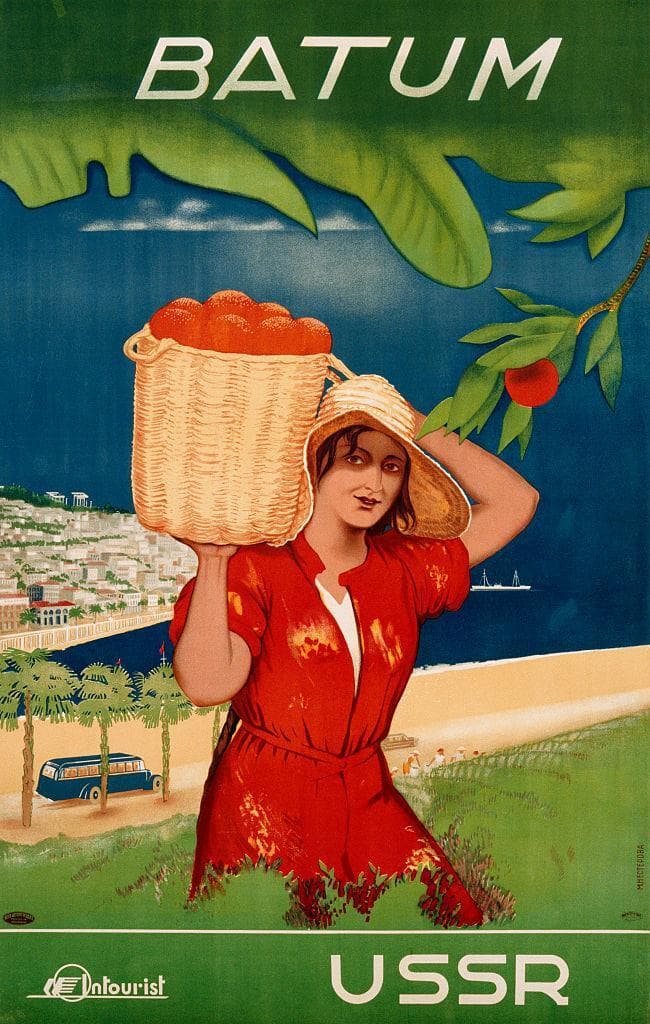
The fact that many people spoke Russian also made the newcomers easier to accommodate — a legacy of the Soviet era, when the city had a sizeable Russian-speaking community.
“Over time, however, tensions began to emerge,” the journalist says. “When Russians started setting up their own businesses, they began hiring mainly their fellow countrymen.”
Rekhviashvili believes this increased competition in the local labour market.
“As in other parts of Georgia, the influx of Russians has contributed, among other things, to rising prices,” says Irma Dimitradze.
“The economic impact may look positive in the documents presented by the authorities, but the reality is far more complicated. Rising prices have made it harder for local residents to buy or rent homes. Russian tourists are an important part of Batumi’s economy, but the data suggest that they generally spend less than visitors from other countries,” she explains.
Both women also see the growing Russian presence in Georgia as a potential security threat. They point to the lack of transparent information about the people arriving in their country.
Rekhviashvili says independent media outlets and non-governmental organisations regularly ask the authorities who these new residents are, what their intentions are and what they are doing in Georgia — but receive no satisfactory answers.
The concern is that some of those arriving may have links to Russian intelligence services.
Rekhviashvili also highlights cases in which Russian citizens who have openly criticised Vladimir Putin and his policies have been refused entry, while other Russians can cross the Georgian border relatively freely.
Dimitradze, meanwhile, believes the risks must also be considered in the context of Russian ownership and business activity in Georgia.
As an example, she points to the expanding operations of Wildberries, a Russian online marketplace whose bank, Wildberries Bank, has been sanctioned by the European Union and the United Kingdom. The company itself has been accused of links to Russia’s war economy.
She also highlights concerns about energy companies using Russian oil in the context of existing sanctions.
“If a particular country or state actor is considered a security threat, that should also be taken into account when making decisions in other areas, including investment,” the journalist says.
“That doesn’t necessarily mean discrimination. It may simply be part of a sensible and responsible security policy.”
She argues that appropriate procedures are needed: screening investments, identifying the ultimate beneficial owners of companies, assessing strategically important assets and monitoring potential threats.
She also points to a broader institutional crisis. In her view, many lawmakers are also businessmen with financial interests of their own. Rather than strengthening regulation and oversight, they may have an interest in weakening them.
“Unfortunately, we are watching a country increasingly governed by an oligarch and his political associates.
“Batumi is becoming something like a Georgian Gotham City, increasingly dangerous and dysfunctional on many levels,” Dimitradze says.
Both journalists interviewed by Gazeta Wyborcza focus on the potential risks arising from Russian legislation.
Vladimir Putin has repeatedly invoked the supposed need to “protect” Russians living abroad as a justification for Russian interventions and invasions. The legal framework includes the law of 24 May 1999, On the State Policy of the Russian Federation Towards Compatriots Abroad.
For Georgia, which has itself experienced Russian aggression and where approximately 20% of the country’s territory remains under Russian occupation, the issue is particularly sensitive.
“What might be the consequences of the growing Russian presence in Georgia?” the two journalists ask rhetorically.
Additional information
1. The ruling Georgian Dream party has been criticised for democratic backsliding, restricting the space available to independent media and civil society organisations, and intensifying repression against the opposition, activists and journalists.
The European Union has also highlighted the weakening of the rule of law and institutional independence, as well as Georgia’s increasing distance from the path towards European integration.
Critics of the party also accuse it of gradually moving closer to Russia. They point, among other things, to the adoption of laws restricting the activities of civil society organisations and the media, with provisions resembling Russia’s so-called foreign agents legislation, as well as the deepening of direct relations with Russia.
2. In 2025, Georgia’s first oil refinery began operating at the Black Sea port of Kulevi, with a processing capacity of approximately 1.2 million tonnes of crude oil a year.
In October, the facility received its first major shipment of Russian crude: approximately 105,000 tonnes of Siberian Light, delivered from Novorossiysk by the Russian company RussNeft.
Deliveries subsequently continued. According to data from the Centre for Research on Energy and Clean Air (CREA), six shipments of Russian crude arrived in Kulevi between October 2025 and May 2026.
Against this backdrop, in July 2026 the EU imposed sanctions on the Kulevi refinery, setting a deadline of 25 January 2027 for it to stop using Russian crude.
However, the plant’s operator, Black Sea Petroleum (BSP), announced that the refinery had completely stopped using Russian oil and, since 24 August, had been processing only crude from non-Russian sources.
In July, the refinery began processing oil from Kazakhstan, and on 28 August it received its first shipment of Libyan crude.
The supply agreement with Libya was signed on 3 July 2026 and runs until the end of 2027, with an option to extend it.
Edited by Ludmiła Anannikova
(Copyright Gazeta Wyborcza-Lena/Leading European Newspaper Alliance)
This article was reviewed by an external translation partner