
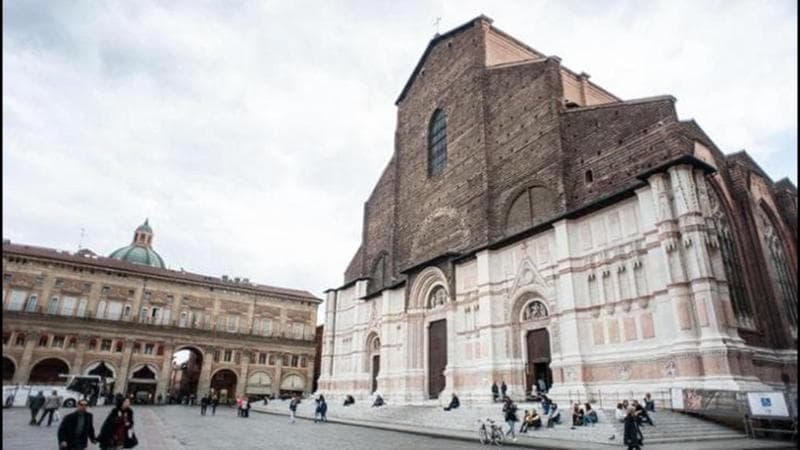
Autumn is the perfect season to visit Bologna. Perhaps the best of all. The porticoes mean you can walk around even when it drizzles, and the city is packed with events, exhibitions and films, its café tables buzzing with people. It is also the perfect time to pick up on some of its more unusual details.
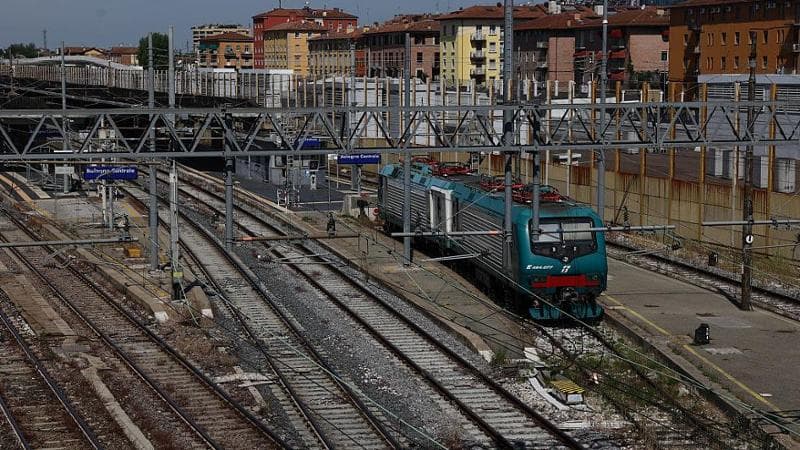
One way or another, most visitors to Bologna arrive at the railway station — directly by train, or, if flying, via the Marconi Express. And it is an excellent place to start, because from there the city can be explored entirely on foot.
If it is your first time in Bologna, it makes sense to stay in the centre. I Portici Hotel, on Via dell’Indipendenza, puts you just a few minutes from Piazza Maggiore. For something more intimate, there is Casa Bertagni, in the university district.
If you already know Bologna, however, cross the tracks towards Bolognina, the neighbourhood that has changed more than any other in recent years.
Here you can stay at Hotel Il Guercino, stop by Mercato Albani, then head back towards the centre through the Manifattura delle Arti. A little further on is P420, one of Bologna’s most interesting contemporary art galleries.
I Portici Hotel, Via dell’Indipendenza 69 (around €350)
Casa Bertagni, Via Giovan Battista de Rolandis 7 (around €300)
Hotel Il Guercino, Via Luigi Serra 7 (around €150)
Early afternoon: an exhibition and a different view of the city centre
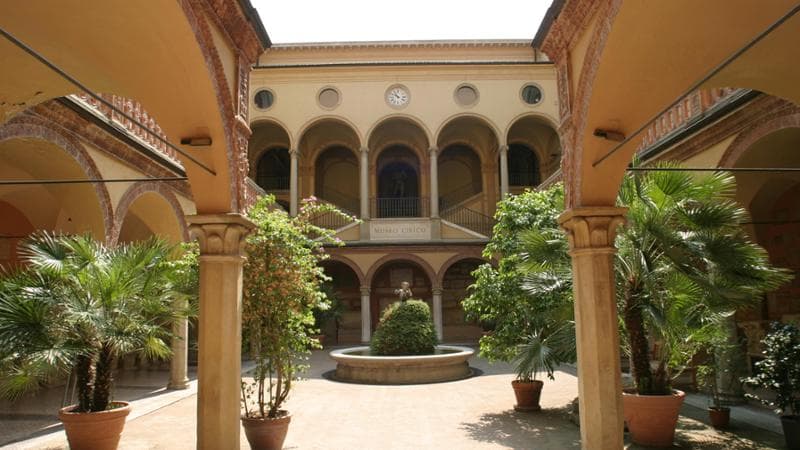
But back to the centre, where the Museo Civico Archeologico is hosting Elliott Erwitt. The Art of Observation. Around 100 photographs are on display, some of them world-famous, others from the photographer’s private collection. Dogs, children, kisses, people caught at that precise moment when something happens — something only Erwitt seems to have been able to capture.
Coming out, you feel like carrying on looking. And you do not have to wait long: Piazza Maggiore is just a few steps away. Cross the square, look up at San Petronio, then step inside Salaborsa and look down instead: beneath its glass floor are archaeological remains from Roman and medieval Bologna.
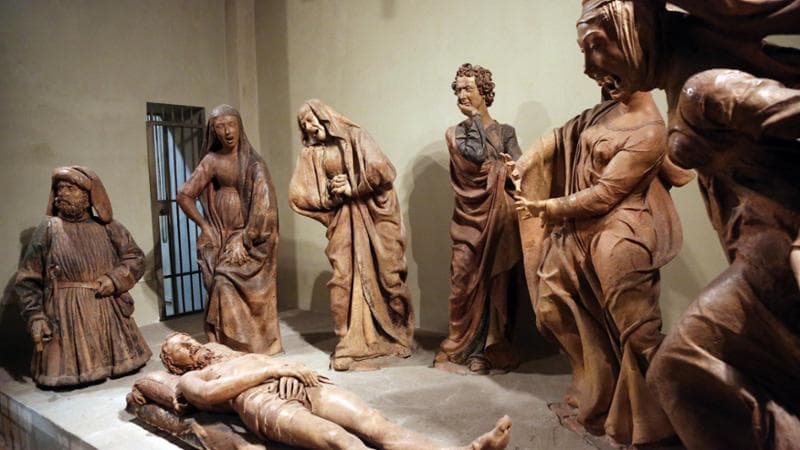
This is the heart of the tourist district, but it is still possible to avoid the most Instagrammed version of Bologna. On Via Clavature is a place even many Bolognese know little about: Santa Maria della Vita, home to Niccolò dell’Arca’s Lamentation over the Dead Christ, a work to take in wide-eyed.
On Via Drapperie is the Antica Aguzzeria del Cavallo, which has been in business since 1783. Not far away is Libreria Nanni, founded in 1825 and the oldest bookshop in the city.
Continue as far as Via de’ Carbonesi and you will find Majani, the chocolate maker celebrating its 230th anniversary this year. It is Italy’s oldest chocolate factory still in operation and remains in the hands of the same family.
Museo Civico Archeologico, Via dell’Archiginnasio 2 (Elliott Erwitt. The Art of Observation: €16)
Biblioteca Salaborsa, Piazza del Nettuno 3
Santa Maria della Vita, Via Clavature 8 (€8)
Antica Aguzzeria del Cavallo, Via Drapperie 12/B
Libreria Nanni, Via de’ Musei 8
Majani, Via de’ Carbonesi 5
Towards evening: aperitivo, dinner and an unexpected nightcap
Enoteca Italiana, on Via Marsala, is the place for a classic aperitivo. Smaller, younger and decidedly more contemporary is Bivio, on Via Urbana, if natural wines are your thing.
For dinner, you can stay in the centre and continue to get around entirely on foot. There are several options, including Ahimè, next to the Mercato delle Erbe, or Casa Merlo. What they share is a fresh, new-generation take on Bologna’s restaurant scene.
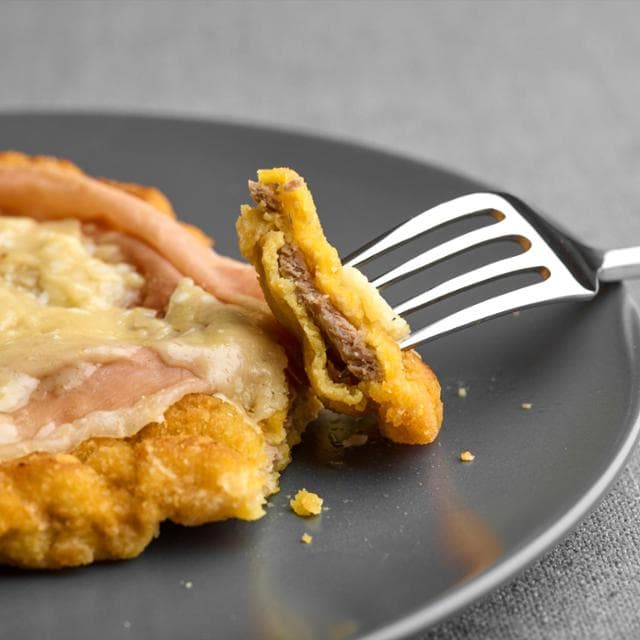
After dinner, see what is on at Teatro Duse or Cinema Modernissimo, beneath Piazza Re Enzo, a 1920s cinema hidden underground. If you would rather end the evening with one last drink, try Ruggine, tucked away in Vicolo Alemagna, or Velluto, on Via de’ Toschi.
Enoteca Italiana, Via Marsala 2/B (€20–30)
Bivio Enoteca – Vini Naturali, Via Urbana 12/B (€10–20)
Ahimè, Via San Gervasio 6/E (€40–80)
Trattoria Ristorante – Casamerlò, Via de’ Gombruti 2/D (tasting menu around €45–50)
Teatro Duse di Bologna, Via Cartoleria 42
Cinema Modernissimo, Piazza Re Enzo
Ruggine, Vicolo Alemagna 2/C
Velluto Botanique Eclectique, Via de’ Toschi 2/G
The next morning: breakfast, shops and a walk through Bologna
The following morning, head to Via Galliera. Start slowly over breakfast at Allegra, or grab a brioche at Forno Brisa. Then carry on along the street to Disco d’Oro, one of Bologna’s historic record shops. Nearby is Drogheria della Pioggia, worth at least a glance through the windows.
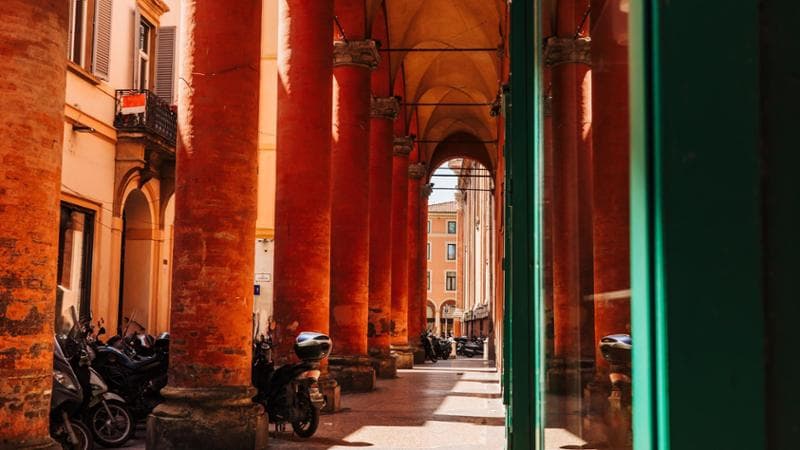
If magazines, illustration and independent publishing are more your thing, make a detour towards the university district and stop at Modo Infoshop or Inuit.
For anyone who wants to get some exercise alongside the locals, there is the walk up to San Luca. The long portico leading to the sanctuary begins at Meloncello, and following it uphill is one of the best ways to watch the city gradually change around you. Alternatively, head to Villa Ghigi, above Porta San Mamolo.
Allegra – Bar & Trattoria, Via Galliera 11/C (breakfast around €10–15)
Forno Brisa Galliera – Bakery & Specialty Coffee, Via Galliera 34/D (breakfast around €5–10)
Disco d’Oro, Via Galliera 23
Drogheria della Pioggia Bologna, Via Galliera 27
Modo Infoshop, Via Mascarella 24/B
Inuit Bookshop, Via Giuseppe Petroni 13/A
Arco del Meloncello, around Via Saragozza 235 (the final 2km uphill to San Luca start here)
Parco Villa Ghigi, main entrance from Via San Mamolo, near Giardino Norma Mascellani
Lunch: back to tradition
At lunchtime, if you feel like venturing beyond the centre, head to Al Cambio, on Via Stalingrado, for a plate of tortellini and a cotoletta alla bolognese to share. If you would rather stay within walking distance, Trattoria da Me, on Via San Felice, is a celebration of sfogline — Bologna’s traditional pasta makers — and fresh handmade pasta.
Al Cambio, Via Stalingrado 150 (around €45–60)
Trattoria da Me, Via San Felice 50/A (around €35–50)
After lunch: one last walk and a gelato before leaving
If you still have some walking left in you, this is the time to head towards Via Fondazza. Pass beneath the Portico dei Servi, cross Piazza Aldrovandi and make your way to Casa Morandi.
Giorgio Morandi lived and painted here for much of his life. Stepping into his rooms means seeing up close the tables, bottles, vases, boxes, window and light that recur throughout his paintings.
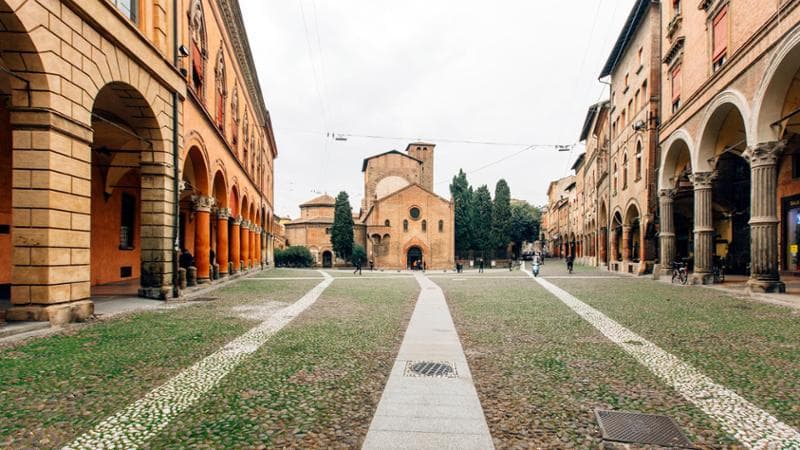
Before leaving, there is still time for a gelato. Cremeria Santo Stefano is just a few minutes’ walk from Casa Morandi, and from there it is worth continuing to Piazza Santo Stefano, one of the most beautiful squares in the city. Then head back towards the centre and, finally, the station. Your 36 hours are almost up.
Casa Morandi, Via Fondazza 36 (free admission) Cremeria Santo Stefano, Via Santo Stefano 70/C (gelato around €3–5)
This article was reviewed by an external translation partner